
American households waste nearly $19 billion per year on electricity consumed during peak demand hours. This staggering figure reveals a problem many homeowners don’t even realize they have. When you use energy during peak times, utility companies charge rates that can be 300 percent higher than off-peak prices.
Smart load management home technology is changing how families pay for electricity. Instead of paying premium rates when demand peaks, households can shift their energy use to cheaper hours. This strategy cuts energy bills without forcing people to sacrifice comfort or convenience.
The concept of energy cost management through smart systems is becoming essential. Traditional energy management relies on manual adjustments and guesswork. Smart load management home systems use real-time data and automation to make these decisions instantly. Your appliances and heating systems respond to price signals automatically, reducing costs while maintaining the same service level.
Residential energy efficiency has entered a new era. Today’s homeowners have access to affordable technology that was once only available to large businesses. Smart meters, intelligent thermostats, and battery storage systems work together to optimize when and how your home uses electricity. The result is significant savings that compound over months and years.
This guide explores practical strategies for implementing smart energy load management in your home. You will learn how to identify peak hours in your area, understand your current consumption patterns, and deploy proven solutions that reduce electricity expenses. Whether you’re starting with a single smart thermostat or building a complete energy management system, this article provides the information you need to make intelligent choices about residential energy efficiency.
Understanding Peak-Time Energy Costs and Their Impact on Your Bills
Energy pricing is not uniform throughout the day. Utility companies structure their rates based on demand patterns, which means the cost of electricity changes depending on when you use it. Understanding how utility peak hours work is essential for managing your household budget and reducing unnecessary expenses. Most Americans remain unaware that their electricity consumption during certain times can cost 30 to 50 percent more than the same usage during off-peak periods.
Utilities use time-of-use rates to balance energy supply and demand across their service areas. This pricing strategy encourages customers to shift their consumption away from high-demand periods. By learning about these rate structures, you can make informed decisions about when to run appliances and operate major systems in your home.
What Are Peak Hours and Why Do They Matter
Utility peak hours are specific times when electricity demand reaches its highest levels. In most U.S. markets, these periods occur on weekdays between 4 PM and 9 PM. During these windows, both residential and commercial customers use electricity simultaneously, placing enormous strain on the electrical grid.
Peak hours matter because they test the limits of utility infrastructure. Power companies must maintain enough capacity to meet maximum demand, which requires significant investment in equipment and maintenance. To recover these costs, utilities charge premium rates during peak periods.
Many utility companies now implement time-of-use rates that reflect these demand patterns. Your electric bill may list different price tiers:
- Peak hours (highest rates)
- Part-peak hours (medium rates)
- Off-peak hours (lowest rates)
Understanding your local utility peak hours schedule allows you to plan when to run dishwashers, laundry machines, and other high-consumption appliances.
The Financial Impact of Peak-Time Energy Consumption
Running major appliances during utility peak hours directly increases your monthly electricity bill. Consider this real-world example: operating your dishwasher at 6 PM during peak demand costs significantly more than running it at 10 PM. The electricity itself is identical, yet the price difference can total several dollars per load.
Some utility providers now charge peak demand charges to residential customers. These fees are based on the highest amount of electricity your home uses during a single peak hour window each month. Peak demand charges penalize concentrated usage during peak periods, making it even more important to spread consumption throughout the day.
Households that shift energy usage away from peak windows can see annual savings of $200 to $400. Electric vehicle owners and homeowners with solar installations often face higher peak demand charges because their consumption patterns are more concentrated during specific hours.
| Activity | Peak Hour Cost | Off-Peak Hour Cost | Potential Savings |
|---|---|---|---|
| Running dishwasher | $2.40 | $1.20 | $1.20 per cycle |
| Doing laundry load | $3.60 | $1.80 | $1.80 per load |
| Charging electric vehicle | $8.00 | $3.20 | $4.80 per charge |
| Running air conditioning | $6.50 | $2.60 | $3.90 per hour |
The financial impact compounds when you consider year-round usage. A family that consistently uses appliances during off-peak hours instead of during utility peak hours gains substantial savings. Contact your local utility company to request a copy of your time-of-use rates schedule and identify your specific peak demand charges.
How Smart Energy Load Management Systems Work
Smart energy load management systems operate like a command center for your home’s electricity use. These intelligent energy systems monitor your power consumption in real-time and automatically shift when appliances run to reduce costs during peak hours. The core idea is simple: your system learns when electricity rates are highest and adjusts your usage to take advantage of cheaper off-peak times.
Home energy automation relies on a network of connected devices working together. Smart plugs, switches, and sensors communicate with a central controller that acts as the brain of the operation. This controller receives information about your energy prices from your utility company and decides which appliances should run and when. The beauty of automated load control is that most of this happens automatically without you lifting a finger.
- Smart meters track your real-time energy usage and relay this data to your system
- Connected appliances or smart plugs receive signals to turn on or off based on electricity prices
- A central hub processes pricing information and consumption patterns
- Mobile apps let you see what’s happening and make manual adjustments when needed
Most systems communicate through Wi-Fi, Zigbee, or Z-Wave technology. These wireless standards ensure your devices talk to each other reliably. Your intelligent energy systems connect to utility rate schedules through either a smart meter or internet-based pricing information, keeping your system updated on when rates change.
Advanced home energy automation systems actually learn from your household patterns. Over time, they understand your typical usage and preferences. This means the system gets smarter without requiring constant adjustments from you. Newer models use artificial intelligence to predict optimal times for running dishwashers, charging electric vehicles, or running laundry machines based on both pricing and your habits.
The Technology Behind Automated Energy Distribution
Modern energy load management relies on advanced technology that transforms how homes track and control electricity use. Smart grid technology forms the backbone of these systems, connecting your household to a network that enables real-time communication between your devices and utility companies. Understanding these technologies helps you make better choices about energy consumption monitoring and power consumption tracking in your home.
The infrastructure supporting automated energy distribution includes several key components working together. These systems collect data, analyze patterns, and make decisions to shift your energy use away from expensive peak hours. Let’s explore the main technologies that make this possible.
Smart Meters and Real-Time Monitoring
Smart meters represent the foundation of modern energy consumption monitoring. Unlike traditional meters, these digital devices record your electricity use in short intervals—usually every 15 minutes or hourly. This frequent measurement gives you and your utility company a detailed picture of when you consume power.
Smart meters communicate bidirectionally, meaning they send data to your utility company while receiving information back. This connection enables real-time feedback about your energy usage patterns. Many meters now connect to home energy management systems, allowing you to see exactly when and how much electricity different appliances consume.
- Display real-time energy consumption data
- Allow access through utility company portals
- Integrate with third-party monitoring applications
- Track power consumption tracking across your home
- Enable immediate feedback on energy-saving actions
Homeowners can access smart meter information through their utility’s online portal or mobile app. Some utilities partner with third-party companies like Sense and Neurio, which provide detailed insights into household energy patterns and appliance-level monitoring.
AI-Powered Energy Optimization Algorithms
Artificial intelligence transforms raw energy data into smart decisions about when to run appliances. These algorithms analyze multiple factors simultaneously to optimize your home’s electricity use without sacrificing comfort.
AI systems examine historical consumption data, upcoming weather forecasts, utility rate schedules, and your personal preferences. The technology learns your household’s patterns—understanding when you typically shower, prefer specific temperatures, or use particular appliances. Machine learning algorithms from smart thermostat manufacturers like Ecobee and Nest use this information to predict your needs and adjust operations automatically.
| Technology Component | Function | Benefit |
|---|---|---|
| Smart Meters | Record electricity use at regular intervals | Precise energy consumption monitoring |
| AI Algorithms | Analyze data and make optimization decisions | Automatic load shifting during peak hours |
| Smart Grid Technology | Enable two-way communication with utilities | Coordinated power management across regions |
| Learning Systems | Study user behavior and preferences | Personalized energy-saving recommendations |
Machine learning enables these systems to improve over time. The more data they collect, the better they understand your household’s unique energy patterns. This continuous learning allows AI-powered systems to make increasingly accurate decisions about shifting loads to off-peak hours when electricity rates drop.
These intelligent systems balance multiple priorities at once. They maximize savings by avoiding peak-hour usage while respecting your comfort needs and appliance requirements. Smart grid technology integrated with these algorithms creates a responsive network that adapts to your home’s specific situation, making energy management seamless and effective.
Smart Load Management Home: Implementing Solutions for Residential Properties
Getting started with smart load management in your home means understanding your current energy patterns and setting realistic goals. Before installing any equipment, assess what you want to achieve. Do you want maximum savings, greater convenience, or a balance of both? Your answer shapes which smart home energy systems you should consider. Many homeowners find that a gradual approach works best, starting with one or two devices before expanding to a complete system.
The scale of your implementation depends on several factors. A simple smart thermostat works well for those just beginning their energy-saving journey. Whole-home smart home energy systems coordinate multiple appliances and give you complete visibility into energy usage across your entire property. Your home size, current technology setup, technical comfort level, and budget all influence which solution fits your needs.
Popular platforms offer different approaches to managing residential energy. Google Nest, Amazon Alexa, and Apple HomeKit integrate energy management features into their ecosystems. Utility companies often provide their own energy management software programs. Standalone solutions from companies specializing in energy management give you focused tools without smart home features.
Practical Implementation Considerations
Before purchasing equipment, check these important factors:
- Your WiFi coverage throughout the home
- Compatibility with your existing appliances
- Whether your utility company offers time-of-use rates in your area
- Installation requirements and technical difficulty
- Integration with your specific rate structure
A home energy controller needs strong WiFi signals to function properly. Test your current network coverage in areas where you plan to install devices. Check whether your existing appliances work with modern energy management software. Different utility companies across the United States offer varying time-of-use programs, so confirm what your provider offers.
| Implementation Type | Starting Cost | Setup Complexity | Best For |
|---|---|---|---|
| Single Smart Thermostat | $200-$400 | DIY Installation | Beginners wanting basic control |
| Standalone Energy Monitor | $300-$600 | Professional Installation | Detailed usage tracking |
| Integrated Smart Home System | $1,000-$3,000 | Mixed (Some DIY, Some Professional) | Multiple device coordination |
| Complete Home Energy Management | $3,000-$8,000+ | Professional Installation Required | Maximum optimization and battery storage |
Installation options range from simple DIY setups to professional installations. A smart thermostat typically requires no special skills. A home energy controller that monitors your entire home’s electrical panel usually needs a licensed electrician. Energy management software works with whatever hardware you already have in place.
Your utility’s rate structure matters more than you might think. Time-of-use programs vary significantly across different regions. Some charge higher rates during late afternoon and early evening hours. Others peak during different times. Smart home energy systems must align with your specific utility’s schedule to provide real savings. Contact your utility company to learn about available programs in your area.
Start small and expand gradually. Many homeowners begin with smart thermostats or smart plugs, learn how energy management software works, and add more devices over time. This approach builds your confidence while spreading out costs. Once you understand your home’s energy patterns, you can make better decisions about larger purchases like battery storage or whole-home systems.
Identifying High-Consumption Appliances and Peak Usage Patterns
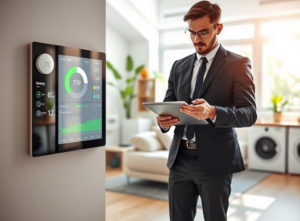
Understanding where your electricity dollars go is the first step toward effective energy usage optimization. Most homeowners have no idea which appliances consume the most power or when peak consumption happens in their homes. A home energy dashboard gives you real-time visibility into these patterns. By identifying your biggest energy users, you can make smart decisions about when to run them and how to reduce waste.
The path to electricity cost reduction starts with knowledge. You need to see the complete picture of your household energy consumption before you can change it. This means looking at your utility bills, checking your smart meter data, and understanding which appliances are working hardest.
Energy Auditing Your Home
An energy audit reveals exactly how your home uses electricity. You can hire a professional, or you can conduct a DIY audit using tools you already have.
Start with your utility bills. Look at the past 12 months to spot seasonal patterns. Winter months often show higher usage due to heating. Summer peaks signal air conditioning load.
Next, check your smart meter if your utility offers one. Many utilities provide online portals where you can view hourly consumption data. This information helps you see when your home uses the most electricity. Use your home energy dashboard to track usage throughout the day and identify peak periods specific to your household.
Create a list of all major appliances and their age. Older appliances typically consume more power than newer models. Record when family members use each device—morning showers, laundry days, cooking times—to understand your unique patterns.
Common Household Energy Vampires
Certain appliances consistently drain household budgets. Understanding their consumption helps guide your energy usage optimization strategy.
| Appliance Category | Annual Energy Use (%) | Typical Annual Cost | Load Management Strategy |
|---|---|---|---|
| HVAC Systems | 40-50% | $1,200-$1,500 | Smart thermostat scheduling, temperature adjustments |
| Water Heaters | 14-18% | $400-$600 | Time-of-use programming, insulation upgrades |
| Washers and Dryers | 13% | $300-$400 | Run during off-peak hours, air drying alternatives |
| Lighting | 9-12% | $200-$300 | LED bulbs, motion sensors, natural light use |
| Refrigerators | 8-10% | $200-$250 | Proper maintenance, optimal temperature settings |
| Phantom Loads | 5-10% | $100-$200 | Smart power strips, unplugging devices |
HVAC systems remain the biggest energy consumer in most homes. These systems run continuously during extreme temperatures. Smart thermostats allow you to program temperature schedules and reduce runtime during off-peak hours for electricity cost reduction.
Water heaters work hard throughout the day. Electric water heaters rank among the most expensive appliances to operate. Programming them to heat water during off-peak hours can significantly lower bills.
Washers and dryers consume large amounts of power during operation. Running these appliances during utility off-peak hours—often early morning or late evening—provides major savings.
Phantom loads quietly drain energy 24/7. These are devices consuming power even when switched off or in standby mode. Common culprits include:
- Television sets and cable boxes
- Computer equipment and monitors
- Phone chargers and USB ports
- Microwave ovens with display clocks
- Smart speakers and home automation hubs
- Game consoles and entertainment systems
Smart power strips cut phantom load waste completely. They detect when devices enter standby mode and shut off power automatically. This simple solution can save $100-$200 annually on electricity costs.
Use your home energy dashboard data to prioritize which appliances to address first. Focus on devices with the highest consumption and longest operating hours. Small changes to continuous-use appliances deliver bigger electricity cost reduction than adjusting occasional-use items.
Strategies for Shifting Energy Usage to Off-Peak Hours
Moving your energy consumption to times when electricity costs less is one of the smartest ways to lower your bills. Load shifting strategies work by using the same amount of electricity but timing it differently. This approach differs from simply reducing how much energy you use. Instead of cutting back on comfort, you’re working smarter by taking advantage of off-peak electricity rates offered by most utility companies.
Understanding when your utility charges less is the first step. Many providers offer lower rates during evening and early morning hours when demand drops. Some areas provide different rates based on the day of the week, with weekends sometimes offering cheaper electricity. Check your bill or contact your utility company to learn your specific rate schedule.
Common Load Shifting Strategies for Daily Appliances
Smart appliance scheduling makes everyday tasks work for your budget. Modern dishwashers and washing machines come with delay-start features that let you program them to run during off-peak electricity rates. Simply load your dishes or laundry before bed, set the timer for early morning or late evening, and let the machine start automatically.
- Run dishwashers and washing machines between 9 PM and 7 AM
- Schedule electric vehicle charging overnight when rates drop significantly
- Pre-cool or pre-heat your home before peak hours begin
- Operate pool pumps during times with lowest electricity costs
- Batch-cook meals during off-peak windows and reheat as needed
For households without built-in delay-start capabilities, smart plugs offer a practical solution. These devices can turn older appliances on and off automatically, giving your existing equipment access to load shifting strategies.
Addressing Practical Concerns
Running appliances at night raises questions about noise. Place washers and dishwashers away from bedrooms, or choose ultra-quiet models designed for evening use. These solutions maintain your lifestyle quality while reducing costs through smarter timing.
| Appliance Type | Best Off-Peak Time | Potential Monthly Savings |
|---|---|---|
| Washing Machine | 9 PM – 7 AM | $8-$15 |
| Dishwasher | 10 PM – 6 AM | $10-$18 |
| Electric Vehicle Charging | Midnight – 6 AM | $30-$50 |
| Water Heater | Off-peak windows | $15-$25 |
Different rate structures require different approaches. Homes with time-of-use rates benefit most from load shifting strategies, while those with demand charges should focus on avoiding peak usage spikes. Your utility bill details which type applies to you.
Simple behavioral changes work alongside technology. Doing laundry on weekends when some utilities offer lower rates cuts costs without requiring new equipment. Meal preparation during off-peak electricity rates lets you use your oven and stove when prices drop, then reheat throughout the week.
Effective load shifting means shifting when you use energy, not sacrificing what you need. By understanding your utility’s off-peak electricity rates and using smart appliance scheduling, you maintain comfort while watching your energy bills decrease.
Smart Thermostats and HVAC Load Management
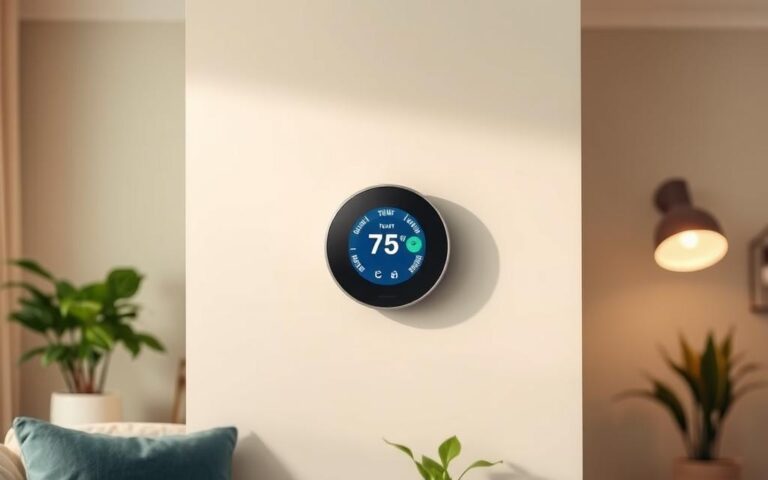
Your heating and cooling system consumes more energy than any other appliance in your home. Smart thermostats offer a powerful way to reduce these costs through intelligent temperature management and load balancing technology. Unlike basic programmable devices, modern smart thermostats learn your patterns and adjust automatically to save money during peak hours.
Smart thermostats from brands like Nest, Ecobee, and Honeywell go far beyond simple scheduling. They track when you’re home, understand your comfort preferences, and respond to real-time energy prices. Many units now participate in demand response programs offered by utilities. These programs reward you for allowing small temperature adjustments during peak demand periods on the grid.
Programming Temperature Schedules for Cost Savings
Creating an effective temperature schedule requires understanding your daily routine and climate. Smart programmable devices allow you to set different temperatures for mornings, afternoons, evenings, and nights. The key strategy involves pre-cooling your home before peak rate periods begin, letting your system coast through expensive hours without running.
A common myth suggests keeping constant temperatures is more efficient. Research shows that allowing a 2-3 degree temperature drift during peak hours saves significant money without affecting comfort. Your home’s thermal mass keeps temperatures stable even when your system rests.
- Set cooling to 78°F during peak afternoon hours
- Lower temperature to 76°F one hour before peak rates end
- Program heating setbacks of 68°F during peak winter evenings
- Adjust schedules weekly based on weather changes
- Use sleep mode to reduce nighttime energy use
Integrating Weather Forecasts for Optimal Performance
Advanced smart thermostats now integrate weather data to make proactive decisions about heating and cooling. When forecasts predict a heat wave, your system pre-cools your home before temperatures spike. On unexpected mild days, it skips unnecessary cycles.
Weather-responsive load balancing technology adjusts your system’s timing based on predicted temperature swings. This prevents your HVAC from working during peak-rate hours while maintaining your comfort. Many demand response programs send alerts about high-demand periods, allowing your thermostat to prepare in advance.
“Smart thermostats represent the single greatest return on investment for most households seeking to reduce peak-time energy costs.”
Participation in utility demand response programs is simple. Your thermostat automatically adjusts during grid stress events in exchange for bill credits or monthly payments. You maintain full override control to restore comfort whenever needed. Most programs offer credits between $10-50 monthly during peak seasons.
| Program Type | Typical Adjustment | Monthly Incentive | Your Control |
|---|---|---|---|
| Voluntary Peak Response | 1-3°F temperature shift | $15-30 | Override anytime |
| Automated Load Balancing | System adjusts as needed | $20-50 | Opt out any event |
| Time-of-Use Integration | Pre-cool during off-peak hours | $10-40 | Manual control available |
Installing a smart thermostat with demand response capabilities transforms your HVAC into an intelligent load management tool. Combined with proper scheduling and weather integration, these programmable devices significantly reduce your peak-hour energy consumption while keeping your home comfortable.
Battery Storage Solutions and Peak Shaving Techniques
Battery storage systems represent one of the most powerful tools for peak load reduction in modern homes. These systems store energy during low-cost off-peak hours and release that stored power during expensive peak periods. This strategy, called peak shaving, helps homeowners avoid paying premium rates when electricity demand reaches its highest levels.
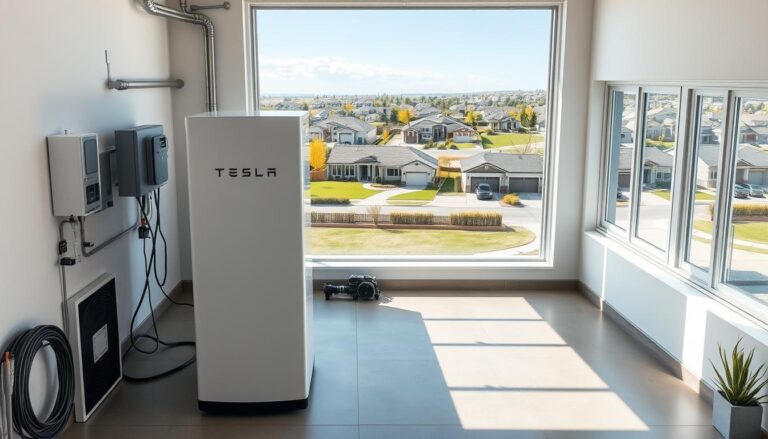
Home battery systems like Tesla Powerwall, LG Chem RESU, and Enphase Encharge work as your personal energy reserves. They charge when utility rates are lowest and discharge when rates climb. This approach to home power management cuts your peak-period grid consumption by up to 75 to 100 percent, depending on your household’s daily usage patterns.
The mathematics behind peak shaving is straightforward. A typical 10 to 13 kilowatt-hour battery system can offset several hours of peak consumption daily. If your utility charges $0.45 per kilowatt-hour during peak times and $0.12 during off-peak hours, a battery system pays for itself faster. This time-of-use rate difference creates real savings for demand-side management in your home.
Battery systems serve multiple purposes beyond simple bill reduction:
- Reduce peak demand charges that spike your monthly bills
- Limit maximum power draws from grid-fed appliances like EV chargers
- Provide backup power during outages and grid emergencies
- Enable participation in virtual power plant programs
Emerging virtual power plant programs offer homeowners additional income streams. Utilities and energy aggregators compensate residents for allowing their batteries to discharge during grid stress events. This demand-side management approach benefits both your wallet and the broader electricity network.
Battery storage makes economic sense today in specific scenarios. Homes with significant time-of-use rate spreads, frequent outages, or high demand charges see faster returns on investment. Your situation determines whether battery storage fits your home power management strategy and timeline.
Calculating Your Return on Investment for Load Management Systems
Making a smart investment in load management technology requires understanding the financial picture. Your electric bill savings and electricity cost reduction depend on several key factors. This section helps you determine whether these systems make financial sense for your home and what incentives can improve your returns.
Initial Costs Versus Long-Term Savings
Smart energy systems come with upfront expenses that vary widely. Understanding these costs helps you calculate realistic timelines for breaking even.
| System Component | Price Range | Annual Savings Potential |
|---|---|---|
| Smart Thermostat | $120–$250 | $100–$300 |
| Whole-Home Energy Monitor | $200–$350 | $150–$400 |
| Smart Plugs (per unit) | $15–$40 | $20–$80 |
| Complete Energy Management System | $500–$2,000 | $300–$800 |
| Battery Storage Solution | $7,000–$15,000 | $800–$1,500 |
Your payback period depends on your home’s specific situation. A typical household installing a smart thermostat and basic load management sees returns within 1 to 2 years. Larger homes with comprehensive automation systems experience payback in 2 to 4 years. Battery storage typically requires 7 to 12 years for full recovery without solar installation.
Several factors influence how quickly you’ll see results:
- The difference between your peak and off-peak electricity rates
- Your household’s total energy consumption
- Your climate and heating/cooling demands
- Local electricity price trends
Homes with high consumption, significant time-of-use rate differences, and demand charges benefit most quickly. Residential demand response programs also accelerate your savings timeline by rewarding you for shifting usage away from peak hours.
Available Incentives and Utility Rebate Programs
Multiple financial incentives exist to reduce your upfront investment and improve your overall returns. These programs make load management systems more affordable for homeowners nationwide.
Federal tax credits currently cover 30% of battery storage costs when installed alongside solar systems. State and local incentives vary significantly, with California, New York, and Massachusetts offering particularly generous programs. Many utility companies provide rebates ranging from $50 to $100 per smart device you install.
Key opportunities include:
- Federal tax credits for battery storage and solar combinations
- State-level rebate programs through clean energy initiatives
- Utility company rebates for smart thermostats and monitors
- Residential demand response program participation payments
- Time-of-use rate discounts from your electricity provider
Visit the Database of State Incentives for Renewables & Efficiency (DSIRE) to find location-specific programs. This resource lists all available federal, state, and local incentives. Electric bill savings increase dramatically when you combine rebates with your natural usage reductions.
Calculate your specific ROI by comparing your upfront investment against projected electricity cost reduction. Factor in available incentives and your household’s consumption patterns. This approach ensures you invest in systems that match your financial goals and energy situation.
Future Trends in Residential Energy Management Technology
The energy landscape is changing fast. Smart grid technology is advancing at a rapid pace, bringing new possibilities to your home. Understanding these emerging trends helps you make smart choices about your energy system today. These developments will shape how you manage electricity for years to come.
Artificial intelligence is becoming smarter and easier to use. Next-generation intelligent energy systems will learn your household patterns automatically. They will make decisions that balance cost, comfort, and environmental impact without requiring constant adjustments from you. The system adapts to your lifestyle rather than forcing you to adapt to it.
Electric vehicles are emerging as game-changers for home energy automation. Your EV won’t just consume power. It can store energy and send it back to your home when needed. This vehicle-to-home (V2H) technology transforms your car into a mobile battery. Vehicle-to-grid (V2G) systems let you sell excess power back to the utility company, creating income opportunities.
Energy pricing is becoming more dynamic. Real-time pricing rates fluctuate hourly based on grid demand. Smart systems will automatically adjust your consumption to take advantage of cheaper hours. You won’t need to monitor rates yourself. Your intelligent energy systems handle this work automatically.
New business models are removing financial barriers. Energy-as-a-service companies install systems and maintain them. They receive a share of your savings instead of upfront payment. This approach makes smart grid technology accessible to more homeowners.
- Enhanced grid coordination programs compensate homes for flexibility
- Interoperability standards like Matter protocol simplify device integration
- Machine learning algorithms improve efficiency continuously
- Carbon tracking features appeal to environmentally conscious families
Home energy automation is evolving toward seamless integration. Devices from different brands will work together smoothly. This interconnected approach maximizes your savings while supporting grid stability. Choosing flexible, adaptable systems today protects your investment in tomorrow’s energy future.
Conclusion
Smart load management home technology has become accessible to everyday homeowners who want to cut their energy bills. The systems discussed throughout this article work by shifting when you use power rather than just cutting back on what you use. This simple shift can save you money without forcing you to sacrifice comfort or convenience in your daily life.
You don’t need to install everything at once. Start small with one smart device like a programmable thermostat or a smart plug. Watch how it affects your energy cost management and your monthly bills. As you see real savings, you can add more technology to your home. This step-by-step approach works for any budget. Your residential energy efficiency plan can grow as your comfort level and finances allow.
Your local utility rates, your climate, your home’s age, and your daily routine all shape the best load management strategy for you. Review the energy audit tools and rate structure information from earlier sections. Pick strategies that fit your specific situation. Electricity rates based on time of use are spreading across the United States. This makes smart load management home systems worth your attention now and for years ahead.
Take action this month. First, check your utility bill to understand your rate structure and peak hour times. Next, conduct a basic energy audit to find which appliances use the most power. Finally, pick one load management strategy to try. Whether you choose a smart thermostat, battery storage, or a simple schedule shift, you’re taking control of your energy cost management. You have the tools, the knowledge, and the ability to reduce what you pay for electricity while helping the environment.
FAQ
What exactly is smart energy load management and how does it help reduce my electricity bills?
Smart energy load management is a technology-driven approach that automatically monitors, controls, and optimizes when your household appliances and systems consume electricity. Rather than using less energy overall, it focuses on shifting your consumption away from expensive peak hours—typically weekday afternoons and early evenings when utility rates surge—to more affordable off-peak periods like late evening or early morning. By timing your energy usage strategically, homeowners can see bill reductions of 30-50% compared to identical usage during peak hours, without sacrificing comfort or convenience. The system works through connected devices communicating with a central controller that receives real-time utility pricing information and automatically adjusts when appliances operate.
What are peak hours and why do utility companies charge more during these times?
Peak hours are specific times when electricity demand reaches maximum levels—typically occurring on weekdays between 4 PM and 9 PM in most U.S. markets. During these periods, both residential and commercial customers draw power simultaneously, placing extreme strain on the electrical grid. Utility companies implement higher rates during peak hours to accomplish two goals: first, they recover the costs of maintaining infrastructure that’s only needed during these demand spikes, and second, they incentivize customers to shift consumption to off-peak times, which naturally reduces grid stress. This pricing structure is called time-of-use rates, and it’s becoming increasingly common across the United States as utilities seek more efficient ways to manage grid resources. Some utilities also apply demand charges—fees based on your highest instantaneous power draw during a billing period—which make load management even more valuable for homes with electric vehicles, heat pumps, or other major electrical loads.
How do smart load management systems integrate with my existing home and appliances?
Smart load management systems are designed for easy integration with standard residential infrastructure and existing appliances. The basic architecture consists of connected devices—including smart plugs, smart switches, smart thermostats, and a central controller or hub—that communicate wirelessly using protocols like Wi-Fi, Zigbee, or Z-Wave. For appliances without built-in smart capabilities, smart plugs and switches add control functionality by intercepting power delivery. The central controller monitors real-time energy consumption and receives utility rate information either through your smart meter or via internet-based rate schedules provided by your utility company. Modern systems are designed for user accessibility, offering smartphone apps that provide visibility into energy usage and manual control when needed, while the automation handles complex decision-making in the background. Implementation can range from simple single-device solutions to comprehensive whole-home systems, allowing homeowners to start small and expand over time based on their needs and budget.
What role do smart meters play in smart load management home systems?
Smart meters are digital utility meters that provide granular, real-time data about your household energy consumption—typically recording measurements in 15-minute or hourly intervals rather than the monthly readings of traditional meters. These meters communicate bidirectionally with your utility company and can also feed consumption data to your home energy management system, enabling precise monitoring of usage patterns and immediate feedback on the impact of energy-saving actions. Smart meters provide the foundational data that allows your load management system to understand current consumption and make informed decisions about when to operate appliances. You can access your smart meter data through your utility’s online portal or third-party applications, giving you transparency into when and how you’re using electricity. This real-time visibility is crucial for understanding where your energy dollars go and identifying opportunities for optimization through load shifting strategies.
How do artificial intelligence and machine learning improve load management performance?
Advanced load management systems use AI and machine learning algorithms to analyze historical consumption data, weather forecasts, utility rate structures, and user preferences to make predictive optimization decisions. These algorithms learn your household’s specific patterns over time—understanding when occupants typically need hot water, prefer certain indoor temperatures, or use particular appliances—and then optimize around these patterns while automatically respecting your comfort and convenience requirements. Rather than requiring users to manually program complex schedules, AI-powered systems adapt continuously as seasons change, as your household routines evolve, and as weather conditions fluctuate. The algorithms can predict upcoming demand patterns and make proactive decisions—such as pre-cooling your home before peak periods begin or delaying dishwasher operation when rates are about to spike. Companies like Sense, Neurio, and manufacturers of smart thermostats including Nest and Ecobee have already integrated these technologies into products available today, making AI-driven optimization a practical tool rather than a future concept.
What’s the difference between load shifting and load reduction, and why does it matter?
Load shifting means using the same total amount of energy but timing that consumption strategically to reduce costs—running your dishwasher at 11 PM instead of 6 PM uses identical electricity but at lower rates. Load reduction, by contrast, focuses on consuming less total energy through efficiency improvements like upgrading to more efficient appliances or reducing thermostat settings. Smart load management primarily addresses load shifting, which has the advantage of delivering immediate financial benefits without requiring you to sacrifice comfort or reduce your actual usage. Load reduction remains valuable but often requires higher upfront investments and lifestyle changes. The most comprehensive approach combines both strategies: using smart load management to shift timing of necessary consumption, while also pursuing efficiency upgrades that reduce total consumption over time. This combination maximizes both your cost savings and environmental benefits.
What are the most effective strategies for shifting appliance usage to off-peak hours?
Effective load-shifting strategies vary by appliance type. For flexible-timing appliances like dishwashers and washing machines, program delay-start features to run late evening or early morning when rates are lowest—most modern appliances include this capability, and smart plugs can add it to older models. For heating and cooling, program smart thermostats to pre-cool or pre-heat your home during mid-to-late afternoon before peak periods begin, allowing the system to coast through expensive evening hours. If you own an electric vehicle, schedule charging to occur overnight when rates are typically lowest. For pool pumps and similar devices, run them during mid-day when solar production is high (if your utility credits solar generation) or overnight depending on your specific rate structure. Address practical concerns like noise by locating appliances away from bedrooms or selecting ultra-quiet models designed for off-peak operation. Simple behavioral strategies also matter—doing laundry on weekends when some utilities offer lower rates, or batch-cooking during off-peak hours—and require no technology at all. The key principle is maintaining your lifestyle quality while reducing costs through strategic timing rather than sacrificing comfort.
Why is my HVAC system the best target for smart load management, and what specific strategies work best?
HVAC systems typically consume 40-50% of total household energy, making them the single largest opportunity for cost reduction through smart management. Smart thermostats from manufacturers like Nest, Ecobee, and Honeywell go far beyond simple programmable thermostats by learning occupancy patterns, responding to real-time conditions, and automatically participating in utility demand response programs. The most effective strategy is pre-cooling or pre-heating during mid-to-late afternoon, before peak rate periods begin, so your system can maintain comfort while coasting through expensive evening hours rather than actively cooling or heating. Allow temperatures to drift slightly—typically 2-4 degrees—during peak periods when rates are highest; most people adapt to minor temperature variations without noticing. Program optimal overnight recovery schedules that take advantage of lowest rates. Advanced weather-responsive programming uses forecast data to make proactive decisions—pre-cooling before predicted heat waves, adjusting schedules for unseasonably warm or cool days, and optimizing timing of heating or cooling cycles. Many utilities offer demand response programs where your smart thermostat automatically adjusts during grid stress events in exchange for bill credits or payments, typically $10-50 monthly, with override controls so you can prioritize comfort when needed. Smart thermostats represent the single most impactful load management investment for most households, often delivering payback periods of just 1-2 years.
How can home battery storage systems help reduce my peak-time energy costs?
Home battery systems like Tesla Powerwall, LG Chem RESU, and Enphase Encharge can be programmed for economic peak-shaving—charging during low-rate off-peak periods and discharging during expensive peak periods, effectively arbitraging the difference between peak and off-peak rates. While batteries are often associated with solar installations, they provide substantial economic benefits even without solar panels in markets with significant rate differentials between peak and off-peak periods. A typical 10-13 kWh battery system can offset several hours of peak consumption daily, potentially reducing peak-period grid consumption by 75-100% depending on household usage patterns. Batteries are particularly valuable for homes with high instantaneous power draws from electric vehicle chargers, electric heating systems, or other major loads, because they can reduce demand charges—fees based on your highest single moment of power consumption during the billing period. Emerging virtual power plant programs allow utilities or third-party aggregators to dispatch your battery during grid stress events, compensating homeowners for this capability through additional monthly payments beyond personal bill savings. Current battery system costs range from $7,000-15,000 installed, making payback periods typically 7-12 years in most markets without solar installation, though scenarios with high time-of-use rate differentials, frequent outages, or demand charges show faster returns. Battery storage represents an increasingly viable component of comprehensive home energy management as prices decline and rate structures increasingly reward peak-shaving behavior.
How do I calculate whether a smart load management investment makes financial sense for my specific home?
Your ROI calculation should consider both upfront costs and realistic savings expectations specific to your situation. Smart thermostats cost $120-250 and typically deliver 1-2 year payback periods. Whole-home energy monitors cost $200-350, smart plugs run $15-40 each, and comprehensive energy management systems range from $500-2,000. Savings vary dramatically based on your time-of-use rate differential (the percentage difference between peak and off-peak rates), total household consumption, climate zone, and home characteristics. A household with a 3:1 or higher peak-to-off-peak rate ratio and high HVAC consumption (common in hot climates) might save 15-20% annually, while one with smaller rate differentials might save only 5-8%. To calculate your specific scenario: multiply your typical daily consumption during peak hours by the rate differential, multiply by 365 days, then divide by your system cost to find payback period. For example, if you typically use 8 kWh during peak periods at $0.18/kWh and off-peak is $0.10/kWh, your daily peak savings potential is $0.64, or $234 annually—a $200 smart thermostat pays back in less than one year. Several financial incentives improve ROI significantly: federal tax credits of 30% apply to battery storage installed with solar and potentially to standalone batteries, state-specific incentives (especially generous in California, New York, and Massachusetts), utility rebate programs offering $50-100 per smart device, and demand response program payments. Use the DSIRE database (Database of State Incentives for Renewables & Efficiency) to identify all available programs in your location. These incentives can reduce your effective system cost by 20-40%, dramatically improving payback periods.
What emerging technologies should I consider when planning my home energy management system?
Several important trends are shaping residential energy management’s future. AI systems are becoming increasingly sophisticated, learning household patterns more quickly and making nuanced optimization decisions that balance cost, comfort, convenience, and carbon footprint for environmentally conscious consumers—reducing the configuration burden on homeowners. Electric vehicles are evolving from simple loads to be managed into mobile battery storage systems through vehicle-to-home (V2H) and vehicle-to-grid (V2G) technologies, allowing your EV to provide backup power during outages or sell energy back to the grid during peak periods. Time-varying rates are expanding beyond simple time-of-use structures to real-time pricing where rates fluctuate hourly or even more frequently based on actual grid conditions; automated systems will become essential to optimize consumption under these complex rate structures without requiring constant manual adjustments. Energy-as-a-service models are emerging where companies install and maintain systems in exchange for sharing the savings rather than requiring upfront payment, reducing adoption barriers for cost-conscious homeowners. Grid integration is advancing through virtual power plant programs coordinating thousands of home systems to provide grid services—turning residential loads into distributed grid assets that improve reliability while compensating homeowners. Emerging standards like the Matter protocol promise enhanced interoperability, making it easier for devices from different manufacturers to work together seamlessly. When selecting systems today, prioritize flexibility and standardization to ensure your choices remain valuable and relevant as technology evolves.
How do I conduct a home energy audit to identify my highest-consumption appliances and usage patterns?
Begin by analyzing your utility bills over 12 months to identify seasonal patterns and baseline consumption, then use your smart meter data to drill deeper—most utility companies provide online access to granular consumption data. If you don’t yet have a smart meter, request one from your utility or purchase a whole-home energy monitor like those from Sense or Neurio to track consumption in 15-minute intervals. Disaggregate consumption by appliance category: HVAC systems typically consume 40-50% of household energy, water heaters 14-18%, washers and dryers 13%, lighting 9-12%, with the remainder spread across refrigerators, ovens, and other devices. For the most detailed analysis, use individual smart plugs on major appliances to measure their specific consumption patterns and identify when they operate. Document your findings—which appliances consume the most energy, when they typically operate, and whether that timing coincides with peak rate periods. Professional energy audits ($150-300) can provide even more detailed insights including thermal imaging to identify insulation gaps and blower door testing to find air leaks, though these focus more on efficiency than load management. The key insight is distinguishing between continuous loads (refrigerators), scheduled loads (water heaters), and discretionary loads (dishwashers)—this distinction determines which appliances are best candidates for load shifting versus those requiring different strategies. This diagnostic foundation enables you to prioritize load management efforts for maximum financial impact.
What are common household “energy vampires” and phantom loads I should target?
Energy vampires are major appliances consuming substantial power during operation: HVAC systems (40-50% of total), water heaters (14-18%), washers and dryers (13%), lighting (9-12%), refrigerators (4-8%), electric ovens (3-6%), and increasingly, electric vehicle chargers (2-10% for homes with EVs). Each category offers different optimization opportunities—while HVAC and water heating benefit from load shifting and smart controls, refrigerators require efficiency upgrades rather than timing changes. Phantom loads—devices consuming power even when not actively in use or in standby mode—include televisions, computer monitors, printers, coffee makers, phone chargers, and entertainment systems. These collectively can account for 5-10% of household energy consumption, costing $100-200 annually in typical homes. Smart power strips and smart plugs ($15-40 each) eliminate phantom load waste by cutting power completely during non-use periods rather than allowing devices to draw standby power. Target phantom loads first because they require minimal lifestyle adjustment—you simply won’t notice the difference between a device being powered off versus in standby mode. After addressing phantom loads, focus on major discretionary loads like dishwashers, washing machines, and pool pumps that can be easily shifted to off-peak hours without sacrificing functionality. Understanding which appliances consume the most power and when reveals the true structure of your household energy use.
What’s the typical payback period for installing a smart thermostat versus a whole-home energy management system?
Smart thermostats typically cost $120-250 and deliver some of the fastest payback periods in home energy technology, usually returning their investment in 1-2 years through HVAC optimization alone. A well-programmed smart thermostat can reduce heating and cooling costs by 10-15% annually—for a home spending $1,200 yearly on HVAC, this equals $120-180 in savings, providing rapid ROI. Whole-home energy management systems—comprehensive platforms that coordinate multiple appliances and energy sources—cost $500-2,000 and typically achieve payback in 2-4 years depending on your rate structure and consumption patterns. Whole-home systems deliver greater total savings because they optimize across all major loads rather than just HVAC, but each additional component (energy monitors, smart plugs, water heater controls) adds both cost and complexity. The most practical approach for most homeowners is starting with a smart thermostat to establish quick wins and learn about load management, then expanding to additional devices as budget allows and as you see results. Homes with high time-of-use rate differentials (peak rates more than 2-3 times off-peak rates) see faster payback across all systems because the incentive to shift consumption is stronger. Battery storage systems currently require 7-12 year payback periods without solar installation in most markets, making them viable only for homes with specific circumstances like frequent outages, high demand charges, or unusually high rate differentials.