

Ever thought about how a home battery like the Tesla Powerwall could save you money, not just during blackouts? With the costs of utilities going up and the need for energy independence growing, home battery systems are changing how we manage energy. By choosing the right battery storage, you can lower your electric bills, help the environment, and make your home more comfortable and reliable.
Key Takeaways
- Battery storage systems can lead to significant cost savings on electricity bills.
- The Tesla Powerwall offers advanced features for energy independence.
- Investing in battery storage supports environmental sustainability.
- Homeowners can benefit from various financial incentives for battery systems.
- Optimizing energy usage can reduce reliance on the grid.
Understanding Battery Storage: An Introduction
Battery storage lets homes store energy, especially from renewable sources. With lithium-ion batteries, homeowners can keep energy for later use. This helps with energy independence and efficiency.
What is Battery Storage?
Battery storage captures and saves energy for later. It’s key for managing energy needs. With lithium-ion batteries, excess solar energy or grid power can be stored. This aids in using energy wisely and keeping costs stable.
How Does Battery Storage Work?
Battery storage works by charging and discharging lithium-ion batteries. These batteries store electrical energy as chemical energy, then change it back when needed. A battery management system helps use energy optimally, extending battery life.
This makes integrating energy storage with home systems easy and appealing.
Key Technologies Behind Battery Storage
Advanced technologies make battery storage better. Lithium-ion batteries are popular for their efficiency and durability. They fit well in home setups. Innovations aim to make batteries cheaper, more efficient, and eco-friendly, promising a better energy future.
The Benefits of Battery Storage for Homeowners
Battery storage systems have many benefits for homeowners. They help you use less traditional energy. This can help you save money and protect the environment.
Cost Savings on Electricity Bills
Investing in battery storage can lower your electric bill. Store energy when it’s cheap and use it when prices are high. This means lower bills and more control over energy costs.
Energy Independence and Reliability
Battery storage lets you be more energy independent. It keeps your key appliances working during power cuts. This means your home is less affected by problems with the grid.
Environmental Impact: Reducing Your Carbon Footprint
Battery storage supports using renewable energy. It helps you use solar power and depend less on fossil fuels. This lowers pollution and can increase your home’s value.
| Benefit | Description |
|---|---|
| Cost Savings | Reduced electric bills through efficient energy use and storing surplus energy. |
| Energy Independence | Reduced reliance on grid energy; backup power available during outages. |
| Environmental Impact | Lower carbon footprint by using renewable energy and reducing fossil fuel dependency. |
Evaluating the Costs of Home Battery Systems
It’s vital to understand the money side of home battery systems before deciding. You need to think about the costs of getting one, the initial cash needed, and the cash benefits over time. Considering these things will show if a battery system is good for your home.
Initial Investment: What to Expect
The price of starting a home battery system can change a lot. It depends on the brand, how much power it can store, and how much work it takes to set it up. Usually, you might pay between $7,000 and $15,000. This price covers buying the battery and paying for someone to install it. High-quality options like Tesla Powerwall and LG Chem are often more expensive at first.
Long-Term Financial Benefits
Getting a home battery system can save you a lot of money on electricity in the long run. If your area has changing electricity prices, you can keep energy when it’s cheap and use it when prices are high. This way, you can save lots of money throughout the system’s life.
Incentives and Rebates Available
To help with the upfront costs, look into incentives and rebates from the government. The Federal Investment Tax Credit, for example, gives you a tax break for a part of your battery system’s setup cost. Many states also offer cash back for adding green energy solutions, which can lower your expenses even more.
Comparing Popular Battery Storage Options
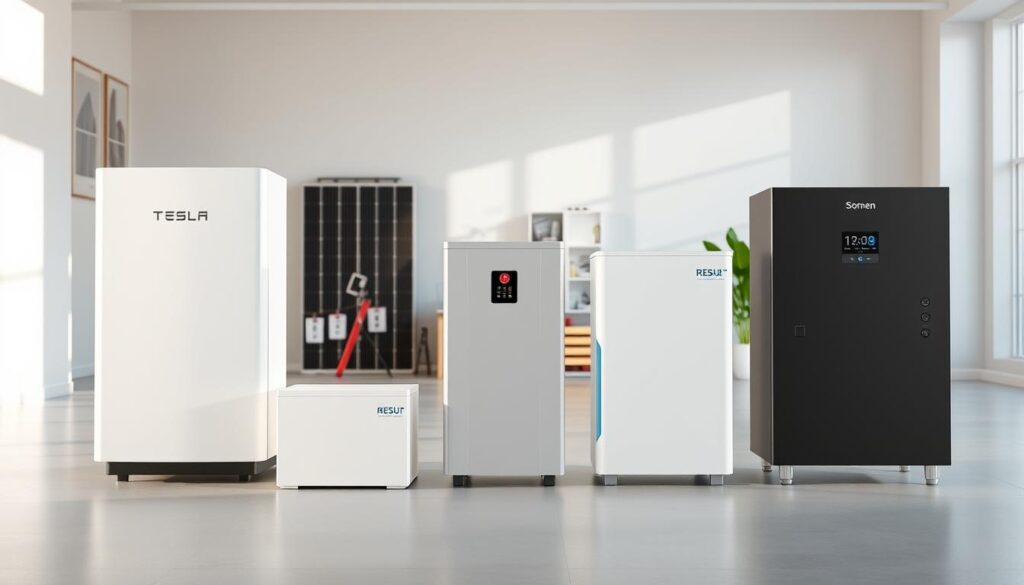
Exploring battery storage options? It’s key to know each one’s pros and cons. The right choice makes a big difference in your home’s energy use and performance. Let’s compare three top choices: Tesla Powerwall, LG Chem RESU, and Sonnen Eco. We’ll look at their features and benefits.
Tesla Powerwall: Features and Benefits
The Tesla Powerwall is a standout in battery storage for its features. It can store 13.5 kWh of energy, enough for a typical home. It looks great in contemporary homes too. You can manage it with a mobile app, track energy in real time, and it even works well with solar systems. Plus, it has a built-in inverter, saving you from buying extra parts.
LG Chem RESU: A Competitor’s Edge
LG Chem’s RESU is a top choice for many reasons. Its small size is perfect when space is tight. You can pick from different sizes to meet your energy needs. The tech inside is advanced, offering safety and efficiency. It’s also easy to add to solar power setups, making it a strong contender in the market.
Sonnen Eco: German Engineering in Battery Storage
The Sonnen Eco showcases top-notch German engineering, focusing on being green and efficient. It’s built to last, making it a great pick for those who care about the planet. You can even sell extra energy back to the grid, saving money and helping the environment. With its features, the Sonnen Eco is a smart choice in battery storage.
How a Battery Storage System Works with Solar Energy
Adding battery storage to solar power is a smart move. It lets you control your home’s energy use better. By saving the sun’s energy for later, you can enjoy many benefits. It’s crucial for homeowners today to know how to use solar power well and always have energy available.
Maximizing Solar Energy Usage
Battery storage catches extra energy the sun makes during the day. When it’s dark or cloudy, and the panels can’t make power, this saved energy comes into play. With a battery system, you use less from the grid and save on your energy costs. Using more solar energy makes your system more efficient.
Off-Peak Charging: Nighttime Benefits
Charging your battery during off-peak hours is smart. Utility companies often charge less during these times. This saves you money and gives you lots of power for when prices go up. It cuts down your energy bills and makes sure you have enough power during pricey times.
Backup Power During Outages
Having a battery system gives you peace of mind with a strong backup. If there’s an outage, your stored energy kicks in. You keep your important appliances running. This helps you stay comfortable and connected, even if the grid goes down. It makes your home’s energy use much better.
Installing Your Home Battery Storage System
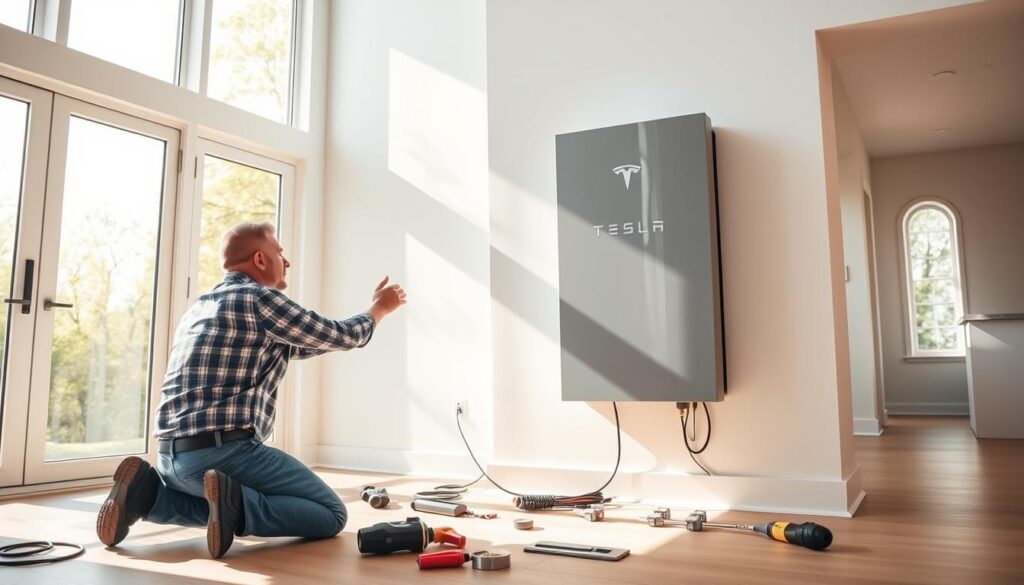
Starting the installation of a battery system in your home takes careful planning. You need to assess your daily energy use first. This step is key for choosing the right size of the system. Then, it’s important to find qualified installers. They make sure the installation meets local rules and standards.
Assessing Your Home’s Energy Needs
It’s crucial to figure out your energy needs before getting battery storage. You should look at your energy bills for the past year. Identify when you use the most energy and any trends of using more energy. This will help you pick a battery that fits your needs. In doing this, you’ll:
- Work out how much energy you use daily in kilowatt-hours (kWh).
- Find out which appliances use the most power.
- Think about how your energy use might grow with new upgrades.
Finding a Qualified Installer
After knowing your energy needs, you should look for skilled installers. Choose professionals who are certified and experienced. Make sure they understand the installation process and the local codes. A good installer will:
- Show you reviews from other customers.
- Check your site to understand your energy needs.
- Offer warranties and support after the installation.
Permits and Regulations to Consider
Getting battery storage often means dealing with permits and rules. These can be different depending on where you live. You usually need to:
- Look into your local building codes and safety standards.
- Apply for any permits you need before starting installation.
- Make sure your system meets fire and safety rules.
Keeping these things in mind helps ensure a smooth installation process.
Maintenance and Lifespan of Battery Storage Systems
Taking good care of your battery system is crucial for its long-term efficiency. Knowing how to keep up with maintenance can make your battery last longer. This part shares tips on maintenance, what to expect from your battery’s life, and when to think about getting a new one.
Routine Maintenance Tips
Follow these tips to keep your battery storage system working well:
- Regularly check connections for corrosion and tightness.
- Inspect cooling vents to ensure they are free of dust or debris.
- Monitor the battery’s charge cycles and depth of discharge.
- Keep the battery clean and free from moisture.
- Perform software updates as recommended by the manufacturer.
Understanding Battery Lifespan
Knowing how long your battery should last helps plan for the future. On average, home batteries last 10 to 15 years in ideal conditions. The lifespan can be affected by:
- Temperature fluctuations
- Charging frequency
- Depth of discharge and overall usage
Watching these factors can tell you how well your battery is doing.
When to Replace Your System
It’s important to know when it’s time for a new battery to keep things efficient. You might need a replacement if you notice:
- Significant decrease in storage capacity
- Frequent charging errors or issues
- Bulges or leaks in the battery casing
- Inability to hold a charge effectively
Financing Options for Battery Storage Systems
Investing in battery storage solutions can change your energy management. It’s vital to know the different financing options. This knowledge helps homeowners to choose wisely. They look at loans, leasing, buying, and using home equity for buying battery systems.
Loans and Financing Plans
Many banks offer loans for battery storage financing. These loans have good interest rates and repayment terms for homeowners. Some of the best plans include:
- Low-interest personal loans
- Home equity loans with favorable terms
- Energy-efficient home improvement loans
Exploring all options helps you pick the right plan for your budget. Search for banks that value renewable energy investments.
Leasing vs. Buying
Your choice between leasing and buying affects your wallet. Leasing has lower upfront costs and makes it easier to upgrade. But, you won’t own the system, missing some tax benefits. Buying means you own it, cutting electricity bills right away. Think about these points when deciding.
| Aspect | Leasing | Buying |
|---|---|---|
| Initial Costs | Lower | Higher |
| Ownership | No | Yes |
| Tax Benefits | Limited | Available |
| Upgrades | More flexible | Less flexible |
Utilizing Home Equity for Investment
Your home equity is a great way to finance battery storage. You can use this equity wisely. Options include:
- Home equity line of credit (HELOC)
- Cash-out refinancing
- Home equity loans
Look at your home’s value and what you owe to figure your equity. This method can fund your battery storage investment, making your home more efficient and green.

Real-Life Financial Returns on Battery Storage
For homeowners thinking about battery storage, knowing the financial side is key. Looking at real-life cases can show you the actual gains people have made. These stories show many ways battery storage has changed their expenses and payback times.
Case Studies of Homeowners
One family’s story with Tesla Powerwalls stands out. A homeowner in California saved more than $1,200 a year on electricity. This big save shows the benefit of using stored power when electricity is priciest.
Financial Profiles of Battery Users
Different people find battery storage useful for various reasons. Take a Texas couple with a LG Chem battery. They managed to start saving money after six years. They aimed for lower bills and more independence. Their story shows what drives people to choose battery storage.
Analyzing Return on Investment (ROI)
Looking into the ROI of battery systems offers promising insights. Government perks often add to the financial pluses. One study found an average return of 15-20% over a decade. This data suggests that battery systems can be both money-wise and green in the long run.
The Future of Battery Storage Technology
Battery storage technology is changing fast. This is because people want it and the environment needs it. The future is bright for battery tech. It will change how homeowners use energy storage solutions. Energy storage innovations are leading us to a more sustainable and efficient future. This will greatly shape battery storage trends.
Trends and Innovations
Looking forward, several trends are clear in battery tech. Solid-state batteries are safer, last longer, and pack more power than current lithium-ion ones. This means electric vehicles and home systems could have smaller, more powerful batteries. Using artificial intelligence in batteries will lead to smarter use of energy and better maintenance.
Predictions for the Next 5-10 Years
Experts expect big growth in energy storage soon. In the next five to ten years, batteries will get cheaper. This is thanks to new tech and more competition. We’ll also see better recycling, making battery production sustainable. Plus, more laws supporting green energy will lead to more home battery systems. This is due to better incentives.
Implications for Homeowners
For homeowners, this progress is exciting. As battery tech gets better, managing energy at home will be easier. This means saving more on electricity bills. Better battery systems also mean less dependence on outside energy sources. This move towards better energy solutions shows why it’s important to keep up with battery storage trends. It helps you make smart decisions for your home’s energy needs.
Potential Challenges and Considerations
Battery storage systems have big benefits for homeowners. But, there are challenges and things to think about. Knowing these can help you make smart choices about adding these systems to your home.
We will talk about common myths, key risks, and concerns about how well they work that you need to know.
Common Misconceptions About Battery Storage
Some think battery storage is only for homes with lots of solar panels. This ignores the benefits for those without solar power. Another myth is all battery systems work the same. Yet, the type, brand, and size can greatly change how well they perform.
Risks and Limitations to Evaluate
There are certain risks with battery storage. For example, how long a battery lasts can differ. Some may only work a few years, while others last much longer. Also, temperature and how you use it can change its efficiency and effectiveness. Knowing these risks helps you understand what to expect.
Addressing Concerns About Efficiency
Many are concerned about how efficient these systems are. They worry about losing energy when charging or discharging batteries. Choosing a system means looking at efficiency ratings. Knowing this helps you pick a high-performance model to get the most out of your investment.
Making the Decision: Is Battery Storage Right for You?
Thinking about adding a battery storage system to your home takes some thought. First, see how much energy your home uses. This helps figure out how big a storage system you need to save money and use energy wisely.
Then, look at what it costs to get and keep a battery system running. Factor in the price to buy it, maintain it, and how it might lower your electricity bills. Understanding these costs can help you decide if it’s the right choice financially.
Lastly, tapping into community resources can offer big help. Talk to local energy groups or attend workshops. They can share stories and advice from people nearby who have gone the same route. This support can help you understand your options and connect with folks who can help.