

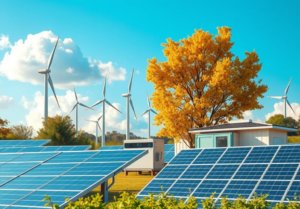
Remarkably, 74% of U.S. communities are now exploring affordable community microgrids as a revolutionary approach to local power generation. These innovative energy systems are transforming how neighborhoods approach electricity production and consumption.
Community energy systems represent a groundbreaking shift in power infrastructure. By leveraging cutting-edge technologies like solar photovoltaics, advanced battery storage, and smart grid controls, local power generation is becoming increasingly accessible and economically viable for communities across the United States.
The convergence of renewable energy technologies, declining equipment costs, and flexible financing models is democratizing energy production. Small towns, urban neighborhoods, and rural communities can now develop robust, resilient energy networks that reduce electricity expenses and increase grid independence.
Affordable community microgrids are not just a theoretical concept but a practical solution addressing rising energy costs and reliability challenges. Innovative technologies are enabling communities to take control of their energy future, creating more sustainable and economically efficient local power ecosystems.
This article explores the breakthrough technologies, financing strategies, and policy developments that are making community-scale energy independence a reality for diverse populations nationwide.
Understanding Community Microgrids and Their Growing Importance
Community microgrids represent a transformative approach to energy production and distribution. These innovative systems are reshaping how local communities think about power generation, providing a robust solution to traditional grid limitations. Microgrid technology enables neighborhoods to create resilient, flexible energy networks that can operate independently or connect to the main electrical grid.
Local energy solutions are gaining significant traction as communities seek greater control over their distributed energy resources. The traditional centralized power grid is increasingly vulnerable to disruptions, making community microgrids an attractive alternative for ensuring energy resilience.
What Defines a Community Microgrid
A community microgrid is more than just a local power system. Key characteristics include:
- Ability to serve multiple customers within a specific geographic area
- Integration of multiple energy generation sources
- Advanced control systems for efficient energy management
- Capacity to disconnect from the main grid during emergencies
The Rising Demand for Local Energy Solutions
Several critical factors are driving the increased interest in community microgrids:
- Increasing frequency of climate-related grid failures
- Rising electricity costs in traditional energy markets
- Growing environmental consciousness
- Desire for energy independence and security
The shift towards local energy solutions reflects a broader trend of communities taking proactive approaches to energy infrastructure. By investing in microgrid technology, neighborhoods can create more reliable, sustainable, and cost-effective power systems that meet their unique energy needs.
Solar Photovoltaic Systems as the Foundation of Affordable Community Microgrids
Solar photovoltaic systems have emerged as a critical component of renewable energy solutions for community microgrids. The dramatic cost reductions in solar technology over the past decade have transformed clean energy technology, making solar installations increasingly accessible and economically viable for local communities.
Community-scale solar microgrids offer unique advantages that set them apart from traditional energy infrastructure. The modular nature of solar panels allows for flexible implementation, enabling communities to scale their energy production incrementally as budgets permit.
- Optimal system sizes range from 100 kW to several megawatts
- Panels can be installed on ground-mount, carport, or rooftop arrays
- Typical lifespan exceeds 25 years with minimal maintenance
The economic benefits of community solar microgrids are substantial. By leveraging bulk purchasing and shared infrastructure, these projects can achieve significantly lower per-watt pricing compared to individual residential installations. Strategic panel orientation and advanced mounting systems further enhance overall energy generation efficiency.
Communities can reduce implementation costs through collaborative approaches, including shared permitting processes and collective investment strategies. This collaborative model transforms solar energy from an individual investment to a community-powered renewable energy solution.
Battery Energy Storage Solutions That Won’t Break the Bank
Community microgrids demand smart energy storage systems that balance performance and affordability. The heart of grid independence lies in selecting the right battery technology that meets both technical and economic requirements.
Modern battery technologies have revolutionized how communities approach energy storage. The landscape of battery technology continues to evolve, offering increasingly cost-effective solutions for local energy networks.
Lithium-Ion vs. Alternative Battery Technologies
Lithium-ion batteries remain the dominant force in energy storage systems, but emerging alternatives are challenging their supremacy:
- Lithium-ion: High energy density, proven performance
- Flow batteries: Longer lifecycle, scalable storage
- Sodium-ion: Lower cost, abundant materials
- Repurposed EV batteries: Sustainable, budget-friendly option
| Battery Type | Cost per kWh | Lifecycle | Best Use Case |
|---|---|---|---|
| Lithium-Ion | $250-$300 | 10-15 years | High-density urban areas |
| Flow Batteries | $180-$250 | 15-20 years | Large-scale storage |
| Sodium-Ion | $150-$200 | 8-12 years | Rural community grids |
Right-Sizing Storage for Community Needs
Effective grid independence requires strategic storage capacity planning. Communities must analyze their specific energy consumption patterns to avoid overinvestment.
“The key is not just storing energy, but storing the right amount of energy efficiently.” – Energy Storage Expert
Considerations for sizing energy storage systems include:
- Peak energy consumption periods
- Local renewable energy generation
- Resilience and backup power requirements
- Budget constraints
Smart communities are discovering that tailored battery solutions can dramatically reduce energy costs while maintaining reliable power infrastructure.
Wind Turbines Scaled for Community Applications
Wind energy emerges as a powerful component of renewable microgrids, offering communities an alternative sustainable energy generation method. Small-scale wind turbines have become increasingly attractive for distributed generation strategies, particularly in regions with consistent wind resources.
Communities considering wind power must evaluate several critical factors for successful implementation:
- Wind speed requirements (minimum 10 mph annual average)
- Local zoning regulations
- Noise considerations
- Land availability
- Installation and maintenance costs
Turbine technologies range from horizontal-axis to vertical-axis designs, each offering unique advantages for different community environments. Typical community wind turbines generate between 10 to 500 kilowatts, making them ideal for local sustainable energy needs.
| Turbine Type | Power Output | Best Use Scenario |
|---|---|---|
| Horizontal-Axis | 10-250 kW | Open rural landscapes |
| Vertical-Axis | 1-50 kW | Urban and restricted spaces |
Innovative approaches like community wind farms on agricultural land demonstrate the potential for dual-purpose renewable infrastructure. These projects not only generate clean energy but also provide additional income streams for local landowners.
Wind energy complements solar production by generating electricity during evening hours and winter months, reducing overall battery storage requirements.
Smart Grid Controls and Energy Management Systems
Smart energy systems have revolutionized how community microgrids operate, transforming complex energy management into an accessible and affordable solution. Modern energy management software provides sophisticated control mechanisms that were once prohibitively expensive for local communities.
The technological landscape of microgrid components has dramatically changed, offering powerful tools that enable precise energy monitoring and optimization. Communities can now leverage advanced control systems without massive financial investments.
Open-Source Software Platforms
Open-source energy management software has emerged as a game-changing approach for community microgrids. These platforms deliver critical functionality at minimal cost:
- Generation forecasting capabilities
- Demand prediction algorithms
- Automated switching mechanisms
- Renewable energy optimization strategies
Platforms like GridLAB-D and OpenEMS provide robust solutions that require primarily technical expertise rather than substantial financial resources. Communities can now implement sophisticated energy management systems with limited budgets.
Real-Time Monitoring and Load Balancing
Advanced smart energy systems now offer unprecedented visibility into microgrid performance. Web dashboards and mobile applications enable real-time tracking of:
- Current energy generation
- Consumption patterns
- Battery storage levels
- Individual household usage
Load balancing strategies have become increasingly sophisticated, allowing automated demand response that can temporarily reduce non-essential loads during peak periods. This approach maximizes system capacity without requiring additional hardware investments.
Combined Heat and Power Systems for Enhanced Efficiency
Community microgrids are transforming energy efficiency through innovative combined heat and power (CHP) systems. These advanced technologies simultaneously generate electricity and capture waste heat, dramatically improving power reliability and reducing overall energy consumption.
CHP systems offer remarkable benefits for local energy infrastructure:
- Achieve up to 80% total energy efficiency
- Reduce greenhouse gas emissions
- Provide dispatchable generation for community needs
- Lower infrastructure and operational costs
Different CHP technologies suit various community scales. Natural gas reciprocating engines work well for smaller applications, typically ranging from 100 kW to 1 MW. Microturbines between 30-250 kW provide flexible solutions for medium-sized communities. Emerging fuel cell technologies promise even greater efficiency and potential for renewable fuel integration.
Communities can strategically implement cogeneration systems to complement intermittent renewable sources like solar and wind. By capturing waste heat for space warming, water heating, or industrial processes, these systems maximize energy efficiency and create resilient local power networks.
Future CHP implementations will likely transition toward renewable fuels such as:
- Hydrogen
- Renewable natural gas
- Biogas from agricultural waste
With typical lifespans of 15-20 years for engines and over 20 years for fuel cells, CHP represents a sustainable long-term investment in community energy infrastructure.
Financing Models That Make Community Microgrids Accessible
Breaking down financial barriers has become crucial in expanding community microgrid adoption. Innovative financing strategies now enable communities to overcome traditional investment challenges, making sustainable energy more attainable than ever before.
Community Solar Gardens and Shared Ownership
Community solar gardens represent a revolutionary approach to microgrid financing. These collaborative models allow multiple participants to invest in shared solar infrastructure without installing personal equipment. Key benefits include:
- Reduced upfront capital requirements
- Flexible investment levels
- Direct energy cost savings
- No individual property modifications needed
“Shared ownership transforms renewable energy from an individual expense to a community investment.” – Renewable Energy Experts
Power Purchase Agreements and Lease Options
Power Purchase Agreements (PPAs) have emerged as a game-changing microgrid financing strategy. These contracts allow third-party developers to finance, construct, and maintain energy infrastructure while selling electricity directly to communities at predictable rates.
Lease options provide additional flexibility, converting substantial capital expenses into manageable operational costs. Typical lease structures span 10-20 years, enabling communities to access cutting-edge energy technologies without significant upfront investments.
Financial innovation is driving community solar adoption, making sustainable energy more accessible than ever before.
Federal and State Incentives Reducing Implementation Costs
Community microgrids are becoming increasingly affordable thanks to robust federal and state renewable energy incentives. The Inflation Reduction Act of 2022 has transformed the landscape of energy policy, providing substantial financial support for microgrid development.
Key federal renewable energy incentives include:
- Investment Tax Credit (ITC) offering 30% credit for solar energy systems
- Department of Energy microgrid pilot programs
- USDA Rural Energy for America Program (REAP) grants
- Department of Defense resilience funding
State-level tax credits and energy policy initiatives further reduce implementation costs. Leading states like California, New York, and Massachusetts offer unique programs to support community microgrid development:
- California’s Self-Generation Incentive Program
- New York’s NY-Prize competition
- Massachusetts’ SMART solar incentive program
Strategic planning can help communities stack multiple incentives, dramatically reducing overall project expenses. Working with experienced developers who understand the complex landscape of renewable energy incentives can maximize financial benefits and accelerate microgrid implementation.
Strategic incentive optimization can transform microgrid projects from financially challenging to economically viable.
Careful navigation of federal and state tax credits creates unprecedented opportunities for community energy independence, making sustainable local power systems more accessible than ever before.
Case Studies of Successful Low-Cost Community Microgrids
Community power initiatives are transforming how neighborhoods approach energy infrastructure. Microgrid implementation has emerged as a powerful strategy for creating resilient, sustainable energy systems across diverse geographic regions.
Real-world examples demonstrate the potential of neighborhood energy solutions to revolutionize local power generation and distribution.
Rural Communities Pioneering Energy Innovation
Rural communities have become trailblazers in microgrid development. The Borrego Springs project in California showcases how remote areas can overcome traditional energy limitations:
- Solar generation integrated with battery storage
- Serving approximately 2,500 residents
- Ability to island during utility outages
Urban Neighborhoods Achieving Energy Independence
Urban areas are equally innovative in developing community power solutions. Brooklyn’s collaborative microgrid projects illustrate how dense neighborhoods can create shared energy networks.
| Location | Microgrid Type | Key Benefits |
|---|---|---|
| Borrego Springs, CA | Rural Solar-Battery | Reliability, Cost Reduction |
| Brooklyn, NY | Urban Shared Solar | Community Resilience, Energy Sharing |
These case studies prove that microgrid implementation can successfully address energy challenges across different community contexts, offering a scalable solution for sustainable local power generation.
Overcoming Technical and Regulatory Barriers
Community microgrids face significant challenges in utility interconnection and regulatory compliance. The energy infrastructure landscape presents complex barriers that require strategic navigation and innovative solutions.
Key obstacles for microgrid implementation include:
- Restrictive utility interconnection policies
- Complex regulatory frameworks
- Technical coordination requirements
- Cybersecurity concerns
Utility companies often view community microgrids as potential competitive threats. They may impose extensive approval processes or create financial barriers that discourage microgrid development. Successful strategies involve demonstrating clear microgrid benefits to local utilities and regulatory bodies.
“The future of energy infrastructure depends on collaborative approaches between communities and utility providers.” – Clean Energy Expert
Technical challenges require sophisticated solutions. Modern inverter technologies and advanced control systems have significantly improved microgrid reliability and grid integration capabilities. Communities can address these challenges by:
- Partnering with technical colleges
- Developing specialized workforce training programs
- Engaging proactively with state regulators
- Proposing pilot programs to demonstrate microgrid effectiveness
Cybersecurity remains a critical consideration in utility interconnection. Implementing robust protection mechanisms and following industry best practices can mitigate potential risks associated with distributed energy resources.
State-level policy changes are gradually creating more supportive environments for community microgrids. Progressive regulations are recognizing the resilience and clean energy potential of distributed generation systems.
Future Innovations Driving Down Microgrid Costs
The landscape of energy democratization is rapidly evolving, with breakthrough technologies promising to revolutionize community microgrids. Emerging innovations are set to dramatically reduce costs and enhance the capabilities of local energy systems.
Cutting-Edge Technologies Reshaping Energy Landscapes
Several groundbreaking technologies are poised to transform smart grid technology and advanced energy storage:
- Perovskite Solar Cells: Next-generation solar technology offering higher efficiency at lower manufacturing costs
- Solid-state batteries with improved energy density and longer lifespans
- Green hydrogen storage systems for seasonal energy management
- Vehicle-to-grid technologies enabling electric vehicles as distributed energy resources
Artificial Intelligence: The Game-Changer in Energy Management
Artificial intelligence is becoming a critical tool in optimizing microgrid performance. AI algorithms now provide unprecedented capabilities in energy prediction and system management:
- Precise energy generation and consumption forecasting
- Automated battery cycle optimization
- Predictive maintenance for infrastructure
- Real-time economic and environmental performance optimization
These technological advances are creating more resilient, cost-effective, and intelligent community energy systems. The future of microgrids looks increasingly accessible and sustainable.
Conclusion
Affordable community microgrids represent a transformative approach to energy infrastructure in the United States. These innovative systems are no longer theoretical concepts but practical solutions that enable communities to take control of their energy production and distribution. By integrating solar photovoltaic technologies, smart grid controls, and creative financing models, local regions can build resilient energy networks that reduce costs and environmental impact.
The energy transition is gaining momentum through community-driven initiatives that prioritize local power generation. Municipalities from rural landscapes to urban centers are discovering that community resilience extends beyond emergency preparedness—it encompasses economic sustainability and environmental stewardship. Small-scale microgrid projects demonstrate that collaborative energy solutions can create meaningful local economic opportunities while reducing dependence on traditional utility structures.
Technological advancements and supportive policy frameworks are making affordable community microgrids increasingly accessible. Communities interested in pursuing these energy solutions should begin by conducting comprehensive energy assessments, forming dedicated energy committees, and exploring available federal and state incentives. The future of energy is decentralized, collaborative, and community-powered—a vision that promises greater control, efficiency, and sustainability for American communities.
As the energy landscape continues to evolve, community microgrids stand as a beacon of innovation, proving that localized, strategic approaches can drive meaningful transformation in how we generate, distribute, and consume electricity.
FAQ
What exactly is a community microgrid?
A community microgrid is a localized energy network that can generate, distribute, and manage electricity for multiple customers within a defined geographic area. Unlike individual home systems, it can operate independently or in conjunction with the main power grid, with the ability to disconnect (or “island”) during broader grid outages to maintain local power supply.
How much do community microgrids typically cost?
Community microgrid costs vary widely, ranging from $300,000 to $5 million depending on size, technology mix, and local conditions. Typical systems serving 50-200 households might cost between $1-3 million, with per-household costs significantly lower than individual residential renewable energy installations due to economies of scale.
What renewable energy technologies work best for community microgrids?
Solar photovoltaic (PV) systems are typically the foundation, often complemented by battery storage and potentially small wind turbines or combined heat and power (CHP) systems. The ideal technology mix depends on local solar exposure, wind resources, community energy consumption patterns, and available incentives.
Can community microgrids save money for participants?
Yes, community microgrids can provide significant cost savings through reduced electricity rates, protection against utility price increases, and leveraging group purchasing and shared infrastructure. Many communities see 10-30% long-term energy cost reductions compared to traditional utility services.
What government incentives are available for community microgrid projects?
Multiple incentives exist, including the federal Investment Tax Credit (offering up to 30% tax credit), Department of Energy grants, state-level renewable energy programs, and local initiatives. The Inflation Reduction Act has significantly expanded financial support for community energy projects.
How reliable are community microgrids during power outages?
Community microgrids are designed for high reliability, with the ability to disconnect from the main grid and continue providing power to local participants. Depending on generation and storage capacity, they can maintain electricity for critical services for 2-72 hours during broader grid failures.
What technical expertise is required to develop a community microgrid?
While complex, communities can successfully develop microgrids by partnering with experienced renewable energy developers, engaging local technical experts, and leveraging open-source control platforms. Many communities start by forming dedicated energy committees and conducting feasibility studies.
Are community microgrids environmentally friendly?
Absolutely. Community microgrids typically integrate renewable energy sources like solar and wind, significantly reducing carbon emissions compared to traditional fossil fuel-based electricity generation. They also promote local clean energy production and can accelerate the transition to sustainable energy systems.
How long does it take to implement a community microgrid?
Implementation timelines vary but typically range from 18-36 months, including feasibility studies, design, financing, permitting, construction, and commissioning. Smaller, less complex projects might be completed in 12-18 months, while larger or more intricate systems could take longer.
Can renters and apartment dwellers participate in community microgrids?
Yes, through innovative models like community solar gardens and shared ownership structures. These approaches allow residents who can’t install individual solar systems to purchase or subscribe to a portion of a shared renewable energy project, receiving credits on their utility bills.