
American households spend an average of $2,200 annually on energy costs, with many homeowners unaware they could slash these expenses by up to 40% through strategic smart energy upgrades. The era of expensive home improvements is over – today’s energy-efficient home upgrades offer rapid payback and substantial long-term savings.
Smart energy upgrades represent a revolutionary approach to home efficiency. By targeting specific systems and technologies, homeowners can dramatically reduce utility bills while enhancing overall home comfort. These upgrades are not just about saving money – they’re about creating a more sustainable, technologically advanced living environment.
The Department of Energy confirms that targeted home energy savings strategies can transform how families consume and manage electricity. From simple LED replacements to comprehensive energy system overhauls, there are solutions for every budget and home type.
This guide will walk you through the most impactful energy-efficient home upgrades, revealing which investments deliver the fastest returns and how to maximize your home’s energy performance. Whether you’re a budget-conscious homeowner or an environmental enthusiast, these smart energy upgrades offer a win-win solution for your wallet and the planet.
Why Energy Efficiency Matters More Than Ever for American Homeowners
American homeowners are facing unprecedented challenges in managing household expenses. The drive to reduce utility bills has become more critical than ever as energy costs continue to climb across the United States. Sustainable home improvements are no longer just an environmental choice but a financial necessity.
Rising Energy Costs Across the United States
Energy cost reduction has become a top priority for families nationwide. Recent data reveals a dramatic surge in utility expenses:
- Electricity rates have increased by 15% in the past five years
- Natural gas prices fluctuate dramatically, impacting home heating costs
- Extreme weather events drive infrastructure upgrades and pricing
The Northeast and California experience the most significant price increases, with average monthly bills jumping substantially compared to Midwestern states. Homeowners are feeling the pinch of these escalating costs.
Environmental Impact and Home Value Benefits
Beyond financial savings, energy-efficient homes offer substantial benefits. Residential energy consumption contributes significantly to carbon emissions, making individual actions crucial in combating climate change.
Homeowners who invest in energy improvements can expect:
- 2-7% increase in property value
- Faster home sales with energy-efficient certifications
- Reduced carbon footprint
- Lower long-term utility expenses
Sustainable living is no longer a choice—it’s a responsibility that pays dividends both financially and environmentally.
Understanding Your Home’s Energy Consumption Patterns
Uncovering the secrets of your home’s energy usage is the first critical step toward meaningful power consumption reduction. Most homeowners are unaware that their energy spending can be dramatically optimized through a strategic home energy audit.
Typical energy consumption across American homes reveals fascinating insights:
- Heating and Cooling: 45-50% of total energy use
- Water Heating: 18-20%
- Appliances: 15-20%
- Lighting: 10-12%
- Electronics: 5-8%
Professional energy efficiency improvements start with a comprehensive home energy audit. Certified auditors use advanced techniques like blower door tests and thermal imaging to pinpoint exact areas of energy waste. These assessments typically cost between $300-$500 but can potentially save homeowners $500-$1,500 annually.
For budget-conscious homeowners, DIY assessment methods can provide valuable insights:
- Review 12 months of utility bills
- Conduct visual insulation inspections
- Check for drafts around windows and doors
- Use affordable thermal leak detectors
Many utility companies offer free or subsidized energy assessments, making it easier than ever to understand and optimize your home’s energy consumption. Knowledge is power – and in this case, it could mean significant financial savings.
LED Lighting: The Fastest Return on Investment
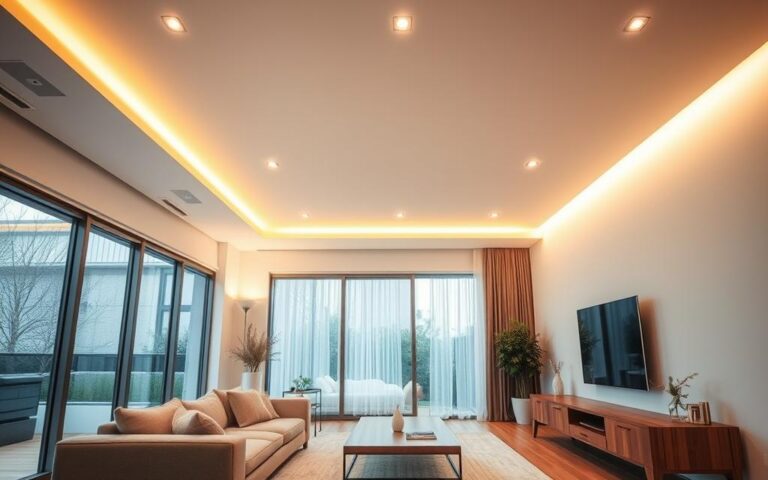
Transforming your home’s lighting is one of the most cost-effective energy solutions available to homeowners today. LED technology represents a revolutionary approach to reducing utility bill savings with minimal upfront investment.
Traditional incandescent bulbs are energy monsters, consuming significantly more electricity compared to modern LED alternatives. Switching to LED lighting can dramatically cut your home’s energy consumption while providing superior illumination.
Calculating Your Lighting Upgrade Savings
Let’s break down the potential savings for a typical household:
- Average home has 40 light bulbs
- Replace 60-watt incandescent bulbs with 10-watt LED equivalents
- Potential annual electricity savings: 540 kWh
- Estimated monetary savings: $65-$80 per year
- Initial investment: $80-$200 for entire home conversion
- Payback period: 1-3 years
Best LED Options for Different Rooms
Selecting the right LED bulbs depends on the room’s purpose and desired ambiance:
- Living Rooms/Bedrooms: Warm white (2700-3000K) for cozy atmosphere
- Kitchens/Bathrooms: Bright white (3500-4100K) for task lighting
- Workshops/Reading Areas: Daylight (5000-6500K) for clear, crisp illumination
Smart LED options now integrate with home automation systems, offering additional convenience and potential energy savings through intelligent scheduling and remote control.
Smart Thermostats That Pay for Themselves
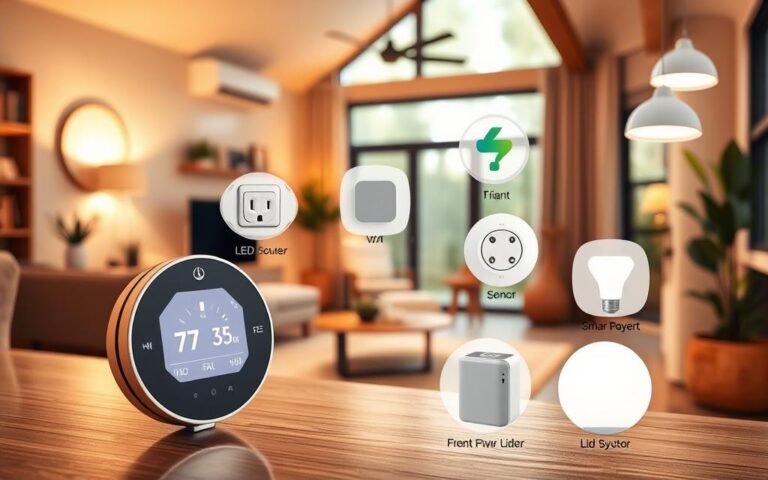
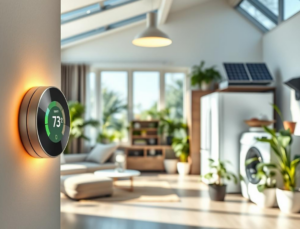
Smart home technology has revolutionized home comfort improvements, with smart thermostats leading the charge in HVAC efficiency. These intelligent devices are more than just temperature controllers—they’re energy-saving powerhouses that can dramatically reduce household energy consumption.
Modern smart thermostats like Nest Learning Thermostat and Ecobee SmartThermostat offer remarkable benefits:
- Automatic temperature adjustments based on home occupancy
- Remote control via smartphone apps
- Personalized energy usage reports
- Integration with other smart home devices
The EPA estimates that ENERGY STAR certified smart thermostats can save homeowners between $50-150 annually on heating and cooling expenses. With devices ranging from $120-250, most households recoup their investment within 1-3 years.
Installation is typically straightforward. Many homeowners can self-install these devices in less than an hour. Professional installation might be necessary for complex HVAC systems, which could add $100-200 to initial costs.
Key features that drive HVAC efficiency include:
- Geofencing technology that detects when residents are home or away
- Room sensors balancing temperatures across different zones
- Weather-responsive temperature adjustments
Utility companies often provide additional incentives, offering rebates of $50-100 to offset purchase costs. By embracing smart home technology, homeowners can simultaneously enhance comfort, reduce energy consumption, and save money.
Insulation Improvements That Stop Money From Escaping
Homeowners seeking to reduce energy costs can dramatically improve their home’s thermal efficiency through strategic home insulation upgrades. Inadequate insulation can lead to substantial energy waste, with heating and cooling losses accounting for up to 40% of household energy expenses.
Attic Insulation Priority Areas
The attic represents the most critical zone for weatherization improvements. Heat naturally rises, making attic insulation a key strategy for maintaining indoor temperature and reducing energy consumption. Proper insulation creates a protective barrier that prevents expensive heated air from escaping during winter and blocks summer heat from penetrating living spaces.
- Recommended R-value: R-38 to R-60 for most U.S. regions
- Insulation types:
- Fiberglass batts: DIY-friendly, $0.40-0.70 per square foot
- Blown-in cellulose: Excellent for irregular spaces, $0.60-1.00 per square foot
- Spray foam: Highest efficiency, $1.50-3.00 per square foot
Air Sealing Strategies for Maximum Efficiency
Insulation works best when combined with comprehensive air sealing. Identifying and addressing common leak points can significantly enhance your home’s energy performance.
- Key areas to seal:
- Attic hatches
- Recessed lighting fixtures
- Plumbing and electrical penetrations
- Rim joists
- Ductwork connections
DIY air sealing techniques using caulk and expanding foam can cost less than $100 for whole-home treatment. Many utility companies offer rebates for professional insulation and air sealing upgrades, making these improvements even more financially attractive.
Pro Tip: A well-insulated and sealed home can save homeowners up to 15% on annual energy costs.
High-Efficiency Water Heaters and Instant Savings
Water heating represents a significant portion of home energy expenses. Traditional water heaters constantly maintain hot water, leading to substantial energy waste. An energy retrofit can transform your home’s water heating efficiency with modern solutions.
Several innovative energy-saving appliances are revolutionizing water heating technology:
- Tankless water heaters
- Heat pump water heaters
- Solar water heating systems
Tankless water heaters provide remarkable benefits. They heat water on-demand, reducing energy consumption by 24-34% for smaller households. These systems typically cost between $1,500-$3,500 installed but can last over 20 years.
| Water Heater Type | Average Installation Cost | Annual Energy Savings |
|---|---|---|
| Conventional Electric | $800-$1,500 | Standard |
| Heat Pump Water Heater | $1,200-$2,500 | $300-$400 |
| Tankless Gas | $1,500-$3,500 | $100-$200 |
Heat pump water heaters offer exceptional efficiency, operating 2-3 times more effectively than standard electric models. These systems transfer heat instead of generating it, dramatically reducing electricity consumption.
Homeowners can maximize water heating efficiency through simple strategies:
- Lower temperature settings to 120°F
- Insulate hot water pipes
- Install low-flow showerheads
- Promptly repair leaks
Federal tax credits up to $2,000 and utility company rebates can significantly offset initial investment costs for high-efficiency water heaters, making energy-saving upgrades more accessible than ever.
Smart Energy Upgrades: Combining Technologies for Maximum Impact
Homeowners seeking to maximize their renewable energy options and green home upgrades are discovering the power of integrated energy systems. Creating a holistic approach to home energy efficiency can dramatically reduce utility costs and environmental impact.
An integrated home energy system transforms individual upgrades into a comprehensive strategy that delivers exponential savings. This approach goes beyond simple replacements by connecting multiple technologies to work seamlessly together.
Building a Comprehensive Home Energy Strategy
Successful green home upgrades follow a strategic phased approach:
- Phase 1 (Immediate Improvements)LED lighting conversion
- Smart thermostat installation
- Basic air sealing
- Water heater optimization
- Phase 2 (Medium-Term Investments)Enhanced insulation upgrades
- ENERGY STAR appliance replacements
- Window treatments
- Phase 3 (Long-Term Transformations)Complete window replacements
- High-efficiency HVAC systems
- Solar panel installations
Modern home energy management platforms like Google Home and Amazon Alexa enable centralized monitoring and control. These systems track energy consumption, providing real-time insights that help homeowners make smarter decisions about their renewable energy options.
Integrated energy approaches can achieve 30-50% energy reductions, far surpassing isolated improvements.
By thinking systematically about green home upgrades, homeowners can create more efficient, comfortable, and sustainable living spaces while significantly reducing their energy expenses.
Window Upgrades Without Breaking the Bank
Windows play a crucial role in your home’s thermal efficiency, accounting for 25-30% of heating and cooling costs. Smart homeowners can implement cost-effective energy solutions without spending thousands on full window replacements.
Budget-friendly window improvement strategies can dramatically reduce energy waste. These approaches provide significant savings while protecting your wallet:
- Weatherstripping and caulking to seal air leaks
- Installing cellular shades for added insulation
- Applying reflective window film
- Using interior storm windows
The most affordable upgrades start at just $100 and can deliver immediate benefits. Weatherstripping alone can reduce heating and cooling expenses by 10-20%. Cellular shades provide an R-2 to R-5 insulation value, creating an additional barrier against temperature fluctuations.
For homeowners seeking more comprehensive solutions, mid-tier options like interior storm windows can improve thermal efficiency by 45-65% at a fraction of replacement costs. These upgrades typically pay for themselves within 5-8 years, making them an intelligent investment in your home’s energy performance.
Climate considerations are key when selecting window improvements. Northern regions benefit from heat-retaining treatments, while southern areas need solutions that block solar heat gain. By choosing targeted, cost-effective energy solutions, homeowners can optimize their window efficiency without breaking the bank.
Energy-Efficient Appliances Worth the Investment
Upgrading to energy-saving appliances can significantly reduce household energy consumption and utility costs. Appliances typically account for 13% of home energy expenses, making smart replacements a crucial strategy for budget-conscious homeowners.
ENERGY STAR Ratings Explained
The ENERGY STAR certification program, administered by the EPA and Department of Energy, provides a reliable guide for identifying the most efficient appliances. These energy-saving appliances meet strict efficiency standards, typically consuming 10-50% less energy than standard models.
- Refrigerators: ENERGY STAR models use 9-10% less energy with improved insulation
- Clothes Washers: 25% less energy and 33% less water consumption
- Dishwashers: 12% less energy and 30% less water usage
- Dryers: Heat pump technology reduces energy consumption by 28%
Rebates and Tax Credits Available in 2024
Homeowners can maximize savings through various financial incentives for energy-efficient appliance purchases. The Inflation Reduction Act offers substantial tax credits and rebates to offset upgrade costs.
| Appliance Type | Tax Credit | Utility Rebate |
|---|---|---|
| Heat Pump Dryer | Up to $2,000 | $50-$200 |
| ENERGY STAR Refrigerator | Up to $500 | $75-$150 |
Strategic timing of purchases during holiday sales, Earth Day promotions, and utility company events can further reduce costs. A typical ENERGY STAR refrigerator replacement can save $60-80 annually, paying for its premium price within 4-5 years.
Solar Solutions for Every Budget

Solar energy has transformed from a luxury to an accessible renewable energy option for homeowners across the United States. With technological advances and decreasing installation costs, sustainable home improvements through solar power are now more achievable than ever.
Homeowners can explore solar solutions across different budget ranges:
- Entry-Level Options ($100-$1,000)Portable solar chargers
- Solar-powered outdoor lighting
- Solar security cameras
- Solar attic fans
- Mid-Range Solutions ($1,000-$5,000)Solar water heating systems
- Partial solar electric systems (1-2 kW)
- Comprehensive Systems ($15,000-$35,000)Full rooftop solar installations
- Complete home electricity generation
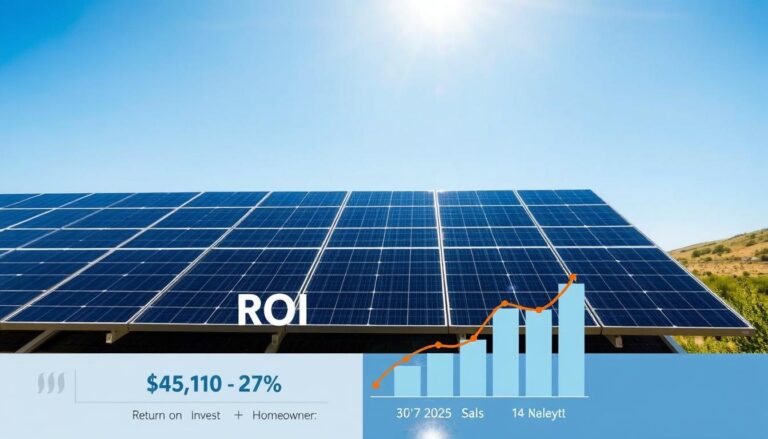
Energy cost reduction becomes significant with solar investments. The federal Investment Tax Credit offers a 30% tax credit through 2032, dramatically lowering installation expenses. Most residential systems pay for themselves within 6-12 years, providing free electricity for 25-30 years afterward.
Financing options include cash purchases, solar loans, leases, and power purchase agreements. For those with unsuitable roofs, community solar programs offer alternative participation in renewable energy initiatives.
Solar technology continues to evolve, making sustainable home improvements more accessible and affordable for American homeowners.
Conclusion
Transforming your home’s energy efficiency is not just a dream—it’s an achievable goal that delivers real financial benefits. Smart energy upgrades represent a strategic approach to reducing utility bill savings while enhancing your living space’s comfort and value. From quick LED lighting replacements to comprehensive solar installations, homeowners have multiple pathways to create meaningful energy improvements.
The journey toward home energy savings begins with understanding your unique energy consumption patterns. Each upgrade, whether a smart thermostat or improved insulation, contributes to a comprehensive strategy of reducing energy waste. The current landscape of federal tax credits and utility rebates makes 2024 an ideal time to invest in smart energy upgrades that pay dividends both financially and environmentally.
Strategic implementation is key. Start with low-cost, high-impact projects like LED bulb replacements or programmable thermostats. These initial steps not only generate immediate savings but also build momentum for more comprehensive home energy efficiency projects. By approaching upgrades systematically, homeowners can create a sustainable improvement plan that fits their budget and long-term goals.
Your home’s energy efficiency journey is personal and progressive. No single upgrade solves everything, but each step matters. Whether you’re motivated by cost savings, environmental responsibility, or improved home comfort, smart energy upgrades offer a pathway to a more efficient, sustainable living environment. Take that first step today—your future self will appreciate the investment.
FAQ
How quickly can I expect to see savings from energy upgrades?
Energy upgrades offer varying return on investment timelines. LED lighting and smart thermostats typically provide the fastest savings, paying for themselves within 1-3 years. Insulation and air sealing improvements can deliver savings within 3-6 years, while more comprehensive upgrades like solar installations may take 8-20 years to fully recoup initial costs.
Are there financial incentives available for home energy upgrades?
Yes! The Inflation Reduction Act provides significant tax credits, including up to $2,000 for heat pump water heaters, 30% tax credit for solar installations, and various rebates for energy-efficient appliances and home improvements. Many utility companies also offer additional local rebates and incentives to offset upgrade costs.
Do I need to replace all my appliances at once to see energy savings?
No, you can strategically upgrade appliances over time. Focus on replacing older, less efficient models (particularly those manufactured before 2000) when they’re near the end of their lifespan. ENERGY STAR certified appliances can provide significant energy savings, with refrigerators, washers, and dishwashers offering the most immediate impact.
How do I know which energy upgrades are best for my home?
A professional home energy audit is the most comprehensive way to identify your home’s specific energy inefficiencies. These audits typically cost $300-500 and can help you pinpoint exactly where you’re losing energy and which upgrades will deliver the most significant savings for your specific home.
Can renters benefit from energy efficiency improvements?
Absolutely! Renters can implement many low-cost, non-permanent upgrades like LED bulbs, smart power strips, window treatments, and portable solar chargers. Additionally, community solar programs now allow renters to participate in solar energy projects without installing panels on their own property.
What’s the most cost-effective energy upgrade I can make?
LED lighting conversion is typically the most cost-effective upgrade. Replacing traditional incandescent bulbs with LED alternatives can save 75-80% on lighting energy costs, with most home conversions paying for themselves within 1-3 years and providing savings for 15-25 years.
How do smart thermostats actually save money?
Smart thermostats save money through multiple mechanisms: automatic temperature setbacks when homes are unoccupied, optimized heating/cooling cycles, weather-responsive adjustments, and detailed energy consumption reports. The EPA estimates that ENERGY STAR certified smart thermostats save an average of 8% on heating and cooling bills, translating to $50-150 annually for typical homes.