
Did you know the average American household spends over $2,000 a year on energy bills? This shows how crucial it is to find ways to cut down on home energy use. By using simple tips, you can lower your bills and help the environment. You don’t need big changes to make a big difference.
In this article, we’ll look at easy ways to make your home more energy-efficient. Whether you want to save money or reduce your carbon footprint, these tips can help. Let’s explore how you can start making your home more energy-smart today.
Understanding Energy Consumption in Your Home
Knowing how much energy your home uses is key to saving money on bills. Things like heating, cooling, and using appliances use a lot of energy. On average, a home uses about 1,000 kWh each month, which can be very expensive.
The Basics of Home Energy Use
Many things in your home use energy. Heating and cooling systems use a lot, followed by appliances and lights. By paying attention to these, you can use less energy and save money.
How Energy Bills Reflect Consumption
Your energy bills show how much energy your home uses. They break down the usage into different categories. This helps you see where you can cut back and save money.
Importance of Reducing Energy Use
Conserving energy is very important. It saves you money and helps the planet. Simple steps like using energy-efficient appliances and better insulation can make a big difference. You’ll save money and help the environment.
Conducting an Energy Audit
An energy audit is key to knowing how to make your home more energy-efficient. It shows how much energy your home uses and where you can make improvements. You can do it yourself or hire a pro with special tools.
DIY vs. Professional Audits
Doing a DIY energy audit lets you check your home yourself. It’s a budget-friendly option. But, a pro audit uses advanced tools for a detailed check. These tools find issues you might miss.
Tools for Home Energy Audits
To do a DIY energy audit, you’ll need some tools. Here are the basics:
- Temperature sensors: These check the heat in different rooms.
- Draft detectors: Find air leaks around doors and windows.
- Lighting wattage meters: See how much energy your lights use.
- Blower door tests: Show where air leaks are in your home.
Key Areas to Inspect
Some areas are more important to check during an energy audit. These include:
| Area of Inspection | Description |
|---|---|
| Insulation | Look for missing insulation in attics, walls, and basements. |
| Windows | Check if windows are single or double-glazed and for drafts. |
| HVAC Systems | Check the efficiency and condition of your heat pumps, air conditioners, and furnaces. |
| Sealing | Find gaps and cracks that waste energy. |
Improving Home Insulation
Boosting home insulation is key to saving energy. Good insulation keeps your home at a steady temperature all year. This can cut down your energy costs a lot. There are many types of insulation, and picking the right one can change your home for the better.
Types of Insulation Materials
Knowing about different insulation types helps you choose wisely. Here are some common ones:
- Fiberglass: It’s affordable and works well to keep warmth in.
- Foam board: It’s light and offers great insulation.
- Spray foam: Great for filling in gaps and odd shapes.
Benefits of Proper Insulation
Insulation does more than save you money. It also makes your home more comfortable by keeping drafts out. Plus, it can even raise your home’s value, making it a smart choice for homeowners.
How to Insulate Effectively
Here are some tips to insulate your home well:
- Find and seal air leaks around windows and doors.
- Update your insulation to make it more efficient.
- Keep your insulation in good shape to work best.
Utilizing Energy-Efficient Appliances
Upgrading your appliances can save a lot of energy and make your home more efficient. ENERGY STAR appliances use 10-20% less energy than regular ones. This not only helps the environment but also cuts down your energy bills.
Understanding ENERGY STAR Ratings
ENERGY STAR ratings show how energy-efficient your appliances are. These appliances pass tough tests to meet the U.S. Environmental Protection Agency’s standards. Choosing ENERGY STAR appliances means you’re making a smart choice for your home and the planet.
The Impact of Upgrading Appliances
Switching to new appliances can lead to big energy savings. ENERGY STAR appliances use the latest technology to use less energy. They also make your home more comfortable and easy to use. Over time, these upgrades can save you money by lowering your utility bills.
Best Energy-Efficient Appliances on the Market
There are many ENERGY STAR certified appliances to choose from. Some popular ones include:
- Whirlpool Energy Star Certified Refrigerators
- LG Front Load Washers
- Bosch Energy Efficient Dishwashers
- Samsung EcoBubble Washing Machines
Adding these energy-efficient appliances to your home can make it more functional. It’s also a big step towards being more sustainable.
Weatherproofing Your Home
Weatherproofing your home is key to saving energy. It helps lower your bills and makes your home more comfortable. A sealed home keeps the air inside, saving you money on utilities.
Sealing Drafts and Air Leaks
Sealing air leaks around windows and doors is a first step. You can use caulking or weatherstripping for this. It stops drafts and keeps your home’s temperature steady all year.
Benefits of Weatherstripping
Weatherstripping boosts your home’s energy efficiency. It’s affordable and seals air leaks well. It also makes your home more comfortable. Proper installation can cut down on heating and cooling costs.
Installing Storm Windows and Doors
Storm windows and doors add extra insulation. They’re especially good in cold areas. They help save energy and keep your home warm, even when it’s cold outside.
Optimizing Heating and Cooling Systems
Keeping your home comfortable is key, and smart systems help save energy. Homeowners can make big savings by using smart tech and regular upkeep. Smart thermostats and maintenance routines are great for energy efficiency.
Smart Thermostats Benefits
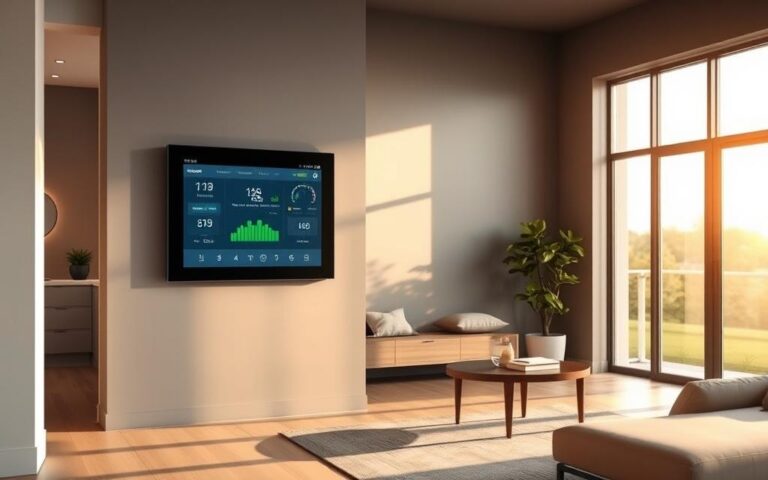
Smart thermostats bring many benefits for your HVAC. They control temperature based on who’s home. This means less energy use and lower bills.
They also offer remote access and energy reports. These features help manage energy better.
Regular Maintenance Tips
Keeping your HVAC in top shape is important. Change air filters often to keep air flowing well. Check ducts for leaks and insulate them to save energy.
Annual checks by pros can catch problems early. This keeps your system running smoothly.
Choosing the Right HVAC System
Choosing the right HVAC system is crucial. A system that’s too big or too small wastes energy. Talk to experts to find the perfect match for your home.
Adopting Renewable Energy Sources
Using renewable energy at home, like solar and wind, lets homeowners control their energy use. It’s a way to make electricity and help the planet at the same time.
Solar Panels and Their Benefits
Solar power is a top choice for renewable energy. It cuts down on fossil fuel use. Homeowners save on electricity bills and see their home’s value go up.
They might even get paid for extra energy. This clean energy helps the planet and saves money.
Wind Energy Options for Homes
Small wind turbines are another good option. They work well in windy areas. But, think about the cost and space needed.
Wind energy can save money and give you energy freedom. It works well with solar systems too.
Government Incentives for Renewable Energy
It’s key to know about government help for solar and wind. There are rebates, tax credits, and grants to lower costs. These incentives make switching to clean energy easier.
| Renewable Energy Source | Benefits | Incentives Available |
|---|---|---|
| Solar Panels | Lower energy bills, increased home value, environmental benefits | Federal tax credits, state rebates |
| Wind Turbines | Energy independence, potential savings, renewable energy generation | Grants, local incentives |
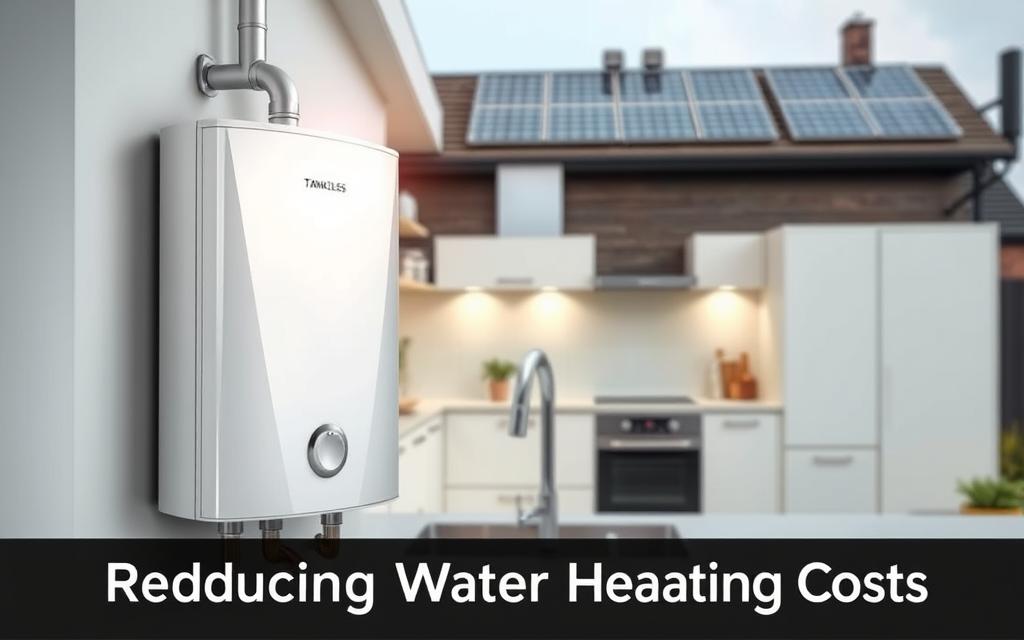
Reducing Water Heating Costs
Water heating is a big part of what uses energy in homes. Making smart choices can save a lot of money. Switching to energy-saving water heaters is a great way to use less energy and save money. You can also save by insulating your hot water tank and pipes.
Lowering the temperature of your water to safe levels also helps. This way, you use energy more wisely.
Efficient Water Heaters
Choosing energy-efficient water heaters cuts down on energy use and helps the planet. These heaters use new tech to heat water better, so you get hot water without high bills. Brands like Rheem and A.O. Smith have options for every home, blending quality with green living.
Insulating Hot Water Tanks
Insulation is key to saving on water heating costs. By insulating your hot water tank and pipes, you stop heat from escaping. This simple step can greatly reduce your energy bill, making it a smart choice for long-term savings and comfort.
Setting Water Temperature to Safe Levels
Keeping water at safe temperatures, around 120 degrees Fahrenheit, stops scalding and saves energy. Higher temperatures use more energy and can be dangerous. Adjusting your thermostats to the right level balances comfort and savings, keeping your family safe and your wallet happy.
Smart Home Technology for Energy Savings
Smart home energy technology can save a lot of energy. It changes how we use power at home. With smart plugs and automated lights, we can use energy better and waste less.
Smart Plugs and Switches
Smart plugs help control our electronics. They let us turn off devices when not needed. This stops devices from using power when not in use.
They also stop “phantom” energy use. This means devices don’t use power when turned off but still on. It saves energy and makes managing devices easier.
Automated Lighting Systems
Automated lights save energy by adjusting to when we’re around and the sun’s light. They dim or turn off lights when not needed. This cuts down on power use but keeps our homes comfy and safe.
Benefits of Home Energy Management Systems
Home energy management systems give us a clear view of our energy use. They let us see how much power we use in real time. This helps us make better choices about energy use.
We can spot which appliances use the most power. This lets us make changes to use less energy. It’s a step towards using smart home technology better.
Changing Habits for Energy Efficiency
Simple energy-saving habits can greatly cut down your home’s energy use. Making small changes in your daily life can make a big difference. Try unplugging devices when not in use and use energy-efficient light bulbs. These actions can lower your bills and help the environment.
Unplugging Devices When Not in Use
Many devices use energy even when turned off. This is called standby power and wastes a lot of energy. Unplugging devices like chargers and TVs can save a lot of energy. It’s easy to do and can lower your energy bill.
Using Energy-Efficient Light Bulbs
Switching to LEDs can cut down on lighting costs. LEDs use less power and last longer than old bulbs. Using them in your home saves energy and helps the planet.
Adjusting Thermostat Settings Daily
Changing your thermostat settings can save a lot of energy. Lowering it at night or when you’re out saves a lot. It keeps your home comfy while saving energy.
Landscaping for Energy Efficiency
Landscaping can make your home more energy efficient. Choosing the right plants can save a lot of energy. Shade trees and shrubs lower cooling costs and make your home look better.
Using rain gardens is another smart move. They help save water and are good for the environment.
Planting Shade Trees and Shrubs
Planting shade trees around your home is a smart choice. They block the sun and keep your home cooler. This means you use less air conditioning in the summer.
Planting trees on the south and west sides of your home works best. This way, they save the most energy.
Rain Gardens and Their Role
Rain gardens are a new way to handle stormwater. They help manage water runoff and support local plants. This method also helps recharge groundwater.
Using native plants in rain gardens is key. They need less water and help local wildlife. This makes your garden beautiful and useful.
Sustainable Yard Maintenance Practices
Keeping your yard eco-friendly is important. Use compost, native plants, and avoid chemicals. This helps local wildlife and saves resources.
Choosing organic methods is best. It makes your soil healthy and helps plants grow. This way, your garden is good for the planet and looks great.
| Practice | Description | Benefits |
|---|---|---|
| Shade Trees | Planting trees strategically to block sunlight | Reduced cooling costs and increased comfort |
| Rain Gardens | Designing gardens to manage stormwater runoff | Improved water absorption and reduced flooding |
| Sustainable Practices | Utilizing organic and native plants | Enhanced biodiversity and reduced chemical use |
Staying Informed About Energy Efficiency Grants
Knowing about energy efficiency grants and rebates helps homeowners make eco-friendly choices. These grants support upgrades like insulation, energy-efficient appliances, and renewable energy. Learning about these funding options can lead to a greener future.
Types of Available Grants and Rebates
Many programs offer funding at local, state, and federal levels. They provide rebates for energy-saving appliances, grants for home audits, and incentives for solar panels. Each program has its own rules and benefits, helping different groups, like low-income families and community projects.
How to Apply for Energy Savings Programs
Applying for these programs requires filling out an application. You’ll need to show your income, energy use, and planned upgrades. Make sure you have all the needed documents ready. Knowing the deadlines and any workshops can make the process easier.
Transferring Knowledge to Your Community
Sharing what you know about energy grants can inspire your community. Organize workshops to teach about energy-saving resources. This helps others get funding for their upgrades, promoting sustainable living for all.