

In today’s world, homes are getting smarter and more energy efficient. You might wonder if a Smart Thermostat is a good buy. Think about how it could make your home comfier and lower your bills.
This review will look into the costs, savings, how it affects home value, and new tech features of Smart Thermostats in 2025. By the end of this, you’ll know if a Smart Thermostat fits your eco-friendly home dreams.
Key Takeaways
- Understanding Smart Thermostats can inform your buying decisions.
- Initial costs must be weighed against long-term savings.
- Smart Thermostats can enhance your home’s resale value.
- Technological advancements are rapidly evolving in the Smart Thermostat market.
- Compatibility with your HVAC system is crucial for optimal performance.
- Consider features like energy monitoring for better utility management.
Understanding Smart Thermostats
Smart Thermostats are key in smart home tech. They let you control your heating and cooling from afar. This means you can make your home more comfortable and save energy, no matter where you are. They do more than old programmable thermostats, changing the way we heat and cool our homes.
What is a Smart Thermostat?
A Smart Thermostat connects to Wi-Fi so you can control it with your phone. It learns what temperatures you like and adjusts itself. This smart learning helps make your home’s heating and cooling better and saves energy.
How Do Smart Thermostats Work?
Smart Thermostats use sensors and math to track your home’s temp and your habits. They connect to your Wi-Fi to gather data on how you live and the weather. This lets you manage them with an app, making your settings perfect and checking your energy use anytime.
Their smart algorithms figure out the best heating and cooling times for you. This takes the hassle out of saving energy and keeping comfy.
Benefits of Smart Thermostats
Getting a smart thermostat has many perks for your home. They boost energy savings and make controlling your climate easy. Knowing these advantages helps you decide if this gadget is right for your HVAC system.
Energy Savings and Efficiency
Smart thermostats cut down on energy use. Research shows they can lower heating and cooling bills by up to 30%. They learn your schedule and adjust the temp accordingly. This means you use less energy but still stay comfortable.
Convenience and Control
A smart thermostat lets you control your home’s climate from anywhere. With your smartphone, you can check and change settings on the go. You can also create schedules for temperature changes, making comfort automatic.
Enhanced Climate Optimization
Smart thermostats use data to keep your home perfectly comfortable. They look at the weather and your likes to make quick adjustments. So, you get a great environment and save energy too.
Initial Costs of Smart Thermostats
When looking into Smart Thermostats, knowing the upfront costs is key. This means understanding both the buying price and the fees for installing. Knowing these costs helps you see what investing in this tech will involve.
Purchase Price Comparison
The price of Smart Thermostats changes a lot based on the features and the brand. Basic models might be around $100, but the top ones can go beyond $300. Here’s a look at some popular models to help you know what prices to expect:
| Brand | Model | Purchase Price | Key Features |
|---|---|---|---|
| Nest | Nest Learning Thermostat | $249 | Learning capabilities, energy history |
| Ecobee | Ecobee SmartThermostat with Voice Control | $249 | Voice control, sensor integration |
| Honeywell | Honeywell Home T9 | $199 | Smart room sensors, geofencing |
Installation Costs and Options
The cost for installation is another thing to think about. Hiring a pro can cost between $100 and $300. This depends on how complex your heating and cooling system is and the rates for work in your area. If you’re looking to save some money, putting it in yourself is an option. This can take just a few hours.
Most Smart Thermostats come with step-by-step guides and online help. Checking out these resources can ease concerns about the costs of setting them up.
Long-Term Savings
Investing in smart thermostats lets homeowners save money in the long run. These devices improve how you use heating and cooling. This means lower energy bills over time. Knowing about these savings can help you decide what’s best for your budget.
Potential Energy Bill Reductions
Smart thermostats adjust your home’s temperature based on your daily routine. This way, you use just the right amount of energy. People often save between 10% and 20% on their bills. This could mean saving hundreds of dollars each year, depending on how much energy you use. Using less energy saves money and makes your home more comfortable.
ROI Over Time
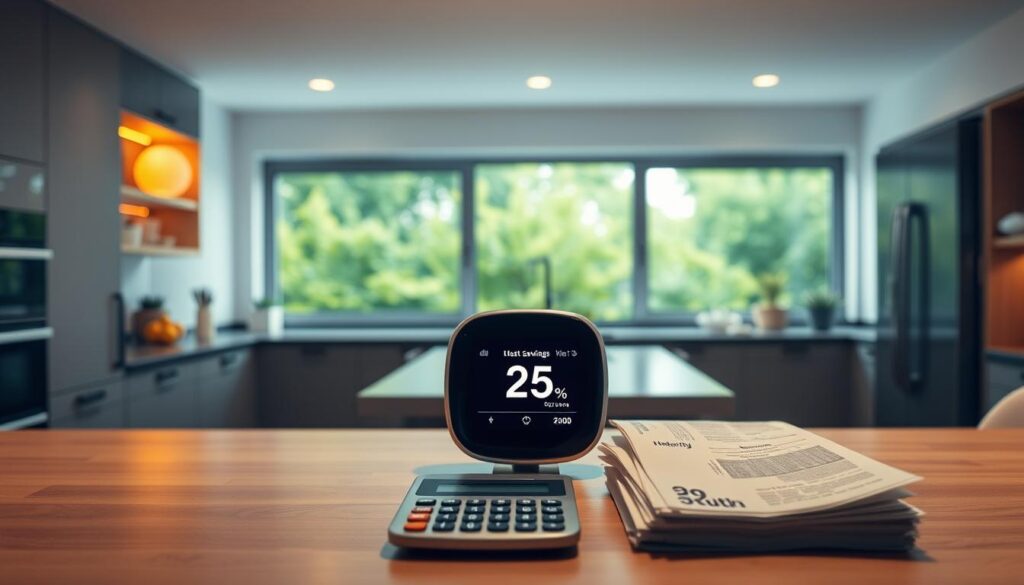
Most homeowners find the return on investment (ROI) for smart thermostats appealing. These devices usually pay for themselves in 18 months to 3 years. After covering the initial cost, you’ll keep saving money on energy. For instance, a $250 smart thermostat could save you about $100 every year. This gives you a great ROI in just a few years. Smart thermostats not only save money but also benefit the environment over time.
| Investment Cost | Annual Savings | Payback Period | Return on Investment (ROI) |
|---|---|---|---|
| $250 | $100 | 2.5 years | 40% |
| $300 | $120 | 2.5 years | 40% |
| $400 | $150 | 2.67 years | 37.5% |
Smart Thermostats and Home Value
Adding smart thermostats can boost your home’s value, especially for resale. Homes with energy-efficient tech are more attractive to buyers. They often sell faster and for more money.
Impact on Home Resale Value
Studies show homes with smart thermostats see a rise in resale value. Energy efficiency and smart features are key for buyers. A smart thermostat lowers energy bills and shows the house is up-to-date. This makes the house stand out in negotiations, often leading to a better sale price.
Attracting Potential Buyers
Smart thermostats are popular among buyers looking for modern home tech. They make your listing stand out to those who value energy savings. Adding one can make your home more appealing in a competitive market.
Features to Consider
When choosing a smart thermostat, look at important features that fit your needs. Make sure it works with your HVAC system for easy setup. Energy monitoring lets you see how much energy you use and find ways to save. A simple-to-use interface makes adjusting settings hassle-free.
Compatibility with HVAC Systems
Before buying a smart thermostat, ensure it fits with your HVAC systems. Some thermostats only work with certain systems. This match is key for better performance and savings.
Energy Monitoring Capabilities
Energy monitoring helps you watch and understand your energy use. This knowledge can point out how to cut energy costs. Many smart thermostats offer detailed reports for tracking how setting adjustments impact energy use.
User-Friendly Interfaces
A smart thermostat should be easy for everyone to use. Look for ones with clear controls and simple apps. This makes it easy for all family members to use it without trouble.
| Feature | Importance | Considerations |
|---|---|---|
| Compatibility with HVAC Systems | Ensures seamless integration | Confirm the thermostat works with your system type |
| Energy Monitoring | Tracks energy usage | Look for detailed reporting options |
| User-Friendly Interface | Affects ease of use | Check reviews for usability feedback |
Popular Smart Thermostat Brands
Looking into top Smart Thermostat brands can help you pick the right one for your home. Every brand comes with its own set of features and perks. They cater to various needs and tastes.
Nest Learning Thermostat
The Nest Learning Thermostat is famous for its smart learning. It learns your schedule and likes to keep you comfy. Plus, it saves energy by adjusting your home’s temperature on its own.
Ecobee SmartThermostat
The Ecobee SmartThermostat is known for its room sensor tech. This lets you check temperatures in different rooms for better climate control. It’s easy to use and works well with other smart home devices. Ecobee is perfect for those who want total control over their home’s climate.
Honeywell Home T9
The Honeywell Home T9 balances price with features. It’s easy to use and supports many HVAC systems. With its smart room sensors, it’s a smart choice for those wanting technology without spending a lot.
Installation Process
Installing a smart thermostat correctly is key to getting the best performance and saving energy. You can choose to install it yourself or get help from experts. Each choice has its benefits and important points to think about. Knowing these can help you make the best decision for you, based on what you know and how comfortable you feel.
DIY vs. Professional Installation
Installing it yourself can be a great way to learn and save money. Many smart thermostats, like the Nest and Ecobee, have guides that are easy to follow for those with basic skills. But, if you’re not confident in your skills or want to make sure everything goes smoothly, getting a pro can be a good choice. They know how to handle complicated systems and fix any problems that come up.
Tips for a Successful Setup
Regardless of how you choose to install, there are tips to help you succeed:
- Read the manual: Make sure to read the guide that comes with your thermostat.
- Turn off power: Always turn off your HVAC system’s power before beginning to avoid accidents.
- Label wires: Label each wire during removal so you reconnect them correctly.
- Use a level: If your thermostat goes on the wall, a level makes sure it looks right and works right.
- Test settings: After installation, check to see if your thermostat works as it should.
Smart Thermostat Integration
Home automation is getting better every day, and Smart Thermostats are a big part of this. They do more than just control your home’s temperature. They work with other smart devices too. This makes your home more connected. It also helps you use less energy and keep your house comfortable.
Home Automation Systems
Adding smart thermostats to your home automation system makes life easier. You can connect them with lights, security cameras, and more. For example, set your thermostat to change when you’re not home. This saves energy and gives you details on how much energy you’re using.
Voice Control Capabilities
Voice control is a cool feature of modern smart thermostats. They work with Amazon Alexa and Google Assistant. You can change your home’s temperature with just your voice. Say, “Set the living room to 72 degrees,” without stopping your other work. This makes controlling your home simple and quick.
Common Concerns
Smart thermostats have lots of benefits but also some worries. Looking at security and reliability is key for peace of mind. This ensures they work great in your home.
Security Risks and Privacy Issues
One big worry is security with smart thermostats. Connecting to the internet makes them hack targets. If not careful, your personal info could be at risk. Makers are getting better at stopping these risks. They use strong passwords and update software often. Changing passwords and checking settings helps keep your info safe.
Malfunctions and Reliability
How reliable smart thermostats are is another concern. Issues like losing connection or wrong temperature readings can happen. Different brands may work better or worse. Knowing which brands are reliable helps pick a good thermostat. Looking at consumer reviews is very helpful for making a choice.
| Brand | Common Malfunctions | Reliability Rating |
|---|---|---|
| Nest Learning Thermostat | Connectivity issues | 4.5/5 |
| Ecobee SmartThermostat | Temperature inaccuracies | 4.7/5 |
| Honeywell Home T9 | Failure to sync | 4.2/5 |
Future Trends in Thermostat Technology
The world of home tech is always changing, and thermostat technology is no exception. You’ll see that AI and advanced machine learning are big parts of these updates. These changes are set to make life easier, save more energy, and make everything run more smoothly.
AI and Machine Learning Developments
Smart thermostats are getting smarter thanks to AI. They learn from your habits to automatically adjust your home’s temperature. This smart feature helps you use less energy and save money, all while staying comfortable. As AI gets better, we can expect even smarter thermostats that know what you need before you do.
Integration with Renewable Energy Sources
Connecting smart thermostats to renewable energy is another big step forward. Many people are choosing sustainable energy, like solar panels, to lessen their environmental impact. Smart thermostats make sure you use the cleanest energy at the best times. This way, your home is more eco-friendly by matching your energy needs with when your renewable sources are most productive.
Making Your Decision
Choosing a smart thermostat means looking closely at your needs and what you can spend. Every home is different, needing things based on its size, the heating and cooling systems already there, and how comfortable you want to be. Start by figuring out how much you’re ready to spend and the good stuff you want from upgrading. This first step is key for the choices you’ll make.
Then, think hard: do you see value in this investment? Smart thermostats save energy and make homes more comfortable. Yet, how much you save and enjoy varies by household. Look at your energy bills now and estimate your savings. Also, think about how much you’ll like having more control and convenience at home.
In the end, taking a close look at this investment lets you choose wisely, fitting your budget and how you live. When you think about all the good and bad points, you can pick something that not only works for you now but also makes your home better and more energy-efficient for a long time.