

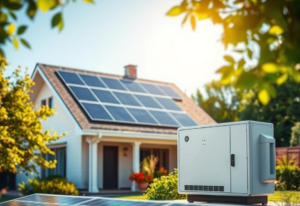
Over 4 million American homes now use solar energy, yet fewer than 1 million pair their panels with battery storage. This gap reveals a major opportunity. The cost of home energy storage systems has dropped by 89% over the past decade, making affordable solar battery systems within reach for everyday homeowners.
Combining solar panels with battery technology creates a complete energy solution. Your solar panels capture sunlight and turn it into electricity during the day. A battery stores that extra power for use at night or during cloudy weather. This pairing gives you energy independence that solar panels alone cannot provide.
The affordability factor changes everything. Ten years ago, residential solar energy storage seemed like a luxury for wealthy early adopters. Today, technological breakthroughs and mass production have transformed the market. Battery costs keep falling. Panel efficiency keeps rising. Installation methods have become simpler.
This article explores how affordable solar battery systems work and why they matter for your home. You will discover the real costs involved in installing these systems. You will learn about federal tax credits and state rebates that reduce your upfront investment. You will compare different battery technologies and understand which ones fit your budget best.
Whether you want backup power during outages or freedom from rising electricity bills, solar energy storage offers real solutions. The combination of solar generation and battery backup creates resilience and savings that benefit homeowners across America.
The Rising Demand for Integrated Solar and Storage Solutions
Residential solar installations have grown tremendously across the United States. Pairing these systems with battery storage has become increasingly popular among homeowners seeking greater control over their electricity supply. This combination represents a significant shift in how Americans approach power generation and consumption, driven by both practical needs and financial incentives.
The market for residential energy storage has expanded rapidly over the past five years. Homeowners now understand that combining solar panels with backup power solutions delivers benefits that solar alone cannot provide. These integrated systems offer protection, savings, and peace of mind in ways that traditional grid-only approaches simply cannot match.
Why Homeowners Are Choosing Combined Systems
Homeowners invest in grid-tied solar storage for several compelling reasons. Power outages from severe weather events occur more frequently than ever. A home equipped with solar panels and battery backup maintains electricity during blackouts, keeping refrigerators running and medical devices operational. This reliability proves invaluable during emergencies.
Energy independence appeals to many property owners. Rather than depending entirely on utility companies, homeowners with integrated systems generate their own power and store excess energy for later use. This autonomy reduces vulnerability to rising electricity rates and grid disruptions.
Environmental awareness drives adoption as well. Families seeking to reduce carbon footprints find that combining solar generation with battery storage maximizes clean energy use while minimizing grid demands.
- Protection during extended power outages
- Reduced dependence on utility companies
- Lower overall electricity expenses
- Environmental responsibility and sustainability
- Increased home property values
Economic Drivers Behind Solar-Plus-Storage Adoption
Battery costs have dropped dramatically. Lithium-ion battery prices fell approximately 89% between 2010 and 2020, making backup power solutions financially accessible to average households. This trend continues downward, improving affordability year after year.
Utility rates keep climbing in many states. Customers in California, Hawaii, and Massachusetts face particularly high electricity costs. Time-of-use rate structures charge premium prices during evening peak demand hours. Grid-tied solar storage systems let homeowners avoid these expensive periods by using stored solar energy when rates spike.
Federal tax credits and state incentives reduce upfront investment requirements substantially. The Investment Tax Credit allows homeowners to deduct 30% of installation costs from federal income taxes. Local utility companies offer additional rebates that lower total expenses.
| Economic Factor | Impact on Adoption |
|---|---|
| Declining battery costs | Systems now affordable for middle-income families |
| Rising utility rates | Faster payback periods and greater lifetime savings |
| Time-of-use rate structures | Higher value for stored energy usage |
| Federal tax credits | Reduces installation costs by up to 30% |
| State and local rebates | Additional savings of $2,000 to $5,000 |
Maximizing solar self-consumption delivers financial advantages. Selling excess power back to utilities typically pays far less than the rate charged for grid electricity. Storing that energy instead preserves value for personal use during expensive peak hours. This strategy transforms backup power solutions into genuine money-saving tools.
Understanding How Solar Battery Systems Work
Solar power storage solutions have become essential for homeowners wanting to maximize their renewable energy use. To understand how these systems operate, you need to know the basic flow of electricity through your home. When sunlight hits your solar panels, they convert that light into direct current electricity. This DC power travels to an inverter, which transforms it into alternating current that powers your household appliances and devices.
The real magic happens when your solar panels generate more power than your home needs. Instead of sending that extra electricity back to the grid, hybrid solar systems direct the surplus energy to your battery storage. This stored power becomes your personal energy reserve for use later in the day. Your solar panel battery backup system stores this energy so you can access it whenever you need it, even after the sun sets.
Most modern systems operate in three distinct modes throughout the day:
- Morning and midday: Solar panels generate power while simultaneously charging your battery storage
- Afternoon: Panels continue producing electricity to both power your home and top off battery reserves
- Evening and night: Your home draws power from stored batteries while the grid remains available as backup
Your solar power storage solutions automatically manage power sources without any effort from you. The system intelligently switches between solar power, battery storage, and grid electricity based on availability and your programmed preferences. You can set your system to prioritize different goals such as maximum self-sufficiency, lowest electricity costs, or maintaining reserve capacity for emergency situations.
The key difference between grid-tied systems with battery backup and completely off-grid installations affects your overall energy independence and system design. Grid-tied systems with batteries provide security and cost savings while maintaining grid connection. Off-grid systems require larger battery capacity to handle all your power needs without external support.
| System Type | Grid Connection | Battery Requirement | Best For |
|---|---|---|---|
| Grid-Tied with Battery Backup | Connected to utility grid | Moderate capacity | Homeowners seeking cost savings and reliability |
| Off-Grid System | No grid connection | Large capacity | Remote locations without grid access |
| Hybrid Solar Systems | Flexible connection options | Scalable capacity | Maximum energy independence and savings |
Understanding these mechanics helps you make informed decisions about which solar power storage solutions best fit your home’s needs. Your battery system continuously learns your energy patterns and adjusts its charging and discharging cycles for optimal performance throughout the year.
Key Components of Affordable Solar Battery Systems
Building an affordable solar battery system requires understanding the essential hardware that powers your home. Each component plays a vital role in converting sunlight into usable electricity and storing energy for later use. Choosing the right parts can help you save money without sacrificing performance. The main components include solar panels, solar inverters, batteries, and balance-of-system equipment like mounting hardware and wiring.
Making smart choices about each component lets you balance cost with efficiency. Understanding what you are buying gives you power over your total investment. Let’s explore the most important pieces of your solar battery system.
Solar Panels and Inverter Technologies
Solar panels convert sunlight into electricity, and you have two main choices: monocrystalline and polycrystalline panels. Monocrystalline panels offer higher efficiency rates, typically between 18-22 percent. They work better in limited space but cost more upfront. Polycrystalline panels are more affordable and generate between 15-17 percent efficiency. They require more roof space for the same power output.
Solar inverters manage how electricity flows through your system. They convert DC power from your panels into AC power for home use. Three types serve different needs:
- String inverters connect multiple panels together and cost less upfront
- Microinverters attach to individual panels and work better with shaded roofs
- Hybrid inverters manage both solar production and battery charging in one unit
Hybrid solar inverters reduce overall system costs by eliminating the need for separate battery inverters. Brands like SolarEdge, Enphase, and SMA offer reliable options at various price points. Hybrid inverters work especially well when you plan to add batteries later.
Battery Chemistry Options and Their Cost Implications
Battery chemistry determines how your system stores energy and how much you’ll spend. Lithium-ion batteries dominate the residential market today. Two main types exist in the lithium-ion family:
| Chemistry Type | Cost Level | Lifespan | Best For |
|---|---|---|---|
| Lithium Iron Phosphate (LFP) | Higher upfront | 10,000+ cycles | Long-term value and safety |
| Lithium Nickel Manganese Cobalt (NMC) | More affordable | 3,000-5,000 cycles | Budget-conscious buyers |
Lithium-ion batteries offer good energy density and proven performance. LFP chemistry costs more but lasts longer and handles deep discharges better. NMC chemistry costs less upfront but may need replacement sooner. The battery chemistry you choose affects both initial cost and long-term savings.
Emerging options like saltwater batteries appeal to budget-conscious homeowners. These alternatives cost less than lithium-ion batteries. They offer lower energy density, meaning you get less storage per unit size. Saltwater technology provides excellent safety features and poses no fire risk. For those prioritizing affordability and safety over maximum storage, saltwater batteries present a real option.
Understanding battery chemistry helps you match your system to your needs and budget. Lithium-ion batteries remain the most popular choice for residential solar systems. Your budget, energy needs, and long-term plans should guide your battery chemistry selection.
Cost Breakdown of Modern Solar-Plus-Storage Installations
Understanding the true cost of a solar-plus-storage system helps homeowners make informed decisions about their energy future. The total investment breaks down into several key components that directly impact your budget. Solar panels typically represent 25-30% of the total system cost, while battery storage accounts for 20-35% depending on capacity needs. Solar installation costs include labor, electrical work, and equipment mounting, ranging from 15-25% of the total expense. Additional costs cover inverters, permitting fees, and any necessary electrical upgrades to your home’s infrastructure.
Let’s examine realistic pricing for three common system sizes across the United States:
| System Size | Solar Panels | Battery Storage | Inverter & Components | Installation Labor | Permits & Inspections | Total Cost (Before Credits) | Cost After 30% Tax Credit |
|---|---|---|---|---|---|---|---|
| Small (5kW/10kWh) | $7,500 | $8,000 | $2,500 | $3,500 | $1,000 | $22,500 | $15,750 |
| Medium (7kW/13.5kWh) | $10,500 | $11,000 | $3,200 | $4,500 | $1,200 | $30,400 | $21,280 |
| Large (10kW/20kWh) | $15,000 | $16,000 | $4,500 | $6,000 | $1,500 | $43,000 | $30,100 |
Regional variations significantly affect your solar installation costs. Mature solar markets like California, Arizona, and Florida benefit from intense installer competition and streamlined permitting processes. These areas typically offer 10-15% lower installation costs compared to national averages. Emerging markets with fewer experienced installers often see costs 15-25% higher due to limited competition and longer permitting timelines.
Equipment choices dramatically shape your final solar battery costs. Budget-conscious installations using tier-2 solar panels and emerging battery brands may cost 20-30% less than premium configurations. Premium systems featuring Tesla Powerwall, LG Chem, or Panasonic batteries combined with top-tier solar panels command higher prices but offer extended warranties and superior performance ratings.
Your solar financing options directly impact total lifetime expenses:
- Cash purchases eliminate interest payments but require significant upfront capital
- Solar loans spread payments over 5-10 years with predictable monthly amounts
- Home equity lines of credit often feature lower interest rates for qualified homeowners
- PACE financing ties repayment to property taxes rather than personal credit
- Lease and power purchase agreements require minimal upfront investment
Selecting the right financing structure for your situation reduces your effective cost burden. Each option presents different advantages depending on your credit profile, available down payment funds, and long-term ownership plans.
Federal and State Incentives Reducing Upfront Investment
Installing a solar-plus-storage system represents a significant investment in your home’s energy future. Fortunately, multiple financial programs exist to reduce your upfront costs. These incentives range from federal tax benefits to state-specific rebate programs. Understanding what’s available in your area can lower your total system cost by 40-50% or even more. Let’s explore the major opportunities that make solar energy more affordable.
The Investment Tax Credit and Its Impact
The federal Investment Tax Credit stands as the most substantial incentive available to homeowners. This credit covers 30% of your total solar-plus-storage installation costs through 2032, thanks to the Inflation Reduction Act. The credit applies to both solar panels and battery components when installed together as an integrated system.
Here’s how solar tax credits work in practice. A $25,000 system installation becomes $17,500 after applying the 30% federal credit. You claim this credit on your federal tax return, reducing your tax liability dollar-for-dollar. The credit applies to owned systems only—not leased systems or power purchase agreements.
One important requirement exists: your battery must be charged primarily by your solar panels to qualify for energy storage incentives. This ensures the credit targets true renewable energy systems. Eligibility also requires that you own your home or have a long-term lease on the property.
- 30% federal credit applies through 2032
- Covers both solar panels and battery storage
- Claimed on your federal tax return
- Battery must be solar-charged to qualify
- Only available for owned systems
Local Rebates and Utility Programs
Beyond federal benefits, many states and local utilities offer additional solar rebates and energy storage incentives. California’s Self-Generation Incentive Program provides rebates specifically for battery storage systems. New York’s NY-Sun initiative offers performance-based incentives. Massachusetts runs the SMART program, which provides long-term energy credits for solar generation.
Utility companies in cities like Austin, Vermont, and Hawaii also run their own rebate programs. These typically offer upfront rebates or performance-based payments over time. Some programs target specific battery technologies or system sizes.
To find incentives in your location, visit the Database of State Incentives for Renewables & Efficiency (DSIRE). This free tool shows all available federal, state, and local programs for your specific address. Combining all available incentives can dramatically reduce your net investment.
| Incentive Type | Coverage Amount | Availability |
|---|---|---|
| Federal Investment Tax Credit | 30% of total cost | All U.S. homeowners through 2032 |
| State Solar Rebates | 5-15% of system cost | Select states like California, New York, Massachusetts |
| Utility Company Programs | 2-10% of system cost | Varies by utility provider |
| Performance-Based Incentives | Annual credits for 10-25 years | Available in specific states and regions |
Stacking multiple incentives is the key to maximizing your savings. A homeowner in California might receive a 30% federal credit, state solar rebates, and additional energy storage incentives from their utility company. These combined benefits can reduce a $30,000 system to less than $15,000 out-of-pocket.
Taking time to research local programs before installation ensures you capture every available incentive. Contact your local utility to learn what programs they offer. Check your state’s energy office website for state-level solar rebates. Review DSIRE for a complete picture of what applies to your address. Acting early in the planning process prevents missing valuable financial assistance.
Comparing Lithium-Ion and Alternative Battery Technologies
When selecting renewable energy storage for your home, you’ll find several battery technologies available. Each option comes with different costs, performance levels, and long-term value. Understanding these differences helps you pick the right battery backup systems for your needs and budget.
Lithium-ion batteries currently lead the residential solar batteries market. These batteries power popular systems like the Tesla Powerwall and LG Chem RESU. Lithium-ion technology offers excellent energy density, which means you get more storage capacity in a smaller space. The costs for lithium-ion batteries have dropped significantly over the past decade, making them affordable for most homeowners.
- Lithium Nickel Manganese Cobalt (NMC) batteries pack more energy into smaller packages, ideal for homes with limited space
- Lithium Iron Phosphate (LFP) batteries from companies like SimpliPhi and Fortress Power offer longer lifespan and enhanced safety features
Lead-acid batteries represent the budget-friendly entry point for battery backup systems. These traditional batteries cost less upfront. The drawback is they require frequent replacement and regular maintenance, which increases expenses over time. Most homeowners find that the initial savings disappear within a few years.
Emerging technologies like flow batteries and saltwater options promise interesting features. Flow batteries deliver exceptional longevity and can cycle thousands of times. Their premium price tag currently limits adoption for residential solar batteries. Solid-state batteries represent the future of renewable energy storage technology, yet they remain unavailable for home installations today.
| Battery Type | Cost Per kWh | Cycle Life | Maintenance Needs | Best Use Case |
|---|---|---|---|---|
| Lithium-Ion (NMC) | $400-600 | 10,000+ cycles | Minimal | Most homes seeking reliability |
| Lithium-Ion (LFP) | $500-700 | 15,000+ cycles | Minimal | Long-term storage needs |
| Lead-Acid (Flooded) | $200-300 | 1,000-2,000 cycles | High | Budget-conscious buyers |
| Lead-Acid (AGM Sealed) | $300-400 | 2,000-3,000 cycles | Moderate | Off-grid cabins |
| Flow Batteries | $600-800 | 20,000+ cycles | Minimal | Premium applications |
The decision between battery technologies depends on your priorities. Choose lithium-ion if you want reliability and lower lifetime costs. Select lead-acid only if your budget is extremely tight and you plan to replace the system within five years. Consider flow batteries if you have space and a larger budget for extended battery backup systems performance.
Safety matters when choosing battery backup systems. Lithium-ion batteries include built-in management systems that prevent overcharging and overheating. Lead-acid batteries need ventilation and careful handling. Research your chosen brand’s safety certifications and warranty coverage before making a final decision on your renewable energy storage investment.
Sizing Your System for Maximum Value and Efficiency
Getting the right size for your solar and battery system is one of the most important decisions you will make. A system that is too small will not meet your energy needs. A system that is too large will waste your money on equipment you do not need. The goal is to find the perfect balance between your home’s power requirements and your budget. Solar system sizing requires careful planning and honest assessment of your household’s electricity consumption patterns.
The process of determining your ideal system size involves understanding your current energy use and thinking about future changes. You will need to look at your electricity bills, consider seasonal differences, and plan for potential growth in your household’s energy demands.
Calculating Your Energy Needs
Start by reviewing your electricity bills from the past 12 months. Look for your average daily kilowatt-hour usage, which appears on most utility statements. This number is critical for accurate solar system sizing. Make note of how your usage changes across seasons. Many homes use more electricity in summer for air conditioning and more in winter for heating.
Next, identify any major appliances or systems that use significant power. Electric water heaters, air conditioning units, and pool pumps can greatly impact your energy needs. Consider future changes as well. Are you planning to purchase an electric vehicle? Do you want to add an extension to your home? Planning ahead helps you avoid needing to expand your system later.
Battery sizing is different from solar panel sizing. Your battery bank should typically store enough energy for evening and overnight hours, not multiple days. Most average American homes need between 10 and 15 kilowatt-hours of battery storage. Trying to store more energy becomes very expensive and is not usually necessary.
Use online solar calculators and design tools to estimate your solar array size based on your location, roof direction, and any shade on your roof. These tools account for how much sunlight your area receives throughout the year.
Balancing Capacity with Budget Constraints
Few homeowners can buy the perfect system all at once. The good news is you have several smart ways to build your system over time while managing costs and capturing available incentives.
One effective strategy is to install solar panels first and add battery storage later. This approach works well if your primary goal is energy bill savings. You get the benefits of solar energy right away while you save money for batteries. Off-grid solar systems and battery combinations can always be expanded as your budget allows.
Another option is to start with smaller battery capacity and plan for future expansion. Many battery systems allow you to add more capacity later without replacing what you already installed. This flexibility helps you spread out your investment across several years.
Consider your specific situation when deciding what to prioritize. Do you live in an area with frequent power outages? You might want to emphasize battery capacity. Are you mainly concerned with energy bill savings? Focus on solar panels first.
| System Approach | Solar Capacity | Battery Capacity | Estimated Cost (Before Incentives) | Best For |
|---|---|---|---|---|
| Budget-Conscious | 5 kW | 9.8 kWh | $18,000 | Homeowners focused on reducing energy bills |
| Balanced | 7 kW | 13.5 kWh | $25,000 | Households wanting backup power and savings |
| Comprehensive | 10 kW | 20 kWh | $35,000 | Families seeking maximum independence |
Phasing your installation over multiple years gives you time to adjust your approach based on real-world results. You might discover your actual usage patterns are different from what you predicted. This knowledge helps you make better decisions about your next expansion phase.
- Review 12 months of electricity bills to find your average daily usage
- Track seasonal variations in your energy consumption
- Plan for future needs like electric vehicles or home additions
- Use online tools to calculate your solar array size
- Size your battery for evening and overnight use only
- Consider installing solar first, batteries later for energy bill savings
- Plan for future battery expansion in your initial design
- Spread installation costs across multiple years
Remember that proper solar system sizing is not about getting the biggest system possible. It is about matching your system size to your actual needs and financial situation. This approach ensures you get the most value from your investment while achieving meaningful energy bill savings.
Top Manufacturers Offering Budget-Friendly Solutions
The solar battery market has expanded significantly, giving homeowners more choices than ever. While premium brands like Tesla and LG Chem remain popular, many manufacturers now deliver reliable affordable solar battery systems at competitive prices. Understanding your options helps you find the best value for your energy independence goals.
Several companies stand out for offering quality products without excessive markups. Fortress Power specializes in modular lithium iron phosphate batteries that appeal to budget-conscious buyers seeking flexibility. Generac PWRcell systems leverage the company’s extensive backup power experience to deliver scalable storage solutions. Sonnen’s eco series provides integrated options designed for straightforward installation and operation.
For solar panels, tier-two manufacturers deliver exceptional value. Canadian Solar, Trina Solar, JA Solar, and Hanwha Q CELLS offer efficiency ratings between 18-20 percent with standard 25-year performance warranties. These companies represent the middle ground between budget panels and premium brands, giving you reliable performance at reasonable costs.
When comparing Tesla Powerwall alternatives and LG Chem batteries against other options, consider these factors:
- Warranty coverage and company longevity
- Certification standards and safety ratings
- Installation support from qualified technicians
- Scalability for future expansions
- Compatibility with existing equipment
| Manufacturer | Product Type | Key Advantage | Warranty Period | Best For |
|---|---|---|---|---|
| Fortress Power | Lithium Iron Phosphate | Modular design and affordability | 10 years | Scalable systems |
| Generac PWRcell | Lithium-Ion Storage | Proven backup power expertise | 10 years | Reliable home backup |
| Sonnen Eco | Integrated Solar-Plus-Storage | Complete system simplicity | 10 years | All-in-one solutions |
| Canadian Solar Panels | Photovoltaic Modules | Strong efficiency at lower cost | 25 years | Budget-conscious installers |
| Hanwha Q CELLS | Photovoltaic Modules | Outstanding performance warranty | 25 years | Long-term value seekers |
Choosing value-oriented brands doesn’t mean sacrificing quality. Many manufacturers producing affordable solar battery systems hold proper certifications and deliver genuine reliability. Your installer’s experience and reputation matter significantly. A skilled installation team that stands behind their work provides better assurance than brand name alone. Research local installers who work with multiple manufacturers and can recommend systems matching your budget and energy needs.
Budget options exist across every component category. Compare warranties, efficiency ratings, and installation costs from several providers before deciding. Starting with affordable solar battery systems allows you to enter the renewable energy market without overwhelming financial commitment.
Installation Considerations That Affect Total Cost
Getting your solar and battery system installed correctly shapes your total investment and long-term success. The installation phase involves many decisions that impact both solar installation costs and system performance. Understanding your options helps you make smart choices about who installs your equipment and what permits you’ll need.
DIY Versus Professional Installation
Some homeowners wonder if they can reduce solar installation costs by installing their own systems. While certain preparatory tasks might seem simple, most of the work requires specialized training. Mounting solar panels on your roof demands precise calculations and safety skills. Installing battery systems and connecting everything to your electrical panel requires deep knowledge of electrical codes, grounding rules, and safety shutdowns.
Attempting a DIY solar installation creates real problems:
- Equipment warranties become void without professional installation
- You lose eligibility for federal tax credits and rebates
- Permitting departments often reject DIY applications
- Liability concerns arise if something goes wrong
- Grid-tied solar storage systems need expert configuration
What you can do yourself includes basic site preparation like trenching for conduit or fixing roof damage. These tasks save money while letting professionals handle the technical work. Qualified installers hold proper licensing and certifications from the North American Board of Certified Energy Practitioners (NABCEP). Look for companies with strong local references and specific experience with battery systems.
Permitting and Inspection Requirements
Permits add both time and expense to your project. Different areas require different paperwork, but most places need building permits, electrical permits, and utility interconnection agreements. Your utility company must approve any grid-tied solar storage setup before you turn it on.
Permitting costs and timelines vary by location:
| Permit Type | Typical Cost | Processing Time |
|---|---|---|
| Building Permit | $200-$800 | 2-6 weeks |
| Electrical Permit | $150-$400 | 1-3 weeks |
| Utility Interconnection | $100-$800 | 2-12 weeks |
| Final Inspection | Included in permits | 1-2 weeks |
Experienced installers manage the entire permitting process for you. They know local codes and submit applications correctly the first time. Some neighborhoods have extra rules about appearance or placement. Historic districts often have strict guidelines about visible equipment. Your homeowners association might require approval before work begins.
Roof inspections check if your structure can hold solar panels. Electrical panel upgrades sometimes become necessary to accommodate your solar system. These upgrades typically cost between $1,500 and $3,000. Planning for these potential expenses prevents budget surprises and keeps your solar maintenance requirements straightforward once installation finishes.
Long-Term Savings and Return on Investment
Understanding your solar ROI helps you make smart decisions about investing in a solar-plus-storage system. The return on investment calculation starts with finding your net system cost. Take the total installation price and subtract all federal tax credits, state rebates, and local utility incentives. This gives you the amount you actually need to pay out of pocket.
Once you know your real cost, you can calculate how much you’ll save each year. Your annual energy bill savings depend on your local electricity rates, how much solar your system produces, and how well your battery stores that energy. Most homeowners see payback periods between 7 to 12 years, depending on where they live and their energy usage patterns.
Your savings improve significantly if your utility uses time-of-use rates. These rates charge higher prices during peak demand hours, usually in the evening. Your battery stores solar energy during the day, then releases it during expensive peak hours. This strategy cuts your electricity costs more than simple grid offset alone.
| State | Average Electricity Rate | Typical Payback Period | 25-Year Savings |
|---|---|---|---|
| California | $0.18 per kWh | 7-8 years | $85,000 |
| Hawaii | $0.28 per kWh | 6-7 years | $125,000 |
| Massachusetts | $0.20 per kWh | 8-9 years | $92,000 |
| Louisiana | $0.10 per kWh | 11-12 years | $48,000 |
| Washington | $0.12 per kWh | 10-11 years | $58,000 |
Electricity costs rise every year. The average increase is 2-3 percent annually. This means your energy bill savings grow larger as time passes. A system that saves you $3,000 in year one might save $3,100 in year two. Over 25 years, these increases add up to substantial savings.
Battery storage creates extra value beyond basic energy bill savings. Your batteries provide backup power during outages, protecting you from expensive generator purchases. Some utilities pay customers for joining virtual power plant programs where stored energy helps stabilize the grid during emergencies. Your system shields you from future rate increases and reduces your carbon footprint at the same time.
Real estate studies show solar installations increase home values by $15,000 to $20,000 on average. This benefit combines with your energy savings to improve your overall return.
- Payback occurs in 7-12 years for most homeowners
- Systems in high-rate states pay back faster
- Time-of-use rates boost annual savings significantly
- Rising electricity rates improve ROI over time
- Battery backup eliminates generator replacement costs
- Home value increases $15,000-$20,000
- Systems last 25+ years with proper maintenance
Think of solar-plus-storage as a long-term investment, not a quick money maker. Your system provides both financial returns and protection against rising energy costs. Combine these benefits with energy independence and environmental impact, and you get a complete picture of why thousands of American homeowners choose solar batteries every year.
Maintenance Requirements and Warranty Coverage
Solar-plus-storage systems need less care than many home systems, but regular attention keeps them running smoothly. Most owners find maintenance straightforward and affordable. Understanding what to expect helps protect your investment and ensures your battery backup systems work when you need them most.
Basic upkeep includes simple tasks you can do yourself. Quarterly visual checks of your solar panels catch debris or damage early. Annual professional inspections verify electrical connections and system performance. In dusty areas, periodic panel cleaning boosts output, though rain handles cleaning in most locations. Monitoring your system through manufacturer apps helps spot performance issues before they become expensive problems. Keep adequate ventilation around battery systems to prevent overheating and maintain efficiency.
Professional maintenance typically costs $150-$300 annually, though many homeowners manage basic monitoring themselves without extra expense. This small investment pays off through early problem detection and extended component life.
Expected Lifespan of System Components
Solar panels typically maintain 85-90% of original output after 25 years and often produce power for 30-40 years. Inverters generally last 10-15 years and need replacement during your system’s lifetime, costing $1,500-$3,000. Battery components require more attention when planning your budget.
Solar battery lifespan depends on usage patterns, depth of discharge, temperature, and charging habits. Lithium-ion batteries usually retain 70-80% of original capacity after 10 years. Replacement costs have dropped significantly and typically range from $7,000-$12,000 for residential systems. Battery backup systems gradually lose capacity over time, which is normal wear. Understanding this helps you plan for eventual replacement without surprise expenses.
| System Component | Typical Lifespan | Replacement Cost Range |
|---|---|---|
| Solar Panels | 25-40 years | $8,000-$15,000 per system |
| Inverter | 10-15 years | $1,500-$3,000 |
| Lithium-Ion Battery | 10-15 years | $7,000-$12,000 |
| Battery Monitoring System | 10-12 years | $500-$1,200 |
Protecting Your Investment with Extended Warranties
Battery warranty coverage protects against manufacturing defects and performance decline. Standard solar panel warranties include a 25-year performance guarantee and a 10-12 year product warranty covering defects. Inverter warranties typically run 10-12 years with extension options available. Battery warranties usually last 10 years with throughput guarantees specifying minimum capacity levels.
Understanding warranty terms matters for long-term planning. Performance guarantees differ from product warranties. Some warranties transfer if you sell your home, while others don’t. Improper installation or unauthorized modifications can void coverage, so working with established installers matters greatly.
Extended warranty options cost $500-$1,500 depending on coverage scope. Evaluate whether additional protection justifies the expense for your situation. Manufacturers like LG, Panasonic, and Enphase provide greater long-term assurance through established company stability. Newer market entrants carry warranty risk if their businesses falter. Choose installers who remain available for warranty service claims throughout your system’s life.
- Verify warranty transfer policies before purchasing
- Ask installers about their warranty claim process
- Review coverage exclusions carefully
- Compare extended warranty options across manufacturers
- Choose companies with proven industry longevity
Conclusion
Affordable solar battery systems have become a practical choice for many American homeowners. The cost of renewable energy storage has dropped dramatically in recent years. Federal tax credits and state incentives make these systems more accessible than ever before. When you combine lower prices with available rebates, home energy storage systems become financially attractive for households across the country.
The value of a solar-plus-storage installation depends on your unique situation. Your local electricity rates matter. The number of power outages in your area matters. The available incentives in your region matter. Some homes will see payback in 5 to 7 years. Others may take longer. The long-term savings and energy independence often justify the upfront investment for many families seeking to reduce their power bills and environmental impact.
Take action by reviewing your recent electricity bills to understand what you spend on energy. Research the federal, state, and local incentives available in your ZIP code. Get quotes from multiple licensed installers who offer affordable solar battery systems. Compare their designs and pricing carefully. Ask about financing options like loans or leases that spread out your costs. Verify that installers are certified and have strong customer reviews before you decide.
View your solar-plus-storage system as a long-term investment in your home’s future, not just a simple purchase. The technology continues improving while costs keep falling. Your research and planning today will lead to a system that delivers the benefits you expect. Energy independence and lower electricity bills are within reach for homeowners ready to embrace renewable energy storage.
FAQ
What is a solar-plus-storage system and how does it work?
A solar-plus-storage system combines solar panels with battery storage to create a comprehensive energy solution for your home. Solar panels convert sunlight into electricity during the day, while hybrid inverters manage the power flow. Excess energy that isn’t immediately used powers your home is stored in batteries for use during evening hours, nighttime, or power outages. The system automatically switches between solar generation, battery discharge, and grid power based on availability and your programmed preferences for energy independence or cost optimization.
How much does a typical solar-plus-storage system cost?
System costs vary significantly based on size and equipment quality. A small system (5kW solar with 10kWh storage) typically costs $18,000-$22,000 before incentives, a medium system (7kW solar with 13.5kWh storage) ranges from $25,000-$30,000, and a larger system (10kW solar with 20kWh storage) costs $35,000-$45,000. Regional variations exist, with mature solar markets like California, Arizona, and Florida offering lower installation costs due to increased competition, while emerging markets may see 15-25% higher prices. The federal Investment Tax Credit currently covers 30% of costs, significantly reducing your net investment.
What is the federal Investment Tax Credit and how much can I save?
The Investment Tax Credit (ITC) allows homeowners to claim 30% of their solar and battery storage system costs as a federal tax credit through 2032, as established by the Inflation Reduction Act. For example, a $25,000 system installation qualifies for a $7,500 credit, reducing your net cost to $17,500. The credit applies to both solar panels and batteries when they’re charged primarily by solar and installed together. This incentive applies to owned systems but not to leased systems or power purchase agreements.
Are there state and local incentives available in addition to the federal tax credit?
Yes, numerous state and local incentives can significantly reduce costs beyond the federal credit. California’s SGIP (Self-Generation Incentive Program) provides additional rebates for battery storage, New York’s NY-Sun initiative supports residential installations, Massachusetts’ SMART program offers performance-based incentives, and utilities like Austin Energy, Green Mountain Power, and Hawaiian Electric offer rebate programs. Combining federal, state, and local incentives can reduce total system costs by 40-50% in favorable jurisdictions. Visit the DSIRE (Database of State Incentives for Renewables & Efficiency) website to find location-specific incentive information.
What battery technologies are available for residential solar storage?
Lithium-ion batteries dominate the residential market due to declining costs and proven performance. Within lithium-ion technology, lithium nickel manganese cobalt (NMC) batteries like those in Tesla Powerwall and LG Chem RESU offer high energy density, while lithium iron phosphate (LFP) batteries from SimpliPhi and Fortress Power provide enhanced safety and longer cycle life. Lead-acid batteries offer lowest upfront costs but require frequent replacement and more maintenance. Emerging alternatives like saltwater batteries and flow batteries exist but remain limited in residential applications, with saltwater batteries offering lower cost and safety advantages at the expense of energy density.
How do I determine the right system size for my home?
Start by analyzing your electricity bills to calculate average daily consumption in kilowatt-hours, identifying seasonal variations in usage patterns. Your solar array size should be based on your location, roof orientation, and shading conditions using online solar design tools. Battery capacity should typically cover evening and overnight consumption (usually 10-15 kWh for average American homes) rather than multiple days of storage, which becomes cost-prohibitive. Consider future changes like electric vehicle adoption or home additions. If budget is constrained, strategies include starting with solar-only and adding batteries later, installing smaller battery capacity with room for future expansion, or phasing installation over multiple years.
Which manufacturers offer affordable solar-plus-storage solutions?
While premium brands like Tesla (Powerwall), LG Chem (RESU series), and Panasonic (EverVolt) command higher prices, several value-oriented manufacturers provide comparable performance at lower costs. Fortress Power offers modular lithium iron phosphate batteries with competitive pricing, Electriq PowerPod provides integrated solar-plus-storage solutions, and Generac PWRcell delivers scalable battery systems with strong warranties. For solar panels, tier-2 manufacturers like Canadian Solar, Trina Solar, JA Solar, and Hanwha Q CELLS offer excellent value with solid 25-year warranties and 18-20% efficiency ratings. Sonnen and SimpliPhi provide integrated complete system solutions with straightforward pricing and ease of operation.
Should I install my system myself to save money?
While DIY installation might save $3,000-$8,000 in labor costs, professional installation is strongly recommended. Battery and electrical integration requires specialized knowledge of electrical codes, proper grounding, rapid shutdown requirements, and battery management systems. DIY installations typically void equipment warranties, may not qualify for incentives, often face permitting challenges, and create liability concerns. However, you can reduce costs by handling preparatory work like trenching for conduit or roof repairs. Professional installers should be properly licensed, NABCEP certified, and experienced specifically with battery systems to ensure proper installation and ongoing support.
What permits and inspections are required for installation?
Most jurisdictions require building permits, electrical permits, utility interconnection agreements, and final inspections by building departments and utilities. Permit costs typically range from $500-$2,000 depending on location, and processing times vary from two weeks to several months. Special considerations include homeowners association approvals, historic district restrictions, and fire code requirements affecting equipment placement. Structural assessments may verify roof capacity for panel weight, and electrical panel upgrades (costing $1,500-$3,000) are sometimes necessary to accommodate solar and battery systems. Experienced installers typically handle permitting as part of their service.
What is the payback period for a solar-plus-storage system?
Payback periods typically range from 7-12 years depending on system cost, local electricity rates, and available incentives. Systems in high-rate states like California, Hawaii, and Massachusetts achieve faster payback than those in low-rate states like Louisiana or Washington. Electricity savings come from offsetting grid consumption in flat-rate areas, while time-of-use rate areas like California gain additional value by shifting consumption from expensive peak periods to off-peak hours when batteries discharge stored solar energy. Rising electricity rates (historically averaging 2-3% annually) improve system economics over time, and the levelized cost of energy (LCOE) allows comparison of solar-plus-storage costs against grid electricity costs over 25-year system lifetimes.
How much can I save on my electricity bills annually?
Annual electricity savings depend on your system size, local utility rates, solar production, and battery utilization. A typical 7kW solar system with 13.5kWh battery in moderate-rate areas might save $1,500-$2,500 annually, while systems in high-rate states like Hawaii or California could save $3,000-$5,000 or more. Time-of-use rate structures enhance savings by allowing you to shift consumption from expensive peak periods to cheaper off-peak hours using stored solar energy. Battery storage specifically increases savings through electricity cost reduction, backup power elimination, potential virtual power plant participation, and protection against future rate increases.
Will a solar-plus-storage system increase my home value?
Yes, solar installations typically increase property values. Studies show that solar systems increase home value by approximately $15,000-$20,000, and this benefit is maximized when systems are owned rather than leased. The value increase reflects lower operating costs, energy security, and reduced carbon footprint. Beyond financial appreciation, homeowners benefit from energy independence, protection against future rate increases, and environmental advantages—non-monetary returns that enhance overall home value and appeal to environmentally conscious buyers.
How long do solar panels and batteries last?
Solar panels typically maintain 85-90% of original output after 25 years and often produce electricity for 30-40 years, with standard warranties guaranteeing specific output levels for 25 years. Inverters generally last 10-15 years and require replacement during system lifetime at costs of $1,500-$3,000. Lithium-ion batteries are typically warranted for 10 years or a specific number of cycles (often 4,000-6,000 cycles), and actual lifespan depends on usage patterns, depth of discharge, operating temperature, and charging practices. Batteries typically retain 70-80% of original capacity at warranty end, with replacement costs currently ranging from $7,000-$12,000 for typical residential batteries.
What maintenance does a solar-plus-storage system require?
Modern solar-plus-storage systems require minimal maintenance. Recommended activities include quarterly visual inspections of solar panels for damage or debris, annual professional inspections to verify electrical connections and system performance, periodic panel cleaning (though rain provides adequate cleaning in most locations), monitoring system production through manufacturer apps to identify performance issues early, and ensuring adequate ventilation around battery systems to prevent overheating. Maintenance costs are typically minimal, usually $150-$300 annually if professional inspections are purchased, though many homeowners handle basic monitoring themselves.
What warranty coverage should I expect for my system?
Solar panels typically include 25-year performance warranties guaranteeing specific output levels plus 10-12 year product warranties covering defects. Inverters are usually warranted for 10-12 years with extension options available. Batteries typically carry 10-year warranties with throughput guarantees. Important warranty terms include product warranties versus performance guarantees, transferability when selling your property, and exclusions that may void coverage. Extended warranty options are available from manufacturers and installers (typically $500-$1,500 depending on coverage). Working with established installers from companies like LG, Panasonic, Enphase, Tesla, and Generac ensures warranties provide greater long-term assurance than warranties from newer market entrants with uncertain longevity.
How does battery storage provide backup power during outages?
Battery storage maintains power to your home during grid outages by automatically switching your system to battery power when the grid fails. This backup capability protects essential loads like refrigerators, lighting, internet connectivity, and medical equipment. The duration of backup power depends on battery capacity and consumption—a 13.5kWh battery powering essential loads might provide 12-24 hours of backup depending on usage. Grid-tied systems with battery backup maintain automatic switching, while off-grid systems provide complete energy independence. Solar-plus-storage systems protect you against extended outages, extreme weather events, and grid failures that can last days or weeks.
Can I add battery storage to an existing solar system?
Yes, battery storage can be added to existing solar systems, though retrofit installation may cost slightly more than integrated installation. Your existing inverter type affects feasibility—systems with string inverters may require adding a separate battery inverter, while hybrid inverter systems can integrate batteries more seamlessly. Before adding batteries, have an electrician assess your electrical panel capacity and whether upgrades are needed. Adding storage to existing solar systems allows homeowners to defer battery costs while immediately benefiting from solar savings, making it an affordable way to phase system expansion over time.
What is a hybrid inverter and why does it matter?
A hybrid inverter manages both solar power generation and battery charging/discharging in a single device, eliminating the need for separate battery inverters. This consolidation reduces overall system cost, simplifies installation, and improves reliability by reducing the number of components. Hybrid inverters intelligently manage power flow, seamlessly switching between solar generation, battery discharge, and grid power based on availability and your programmed preferences. Leading hybrid inverter manufacturers include SolarEdge, Enphase, and SMA, offering solutions that balance cost and performance for residential installations.
How do time-of-use rates affect the value of battery storage?
Time-of-use (TOU) rates charge different electricity prices based on consumption timing, with peak rates during high-demand periods (typically 4 PM-9 PM) and lower off-peak rates during other hours. Battery storage provides significant additional value in TOU rate areas by shifting consumption from expensive peak periods to cheaper off-peak hours. For example, you can use solar energy to charge batteries during the day and discharge them during expensive evening peak periods rather than purchasing grid electricity at premium rates. States like California, Hawaii, and Massachusetts with prevalent TOU rates create particularly favorable conditions for solar-plus-storage economics, often reducing payback periods by 2-3 years compared to flat-rate areas.
Are there financing options available beyond cash purchases?
Multiple financing options are available to spread solar-plus-storage costs. Solar loans allow you to finance the system while retaining ownership and claiming tax incentives and rebates. Home equity loans leverage your home’s equity at potentially lower interest rates. PACE (Property Assessed Clean Energy) financing allows repayment through property tax assessments, transferring to new owners if you sell. Leases and power purchase agreements require no upfront payment but prevent you from claiming incentives. Cash purchases offer the lowest total cost but require significant upfront capital. Different financing approaches affect total lifetime costs and monthly cash flow, so comparing options helps identify the approach best suited to your financial situation.
What is a virtual power plant and can I earn money from my battery?
A virtual power plant (VPP) program aggregates distributed battery and solar resources to provide grid services. Homeowners with battery storage can participate in VPP programs that pay for allowing utilities to use stored energy during peak demand periods or grid emergencies. Utilities like Sunrun, Enphase, and Tesla offer VPP programs in select regions. Earnings from VPP participation typically range from $10-$100 monthly depending on program structure and utility region, representing additional value streams beyond electricity bill savings. Participation is usually voluntary and doesn’t compromise your emergency backup power availability.
How does shading affect solar system design and cost?
Shading from trees, buildings, or terrain significantly reduces solar production and must be carefully assessed during system design. Shaded areas reduce production efficiency for entire arrays (with string inverters) or just shaded panels (with microinverters). Design strategies include orienting arrays away from shading, trimming vegetation, installing arrays on unshaded areas, or using microinverters to minimize shading impact. Shade analysis during design prevents costly undersizing where you purchase inadequate solar capacity, and professional solar design tools accurately model shading patterns throughout the year to ensure optimal system sizing and maximum energy production.
What environmental benefits do solar-plus-storage systems provide?
Solar-plus-storage systems eliminate or significantly reduce grid electricity consumption, preventing greenhouse gas emissions from fossil fuel power generation. A typical 7kW residential solar system with battery storage offsets approximately 10-12 tons of carbon dioxide annually, equivalent to planting hundreds of trees or removing a car from roads for a year. Over a 25-year system lifetime, you prevent approximately 250-300 tons of carbon emissions while reducing demand for mining, refinement, and transport of fossil fuels. Battery storage maximizes solar utilization by reducing excess solar export to utilities at low rates, improving overall system efficiency and environmental impact.
What electrical upgrades might my home require?
Some homes require electrical panel upgrades to accommodate solar and battery system installation, typically costing $1,500-$3,000. Panels with insufficient available breaker spaces, aged wiring, or inadequate service capacity may need professional assessment and upgrades. Dedicated breaker installation ensures proper disconnection capability, and rapid shutdown switches comply with fire code requirements. Trenching for conduit connecting rooftop solar arrays to interior equipment may require additional electrical work, and some locations require dedicated disconnects between solar, battery, and grid. A licensed electrician’s assessment before system design identifies required upgrades and prevents costly surprises during installation.
How do I monitor my system’s performance after installation?
Most systems