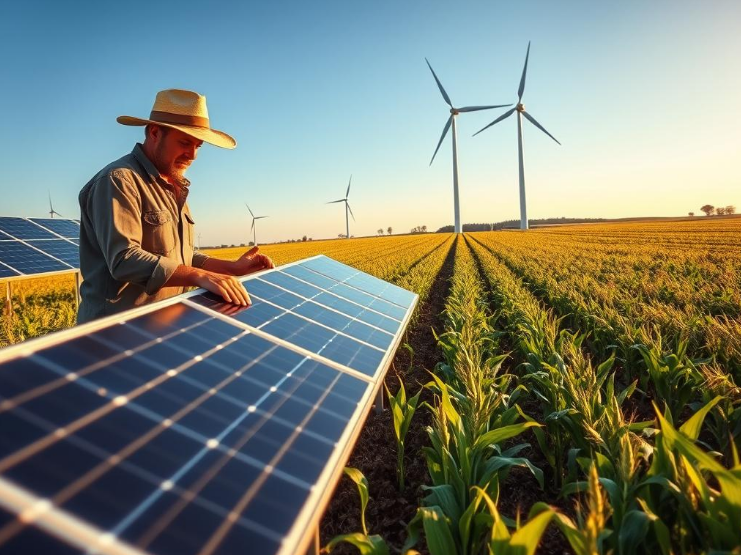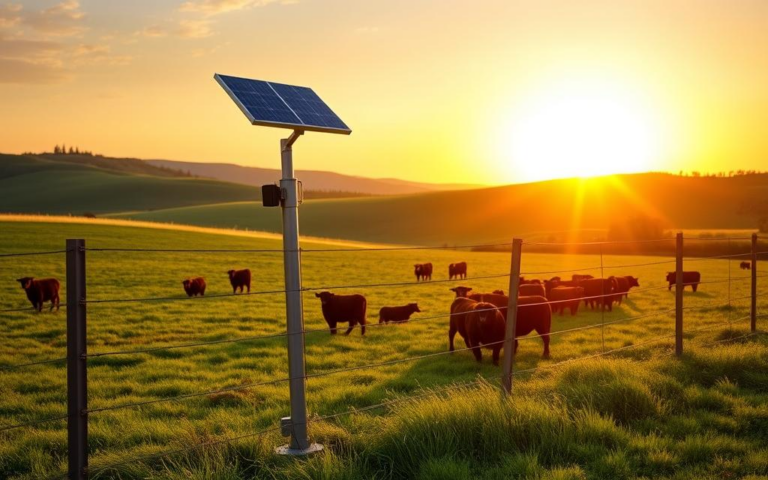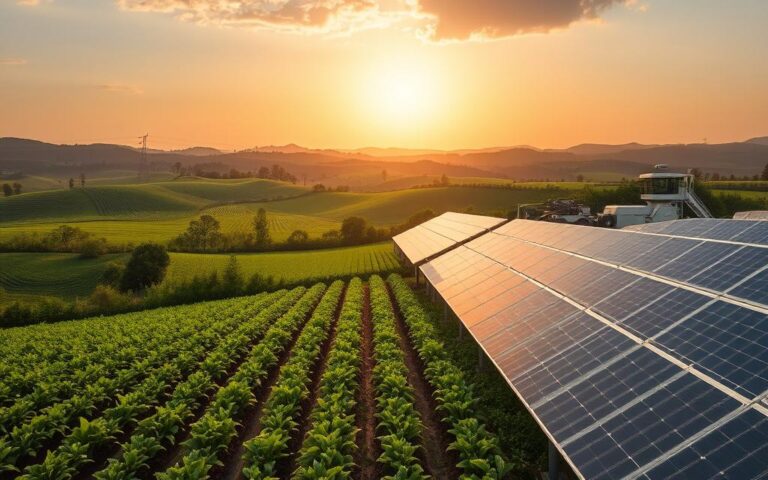

An astonishing 25% of global greenhouse gas emissions come directly from agriculture, making sustainable agriculture systems a critical frontier in climate change mitigation. Climate resilient agriculture energy represents a transformative approach to addressing both environmental challenges and farming sustainability.
American farmers face unprecedented environmental pressures, with extreme weather events threatening crop production and operational stability. Climate smart farming emerges as a strategic solution, integrating renewable energy technologies to protect agricultural productivity and reduce carbon footprints.
Renewable energy systems offer farmers more than environmental benefits. Solar, wind, and biomass technologies provide cost-effective power sources that enhance farm resilience, reduce operational expenses, and create new economic opportunities across rural communities.
The agricultural sector stands at a pivotal moment. By embracing innovative energy solutions, farmers can simultaneously combat climate change, increase economic stability, and ensure food security for future generations.
The Intersection of Renewable Energy and Modern Farming
Modern agricultural operations have transformed into complex energy-dependent systems. Renewable energy farming has emerged as a critical solution to address the increasing energy demands of contemporary agriculture. Farmers now rely on sophisticated technologies that require substantial electrical and fuel inputs for various critical functions.
The energy requirements for agricultural operations include multiple critical components:
- Irrigation pump systems
- Grain drying facilities
- Climate-controlled storage spaces
- Livestock ventilation infrastructure
- Mechanized agricultural equipment
Agricultural sustainability increasingly depends on farm renewable systems that provide resilience against traditional energy market volatilities. Rural landscapes offer unique opportunities for distributed energy generation, with vast land areas ideal for solar and wind installations.
| Energy Source | Agricultural Application | Efficiency Rating |
|---|---|---|
| Solar Power | Irrigation Pumps | 85% |
| Wind Energy | Crop Processing | 75% |
| Biomass | Heating Facilities | 65% |
By integrating renewable energy farming strategies, agricultural operations can simultaneously reduce carbon footprints and enhance economic stability. The transition represents more than an environmental choice—it’s a strategic approach to modernizing agricultural infrastructure.
Understanding Climate Vulnerabilities in Agricultural Systems
Climate change presents unprecedented challenges for agricultural productivity across the United States. Farmers face increasingly complex environmental risks that threaten their crop yields, water resources, and overall agricultural resilience. Understanding these climate vulnerabilities becomes crucial for developing effective climate adaptation agriculture strategies.
The agricultural landscape is transforming rapidly, with multiple interconnected challenges emerging from shifting environmental conditions. Farmers must now navigate a complex ecosystem of unpredictable weather patterns and resource constraints.
Extreme Weather Events and Crop Production
Extreme weather events pose significant risks to agricultural systems. Hurricanes, tornadoes, and severe storms can devastate crop production within hours. Farmers increasingly recognize the need for robust risk management strategies that include:
- Diversified crop selection
- Enhanced infrastructure protection
- Advanced early warning systems
- Renewable energy backup solutions
Water Scarcity and Irrigation Challenges
Drought conditions create substantial pressure on water resources. Agricultural resilience now depends on innovative water management techniques that optimize limited water supplies.
| Water Management Strategy | Water Savings Potential |
|---|---|
| Drip Irrigation | 30-50% reduction |
| Precision Agriculture | 20-40% efficiency improvement |
| Crop Selection Adaptation | 15-25% water conservation |
Temperature Fluctuations and Growing Seasons
Shifting temperature patterns dramatically impact traditional agricultural calendars. Adaptive farming techniques now require sophisticated monitoring and responsive crop management strategies to maintain productivity.
Climate adaptation agriculture demands innovative approaches that integrate technological solutions with traditional farming wisdom. By understanding and preparing for these vulnerabilities, farmers can build more resilient agricultural systems.
Solar Power Applications for Farm Operations
Solar powered farming is revolutionizing agricultural energy systems across the United States. Farmers are increasingly turning to clean energy agriculture solutions that provide reliable power and enhance farm energy independence.
Solar technology offers multiple critical applications for modern agricultural operations:
- Powering irrigation pumps during peak sunlight hours
- Supporting livestock facility electrical needs
- Enabling precision agriculture technologies
- Reducing operational energy costs
The innovative concept of agrivoltaics represents a groundbreaking approach to integrating solar installations with crop production. By strategically positioning elevated solar panels, farmers can generate electricity while providing partial shade beneficial for specific crops.
| Farm Type | Solar Application | Energy Benefits |
|---|---|---|
| Dairy Farms | Milking Equipment Power | Consistent Refrigeration |
| Vegetable Operations | Cold Storage Systems | Product Quality Preservation |
| Livestock Facilities | Ventilation & Cooling | Animal Welfare Management |
Modern solar battery storage systems enable farms to overcome traditional energy limitations. These advanced technologies store excess daytime solar generation for nighttime operations, creating a robust and resilient energy infrastructure.
By investing in solar powered farming, agricultural businesses can significantly reduce their carbon footprint while achieving greater economic stability through predictable energy costs and reduced grid dependence.
Wind Energy Solutions for Rural Agricultural Communities
Wind energy is transforming the landscape of renewable energy farming in rural communities across the United States. Agricultural regions with consistent wind resources are discovering innovative ways to harness clean energy while supporting farm operations.
Rural agricultural communities are increasingly adopting wind energy as a sustainable power solution. Wind turbines offer farmers an opportunity to diversify income streams and reduce operational energy costs.
On-Farm Wind Turbine Integration
Farmers are discovering multiple benefits of integrating wind turbines into their agricultural operations:
- Reduced electricity expenses for farm equipment
- Stable energy production during peak agricultural seasons
- Potential additional revenue through excess energy generation
Wind energy in rural communities provides multiple advantages for agricultural operations. Small to medium-scale wind turbines can power various farm systems, from irrigation pumps to grain processing equipment.
| Farm Type | Wind Energy Application | Potential Energy Savings |
|---|---|---|
| Crop Farms | Irrigation Systems | 30-50% reduction in energy costs |
| Livestock Operations | Ventilation and Water Pumping | 25-45% energy cost reduction |
| Grain Processing | Drying and Equipment Power | 35-55% energy expense savings |
Community Wind Projects Supporting Local Farms
Collaborative wind energy projects are emerging as powerful solutions for renewable energy farming. These community-driven initiatives allow multiple farmers to invest in shared wind installations, creating more efficient and economically viable renewable energy systems.
By pooling resources, rural communities can develop larger wind energy projects that provide consistent power and generate additional income through utility power purchase agreements.
Climate Resilient Agriculture Energy Systems and Grid Independence
Farmers are transforming their approach to energy management through innovative climate resilient agriculture energy systems. These advanced technologies enable farm energy independence by creating robust microgrids that protect agricultural operations from external power disruptions.
Key components of agricultural resilience include:
- Integrated renewable energy sources
- Advanced battery storage systems
- Smart energy management technologies
Modern farms are no longer passive energy consumers but active energy producers. By combining solar panels, wind turbines, and battery storage, agricultural operations can maintain critical functions during extreme weather events or grid failures.
The strategic implementation of farm energy independence provides farmers with critical advantages:
- Continuous operation during power outages
- Reduced electricity costs
- Enhanced environmental sustainability
Cutting-edge battery technologies like lithium-ion storage enable farmers to optimize energy generation and consumption. These systems intelligently manage power flow, drawing from renewable sources or stored energy based on real-time conditions and cost considerations.
Climate resilient agriculture energy systems represent a revolutionary approach to farm management and energy infrastructure.
By investing in renewable energy technologies, farmers can create more reliable, efficient, and sustainable agricultural operations that are prepared for the challenges of a changing climate.
Biomass and Biogas: Converting Agricultural Waste to Power
Agricultural operations are transforming waste into valuable energy resources through innovative biomass energy farming techniques. Sustainable agriculture systems are discovering powerful ways to convert organic materials into renewable power, creating a circular approach to energy production and environmental stewardship.
Farms generate substantial organic waste that can be strategically converted into energy, addressing both waste management and power generation challenges. The process of agricultural carbon reduction through biomass technologies offers multiple environmental and economic benefits.
Anaerobic Digestion for Livestock Operations
Livestock farms are pioneering energy transformation through anaerobic digestion systems. These innovative technologies break down animal waste in oxygen-free environments, producing biogas that can be used for:
- Generating electricity for farm operations
- Heating farm buildings
- Reducing methane emissions
- Creating nutrient-rich fertilizer
Crop Residue Energy Generation
Agricultural residues like corn stover, wheat straw, and rice hulls represent untapped energy potential. Biomass energy farming techniques convert these materials into valuable power sources through advanced conversion methods.
| Crop Residue Type | Energy Potential | Conversion Method |
|---|---|---|
| Corn Stover | High | Direct Combustion |
| Wheat Straw | Medium | Gasification |
| Rice Hulls | Low | Pelletization |
By implementing these sustainable agriculture systems, farmers can generate additional revenue, reduce waste, and contribute to agricultural carbon reduction efforts while creating reliable, locally-controlled energy solutions.
Hydroelectric and Micro-Hydro Systems for Irrigation Networks
Renewable energy farming is revolutionizing agricultural water management through innovative hydroelectric solutions. Micro-hydro systems offer farmers a powerful way to generate electricity while managing irrigation networks. These small-scale power generation technologies transform water infrastructure into energy-producing assets.
Farms with flowing water resources can leverage energy efficient irrigation techniques that simultaneously generate electricity. Micro-hydro systems work by channeling water through specialized turbines, creating electricity from existing water movement in irrigation canals and streams.
- Generate electricity using existing water infrastructure
- Minimize environmental impact
- Provide consistent renewable energy
- Reduce operational electricity costs
The Pacific Northwest and mountain states present ideal conditions for micro-hydro implementation. Farms in these regions can capitalize on topographical advantages, installing turbines in pressurized irrigation lines or near water storage reservoirs.
Micro-hydro systems represent a breakthrough in sustainable agricultural energy production, transforming irrigation networks into dual-purpose infrastructure.
Regulatory considerations remain crucial when implementing these systems. Farmers must navigate water rights and environmental permit requirements. Despite these challenges, micro-hydro offers an exceptionally reliable baseload power solution with minimal maintenance needs.
Renewable Energy Powered Precision Agriculture Technologies
Precision agriculture technology is revolutionizing farming by integrating advanced sensor networks and renewable energy solutions. Farmers are now transforming traditional agricultural practices through sophisticated technologies that enhance crop management and resource efficiency.
Modern climate smart farming relies on intelligent systems that minimize resource waste while maximizing agricultural productivity. Renewable energy plays a critical role in powering these innovative agricultural technologies.
Solar-Driven Sensor Networks and Monitoring Systems
Solar-powered sensor networks provide farmers with unprecedented insights into field conditions. These advanced monitoring systems collect real-time data about:
- Soil moisture levels
- Temperature variations
- Nutrient concentrations
- Crop health indicators
“Data-driven agriculture enables farmers to make precise decisions that optimize resource utilization,” says agricultural technology expert Dr. Emily Rodriguez.
Automated Irrigation with Clean Energy
Energy efficient irrigation systems powered by renewable sources are transforming water management in agriculture. Solar-powered pumps and intelligent irrigation networks help farmers:
- Reduce water consumption
- Minimize energy expenditures
- Maintain optimal crop hydration
- Adapt to changing environmental conditions
| Technology | Energy Source | Water Savings |
|---|---|---|
| Solar Drip Irrigation | Photovoltaic Panels | 40-60% |
| Automated Pivot Systems | Solar Arrays | 30-50% |
By integrating renewable energy with precision agriculture technology, farmers can create sustainable, resilient agricultural ecosystems that respond dynamically to environmental challenges.
Economic Benefits and Return on Investment for Farmers
Renewable energy farming presents a compelling financial opportunity for modern agricultural operations. Farmers increasingly recognize that sustainable agriculture systems can generate significant economic advantages beyond traditional production methods.
The initial investment in farm energy independence might seem substantial, but the long-term financial benefits are remarkable. Renewable energy technologies offer multiple revenue streams and cost-saving mechanisms:
- Direct electricity cost reductions
- Net metering program compensation
- Renewable energy certificate sales
- Carbon credit generation
Solar installations typically achieve payback periods between 5-10 years. Biogas systems on large livestock operations can recover investments even faster, ranging from 3-7 years depending on local energy prices and available incentives.
Renewable energy investments also enhance farm property values and provide critical risk mitigation. By establishing fixed energy costs, farmers protect themselves from volatile fossil fuel price fluctuations that can dramatically impact operational budgets.
Specialized financing mechanisms support these transitions, including:
- USDA renewable energy programs
- Agricultural lender partnerships
- Power purchase agreements
Investing in renewable energy is not just an environmental choice—it’s a strategic financial decision for modern farmers.
The economic landscape for renewable energy farming continues to improve, making sustainable agricultural systems increasingly attractive for forward-thinking agricultural entrepreneurs.
Policy Frameworks and Incentives Supporting Energy Transition in Agriculture
The landscape of agricultural sustainability is rapidly evolving, with government policies playing a crucial role in accelerating clean energy agriculture. Farmers across the United States now have access to multiple financial incentives and support programs designed to reduce agricultural carbon reduction efforts and promote renewable energy adoption.
Federal support for agricultural renewable energy has expanded significantly in recent years, creating substantial opportunities for farmers to invest in sustainable technologies.
Federal Programs and Tax Credits
The USDA Rural Energy for America Program (REAP) stands out as a critical resource for farmers seeking to implement renewable energy solutions. Key features of this program include:
- Grants covering up to 25% of project costs
- Loan guarantees for renewable energy installations
- Support for solar, wind, and biomass energy projects
State-Level Initiatives and Grants
State governments have developed targeted programs to further support agricultural sustainability and clean energy transitions.
| State | Key Incentive Program | Focus Area |
|---|---|---|
| California | Self-Generation Incentive Program | Energy Storage |
| New York | Agricultural Energy Efficiency Program | Renewable Infrastructure |
| Iowa | Renewable Energy Tax Credits | Wind and Solar Projects |
Farmers interested in leveraging these programs should consult local agricultural extension services and renewable energy consultants to navigate the complex landscape of financial incentives.
Conclusion
The transition to climate resilient agriculture energy represents a critical pathway for American farmers navigating increasingly unpredictable environmental conditions. Climate smart farming is no longer a distant concept but an immediate strategy for sustainable agricultural production. Farmers across the United States are discovering that renewable energy technologies provide robust solutions to climate challenges while simultaneously reducing operational costs.
Agricultural resilience emerges as a key driver of this transformative approach. Solar, wind, biomass, and hydroelectric systems are proving themselves as practical tools for farm sustainability. These technologies offer more than environmental benefits—they provide economic stability and operational independence for agricultural businesses facing growing climate uncertainties.
The future of farming will be defined by adaptable energy strategies that integrate cutting-edge renewable technologies with traditional agricultural practices. Early adopters are demonstrating that strategic energy investments can create more robust, efficient, and economically viable farming operations. Farmers who conduct comprehensive energy audits, explore tailored renewable solutions, and leverage available financial incentives will be best positioned to thrive in an evolving agricultural landscape.
As climate pressures intensify, renewable energy integration will transition from being a competitive advantage to an operational necessity. The agricultural sector stands at a pivotal moment—embracing these innovations can simultaneously address environmental challenges and create more resilient farming ecosystems for future generations.
FAQ
What is climate-resilient agriculture energy?
Climate-resilient agriculture energy refers to renewable energy systems that help farmers maintain agricultural operations during extreme weather events, reduce carbon emissions, and provide reliable power sources that enhance farm productivity and sustainability.
How do solar panels benefit agricultural operations?
Solar panels can power irrigation systems, livestock facilities, and farm equipment, providing energy independence, reducing operational costs, and enabling farmers to generate electricity on-site while maintaining productivity during grid disruptions.
What is agrivoltaics?
Agrivoltaics is an innovative approach that combines solar energy generation with crop production, where solar panels are strategically placed to provide partial shade for certain crops while simultaneously generating renewable electricity.
Can farmers generate energy from agricultural waste?
Yes, farmers can convert agricultural waste like animal manure and crop residues into biogas and biomass energy through processes like anaerobic digestion, creating a circular energy system that reduces waste and generates renewable power.
What financial incentives exist for renewable energy in agriculture?
Farmers can access federal programs like the USDA Rural Energy for America Program (REAP), federal tax credits, state-level grants, and renewable energy certificates that significantly offset the initial investment in renewable energy systems.
How do wind energy solutions support rural agricultural communities?
Wind turbines can be integrated directly on farms or through community wind projects, providing local farmers with reliable, clean energy that reduces electricity costs and creates additional revenue streams through power generation.
What are the primary climate vulnerabilities in agricultural systems?
Agricultural systems face vulnerabilities including extreme weather events, water scarcity, unpredictable temperature fluctuations, and disrupted growing seasons, which renewable energy systems can help mitigate through reliable power and adaptive technologies.
How do renewable energy systems enhance grid independence?
By combining multiple renewable energy sources like solar, wind, and biomass with advanced battery storage, farms can create microgrids that can operate independently during grid outages, ensuring continuous farm operations.
What role do precision agriculture technologies play in climate resilience?
Renewable energy powers sophisticated sensor networks and automated systems that monitor crop health, optimize resource use, and enable farmers to make data-driven decisions quickly in response to changing environmental conditions.
How long does it take to recoup investments in renewable energy systems?
Depending on the technology and farm’s energy needs, renewable energy systems typically achieve payback periods between 5-10 years, with additional benefits from reduced energy costs, potential revenue from excess energy generation, and increased property value.