
American farmers are facing an unprecedented challenge: agricultural energy costs have surged by 37% in the past three years, threatening farm profitability and sustainability. Energy independence in agriculture is emerging as a critical strategy for farmers seeking to stabilize operational expenses and enhance productivity.
Sustainable farming practices are revolutionizing how agricultural businesses manage their energy consumption. By implementing renewable energy systems, farmers can dramatically reduce their reliance on traditional power grids while creating more predictable financial models for their operations.
The transformation goes beyond simple cost-cutting. Modern farmers are discovering that energy independence provides strategic advantages, enabling them to control expenses, reduce environmental impact, and create more resilient agricultural businesses. Solar, wind, and biomass technologies are now powerful tools for agricultural economic sustainability.
This comprehensive exploration will dive into how innovative energy solutions are reshaping farming economics, offering farmers unprecedented opportunities to improve their operational efficiency and long-term financial stability.
The Rising Energy Costs Challenging Modern Farming Operations
Modern agricultural operations are facing an unprecedented challenge: skyrocketing farm energy costs that threaten the economic stability of rural businesses. Farmers across the United States are experiencing a significant surge in agricultural energy management expenses that can consume up to 30% of their total operational budget.
The energy demands of contemporary farming are complex and multifaceted. Different agricultural sectors require substantial power for critical operations:
- Irrigation systems running complex water management networks
- Grain drying and processing equipment
- Climate-controlled storage facilities
- Livestock ventilation and milking operations
Energy price volatility creates substantial financial uncertainty for farmers. Unexpected price spikes can dramatically impact farm profitability, especially during peak demand periods like harvest season. The unpredictability of traditional energy markets makes long-term planning increasingly challenging.
“Energy costs have become a make-or-break factor for agricultural sustainability,” says agricultural economist Dr. Sarah Martinez.
As farming technology becomes more sophisticated, energy requirements continue to grow. Small and medium-sized farms are particularly vulnerable, with farm operational costs escalating faster than revenue streams. This economic pressure is pushing farmers to explore alternative energy solutions that promise greater financial stability and independence.
Understanding Energy Independence in Agriculture
Agricultural operations are experiencing a transformative shift in energy management. Farmers are no longer passive consumers of electricity but are becoming active producers through energy self-sufficiency farming strategies. This revolution in agricultural energy approaches is reshaping how farms generate, consume, and manage power.
Energy independence represents a critical evolution in agricultural sustainability. Farms are increasingly adopting grid independence farming techniques that allow them to generate their own power and reduce reliance on traditional utility infrastructure.
What Energy Independence Means for Farms
Energy independence for farms goes beyond simply generating electricity. It encompasses a comprehensive approach to on-farm energy generation that provides multiple benefits:
- Reduced operational costs
- Enhanced resilience against power disruptions
- Potential revenue from excess energy production
- Lower carbon footprint
The Shift from Grid Dependence to Self-Sufficiency
Historically, farms were entirely dependent on external power sources. Modern agricultural operations are transforming this model by implementing renewable energy systems that provide greater control and economic stability.
| Energy Source | Farm Potential | Cost Efficiency |
|---|---|---|
| Solar | High | Moderate to High |
| Wind | Medium | High |
| Biomass | Medium | Low to Moderate |
By embracing energy self-sufficiency farming, agricultural businesses can create more predictable and sustainable energy strategies. The transition requires initial investment but offers long-term financial and operational advantages.
Solar Power Solutions Transforming Farm Economics
Renewable energy for farms is revolutionizing agricultural operations across the United States. Solar panels for agriculture have become a game-changing technology that helps farmers reduce energy costs and increase sustainability. The dramatic decline in solar equipment prices has made clean energy agriculture more accessible than ever before.
Farmers now have multiple solar installation options to meet their unique energy needs:
- Rooftop systems on barns and storage buildings
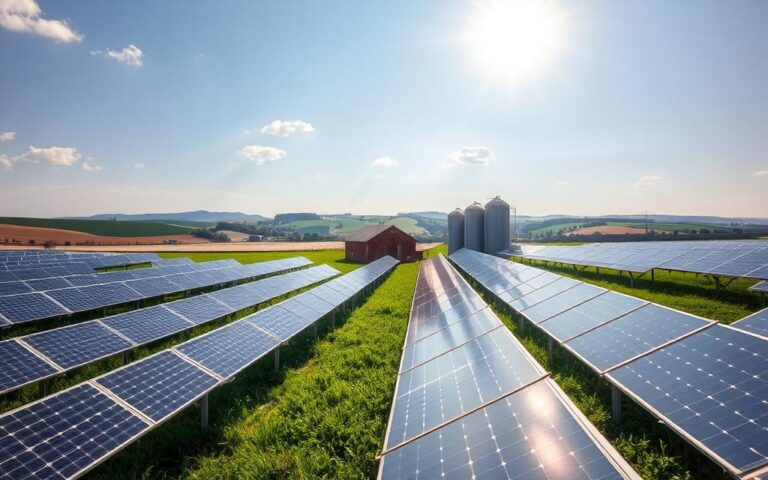
- Ground-mounted solar arrays on unused land
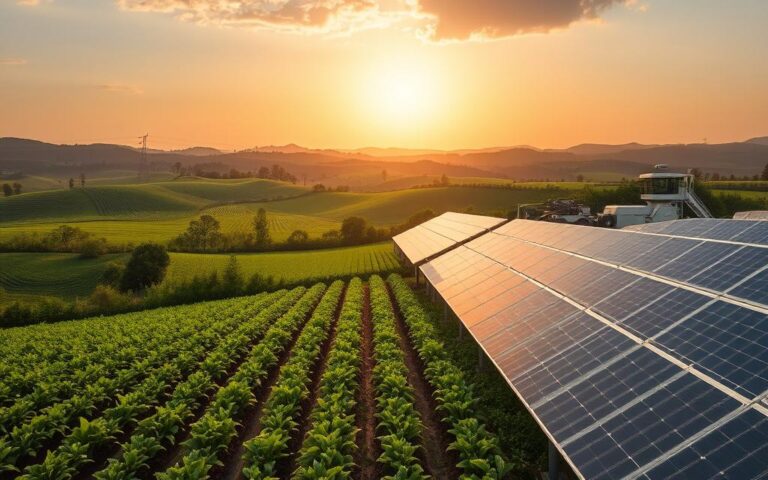
- Innovative agrivoltaic systems combining crop production with solar generation
The economics of solar power for farms are increasingly compelling. Current installation costs range from $2.50 to $3.50 per watt, with typical payback periods between 6-10 years. Farms can now design systems that match current energy requirements while allowing for future expansion.
| Farm Size | Typical Solar System Size | Estimated Annual Energy Production |
|---|---|---|
| Small Diversified Farm | 25-50 kW | 35-70 MWh |
| Medium Commercial Farm | 100-250 kW | 140-350 MWh |
| Large Agricultural Operation | 500 kW – 2 MW | 700-2,800 MWh |
Net metering policies provide additional financial benefits, allowing farms to receive credits for excess solar production fed back to the electrical grid. This approach effectively transforms the utility grid into a virtual battery, maximizing the economic potential of solar investments.
Wind Energy Systems for Rural Agricultural Properties
Wind power farming has emerged as a game-changing renewable power systems solution for agricultural operations across the United States. Farmers are increasingly exploring wind energy as a strategic approach to agricultural energy solutions that can dramatically reduce operational costs and increase energy independence.
Rural properties with consistent wind resources present unique opportunities for implementing wind energy technologies. The potential for generating clean electricity directly on farmland has become an attractive option for modern agricultural businesses.
Small-Scale Wind Turbines for Individual Farms
Farmers can benefit from small-scale wind turbines designed specifically for agricultural settings. These systems typically range from 10kW to 100kW and offer several advantages:
- Consistent power generation during different times of day
- Complementary energy production to solar installations
- Potential for significant long-term cost savings
Successful wind power farming requires careful site assessment. Key considerations include:
- Minimum average wind speeds of 10+ mph
- Proper tower height (80-120 feet recommended)
- Professional wind resource evaluation
Community Wind Projects Benefiting Multiple Producers
Collaborative wind energy approaches are transforming renewable power systems in rural communities. Community wind projects allow multiple farmers to share investment costs and energy benefits, creating innovative agricultural energy solutions that extend beyond individual farm boundaries.
Farmers can participate in wind energy through various models, including direct ownership, land leasing to wind developers, and cooperative investment strategies. These approaches provide flexible options for integrating wind energy into agricultural operations.
Biomass Energy: Converting Farm Waste into Power
Farmers are transforming agricultural waste into a powerful renewable energy solution through biomass energy conversion. This innovative approach creates a sustainable cycle that turns potential waste into valuable electricity and heat sources.
Biomass energy systems offer farms a unique opportunity to optimize energy production while addressing waste management challenges. The process involves converting organic materials from agricultural operations into usable power through several key technologies:
- Anaerobic digesters for converting livestock manure into biogas
- Biomass boilers burning crop residues and plant materials
- Gasification systems generating synthetic gas from solid biomass
Livestock operations particularly benefit from these systems. Anaerobic digestion solves two critical challenges simultaneously: waste management and energy generation. A typical large dairy farm with 500 cows can generate 100-300 kilowatts of continuous power.
“Biomass energy transforms agricultural waste from a disposal problem into a valuable resource.”
The advantages of biomass energy in agricultural sustainability extend beyond power generation. These systems provide consistent 24/7 energy production, reduce waste volumes, control odors, and create high-quality fertilizer byproducts.
| Biomass Energy Technology | Power Output | Key Benefits |
|---|---|---|
| Anaerobic Digesters | 100-300 kW | Waste management, continuous power |
| Biomass Boilers | 50-200 kW | Heating, crop residue utilization |
| Gasification Systems | 75-250 kW | Synthetic gas production, versatility |
Farm energy optimization through biomass technologies represents a promising path to increased sustainability and reduced operational costs. By converting waste into power, farmers can create a more resilient and environmentally friendly agricultural ecosystem.
The Financial Impact of Renewable Energy Adoption on Farm Profitability
Renewable energy represents a transformative opportunity for agricultural operations to enhance farm profitability and create long-term financial stability. Farmers increasingly recognize that strategic energy investments can dramatically reduce operational costs and generate additional revenue streams.

Understanding the financial landscape of energy ROI agriculture requires comprehensive analysis of multiple economic factors. Farmers must evaluate several critical components when assessing renewable energy systems:
- Initial capital investment
- Annual energy production potential
- Avoided electricity costs
- System maintenance expenses
- Equipment lifespan projections
Calculating Return on Investment for Energy Systems
Effective financial planning involves understanding the complete economic picture of renewable energy investments. The levelized cost of energy (LCOE) provides farmers a critical metric for comparing renewable systems against traditional grid electricity.
| Investment Metric | Solar System | Wind System |
|---|---|---|
| Average Initial Cost | $25,000-$50,000 | $30,000-$70,000 |
| Estimated Annual Savings | $3,500-$5,500 | $4,000-$6,500 |
| Payback Period | 5-8 years | 6-10 years |
Tax Incentives and Government Programs Supporting Energy Transitions
Agricultural tax incentives play a crucial role in making renewable energy investments more accessible. Key financial support mechanisms include:
- Federal Investment Tax Credit (30% system cost)
- USDA Rural Energy for America Program (REAP) grants
- Accelerated depreciation through MACRS
- State-specific renewable energy incentives
By leveraging these programs, farmers can significantly reduce upfront costs and accelerate their path to energy independence. Strategic financial planning transforms renewable energy from an expense into a profitable agricultural investment.
How Energy Independence Improves Crop Production and Livestock Management
Energy independence is revolutionizing agricultural productivity by providing farmers with unprecedented control over their crop production efficiency and livestock energy management. Modern agricultural operations are discovering that reliable energy systems unlock transformative capabilities across farming practices.
For crop production, renewable energy enables precise technological interventions that dramatically improve yields:
- GPS-guided equipment optimization
- Advanced automated irrigation systems
- Climate-controlled storage facilities
- Precision monitoring technologies
Livestock management benefits equally from agricultural energy solutions. Consistent power supply allows farmers to maintain optimal environmental conditions critical for animal health and productivity. Temperature-controlled barns, automated feeding systems, and advanced monitoring technologies become economically viable when energy costs are predictable and manageable.
Renewable energy systems support specialized agricultural operations by providing:
- Continuous climate control in greenhouses
- Reliable power for milking equipment
- Consistent ventilation for animal facilities
- Data-driven livestock management platforms
Farmers embracing energy independence are not just reducing costs—they’re strategically positioning themselves to maximize agricultural productivity through intelligent energy management.
Battery Storage Systems and Energy Management for Agricultural Operations
Modern farms are revolutionizing their energy strategies through advanced battery storage farms and smart grid agriculture technologies. These innovative solutions are transforming how agricultural operations manage and optimize their energy consumption.
Farm energy optimization has become crucial for agricultural businesses seeking to reduce costs and increase operational efficiency. Battery storage systems offer farmers unprecedented control over their energy resources, enabling them to capture and utilize renewable energy more effectively.
Storing Excess Energy for Peak Demand Periods
Farmers can now leverage cutting-edge battery technologies to address energy challenges. Key advantages of battery storage systems include:
- Capturing excess solar and wind energy during peak production times
- Reducing reliance on grid electricity during expensive peak hours
- Providing reliable backup power for critical farm operations
“Battery storage is no longer a luxury—it’s a strategic necessity for modern agricultural operations.” – Agricultural Energy Experts
Smart Grid Technology for Farm Energy Optimization
Smart grid agriculture technologies are reshaping energy management on farms. These advanced systems enable farmers to:
- Automatically manage energy flows
- Optimize renewable energy consumption
- Predict and respond to energy production patterns
The future of farming is intelligent, connected, and energy-efficient. By integrating battery storage farms with smart grid technologies, agricultural operations can dramatically reduce energy costs while increasing sustainability.
Case Studies: Farmers Who Successfully Achieved Energy Self-Sufficiency
Energy self-sufficiency farming has transformed agricultural operations across the United States. Innovative farmers are proving that renewable energy for farms is not just a theoretical concept but a practical path to improved farm profitability.
Let’s explore real-world success stories that demonstrate the power of agricultural energy independence:
- Midwest Grain Farm Solar Solution: A corn and soybean operation in Iowa installed a 150kW solar array across machine shed roofs and unused field corners. The system:
- Reduced annual energy costs by $18,000
- Powered grain drying and irrigation systems
- Achieved complete payback in seven years
- California Dairy’s Innovative Approach: A large dairy farm near Fresno implemented an anaerobic digester that:
- Processes manure from 1,200 cows
- Generates 250kW of continuous power
- Eliminated electric bills completely
“Renewable energy isn’t just about saving money – it’s about creating a sustainable future for agriculture,” says Mark Thompson, a solar energy consultant for rural farms.
These case studies reveal that energy self-sufficiency is achievable across diverse farm types. From solar arrays to biogas systems, farmers are finding innovative ways to reduce energy costs and increase operational resilience.
The key benefits extend beyond financial savings. Farmers report improved energy reliability, reduced carbon footprints, and enhanced community reputation through sustainable practices.
Each successful implementation demonstrates that renewable energy for farms is a viable strategy for modern agricultural businesses seeking to improve farm profitability and environmental stewardship.
Overcoming Initial Investment Barriers and Implementation Challenges
Farmers exploring renewable energy for farms often face significant financial hurdles. The initial investment can seem daunting, especially for agricultural operations working with tight operational budgets. Understanding the strategies to overcome these challenges is crucial for successful agricultural energy solutions.
Key barriers to implementing renewable energy systems include:
- High upfront capital requirements
- Limited technical knowledge
- Complex permitting processes
- Uncertainty about long-term performance
Innovative approaches can help farmers navigate these challenges. Strategic planning and financial partnerships can transform seemingly insurmountable obstacles into achievable goals for farm operational costs reduction.
| Investment Strategy | Potential Benefits | Implementation Difficulty |
|---|---|---|
| Modular System Installation | Reduced Initial Cost | Low |
| USDA REAP Grants | 40-50% Cost Coverage | Medium |
| Power Purchase Agreements | Zero Upfront Investment | High |
Farmers can leverage multiple strategies to minimize financial risks. Working with agricultural energy consultants and local extension services provides crucial guidance. These experts help farmers understand system requirements, navigate technical complexities, and identify the most cost-effective renewable energy solutions.
The key to successful renewable energy adoption is understanding your farm’s unique energy needs and developing a tailored implementation strategy.
By breaking down implementation challenges into manageable steps, farmers can gradually transition toward energy independence. The long-term financial and environmental benefits far outweigh the initial investment concerns.
Future Trends in Agricultural Energy Independence and Sustainability
The landscape of agricultural sustainability is rapidly evolving, with groundbreaking technologies promising to revolutionize clean energy agriculture. Farmers are standing at the cusp of a technological transformation that could dramatically reshape how agricultural operations generate and manage energy.
The journey toward farm equipment electrification is accelerating, bringing innovative solutions that address both environmental concerns and operational efficiency. Emerging technologies are creating unprecedented opportunities for agricultural energy independence.
Emerging Technologies on the Horizon
Several cutting-edge technologies are poised to transform agricultural energy systems:
- Agrivoltaic systems that integrate solar panels with crop production
- Advanced battery technologies like iron-air and flow batteries
- Small-scale hydrogen production systems
- AI-powered energy management platforms
- Blockchain-enabled peer-to-peer energy trading networks
Artificial intelligence will play a crucial role in optimizing farm energy consumption. Machine learning algorithms can predict energy needs, minimize waste, and create intelligent energy management strategies.
The Role of Electric Farm Equipment
Electric farm equipment represents a significant leap forward in agricultural sustainability. Manufacturers like Monarch Tractor and John Deere are developing zero-emission vehicles that can be powered entirely by renewable energy sources.
“The future of farming is electric, sustainable, and intelligent.” – Agricultural Technology Innovator
Key advantages of electric farm equipment include:
- Reduced operational costs
- Lower maintenance requirements
- Minimal environmental impact
- Integration with renewable energy systems
- Potential for autonomous operation
The convergence of renewable energy, electrification, and smart technologies is creating a new paradigm for agricultural sustainability. Farms are transforming from traditional energy consumers to sophisticated, self-sufficient ecosystems.
Conclusion
The journey toward energy independence represents a transformative opportunity for modern farms. Sustainable farming practices are no longer just an environmental ideal but a critical strategy for farm profitability. Farmers who invest in renewable energy systems can dramatically reduce operational costs, protect against volatile utility rates, and create more resilient agricultural businesses.
Implementing energy independence is not a one-size-fits-all approach. Each farm can develop a customized strategy that matches its unique resources, location, and financial capabilities. From solar installations to wind turbines and biomass systems, the options for reducing energy dependency are diverse and increasingly accessible. The initial investment may seem challenging, but long-term benefits far outweigh the upfront costs.
Technological advancements continue to make renewable energy more efficient and affordable. Farmers who take proactive steps now will position themselves at the forefront of agricultural innovation. By embracing energy independence, agricultural operations can simultaneously improve their economic performance and contribute to broader environmental sustainability goals.
The future of farming is green, efficient, and self-sufficient. As energy technologies evolve and traditional grid reliance becomes less economically viable, farms that have already begun their renewable energy journey will have a significant competitive advantage. Exploring energy independence is not just a choice—it’s becoming a strategic necessity for forward-thinking agricultural businesses.
FAQ
What is energy independence for farms?
Energy independence for farms means generating sufficient renewable energy on-site to meet most or all of the operation’s power needs, reducing reliance on utility-provided electricity. This can involve solar, wind, or biomass systems that produce energy, potentially allowing farms to offset grid electricity costs or even sell excess power back to the grid.
How much can farmers save by adopting renewable energy?
Farmers can typically save 15-30% on their total operational costs by implementing renewable energy systems. Depending on the farm’s size and energy consumption, annual savings can range from $10,000 to $50,000, with payback periods typically between 6-10 years.
What renewable energy technologies work best for farms?
Solar is the most widely adopted technology, with photovoltaic systems easily installed on barn roofs or unused land. Wind turbines work well in regions with consistent wind resources, and biomass systems are excellent for farms with significant organic waste like livestock operations.
Are there government incentives for farm renewable energy?
Yes, the USDA Rural Energy for America Program (REAP) offers grants covering up to 25% of project costs. The federal Investment Tax Credit provides a 30% tax credit, and many states offer additional incentives like property tax exemptions and rebates.
How do battery storage systems benefit farms?
Battery storage allows farms to store excess renewable energy generated during peak production times, providing power during evening hours or low-production periods. This reduces reliance on grid electricity, especially during expensive peak-rate times, and offers backup power during potential outages.
Can small farms implement renewable energy?
Absolutely. Renewable energy systems can be modular and scaled to fit farms of any size. Small farms can start with modest 25-50 kW solar installations and expand over time, using financing options like power purchase agreements or leasing to minimize upfront costs.
What maintenance is required for farm renewable energy systems?
Most modern renewable energy systems require minimal maintenance. Solar panels typically need annual cleaning and inspection, wind turbines require more frequent checks, and biomass systems need more regular maintenance. Most manufacturers offer 20-25 year warranties on major components.
How do renewable energy systems impact crop and livestock production?
Reliable, affordable energy enables advanced agricultural technologies like precision irrigation, climate-controlled storage, automated feeding systems, and environmental monitoring. This can lead to improved crop yields, better livestock health, and reduced post-harvest losses.