
Thinking about switching to solar energy? Wondering if it can save you money? Understanding the Return on Investment (ROI) for solar panels is key. It shows both immediate financial benefits and long-term savings on home value and energy bills. Today, saving money with solar panels is a top priority for homeowners. This guide will help you see how solar energy can be a good financial decision. It makes your energy use profitable.
Key Takeaways
- Understanding Solar Panel ROI can significantly impact your financial decisions.
- Calculating potential solar panel cost savings is essential for homeowners.
- Solar energy return on investment contributes to both immediate and long-term savings.
- Investing in solar not only reduces bills but also increases property value.
- A well-calculated ROI can ease your pathway to energy independence and sustainability.
Understanding Solar Panel ROI and Its Importance
Putting money into solar energy is both good for the planet and your wallet. Learning about solar panel ROI gives you essential details on how well your investment is doing. It tells you what financial benefits you can see from your solar panels. This helps you make smart choices about your home’s energy use.
What is Solar Panel ROI?
Solar panel ROI shows how much money you get back from investing in solar power. Think about the up-front costs, the ongoing upkeep, and how much you save on energy bills. The main point is figuring out when the solar panels start paying for themselves and how much money you’ll make in the end. This is why it’s key to understand solar energy’s return on investment.
Why ROI Matters for Homeowners
For people who own their homes, ROI helps judge if an energy project is worth it. It lets you see the long-term benefits of putting money into energy. A good ROI means you could make money, boost your home’s value, and help the planet.
The Benefits of Investing in Solar Energy
The perks of solar energy investment go beyond just saving money right now. They include:
- Reduced monthly utility bills – Solar power can greatly reduce how much you spend on energy.
- Government incentives – There are tax credits and rebates available for those who choose solar.
- Energy independence – With solar, you rely less on traditional energy sources, which means more security.
- Environmental impact – Going green with solar energy cuts down your carbon footprint.
Key Factors Affecting Solar Panel ROI
Several key factors shape the ROI of solar panels. Understanding them helps in making wise choices for your solar setup. These include the upfront cost, government incentives, savings on energy, and upkeep costs.
Initial Costs of Solar Installation
Solar installation comes with significant initial costs. The size and quality of the system, and how complex the installation is, affect the total price. By comparing quotes from different providers, you can find better deals. Reducing upfront costs boosts your future savings from solar panels.
Government Incentives and Rebates
Government incentives greatly improve your solar investment returns. Tax credits, rebates, and grants from different levels of government lower your initial costs. These benefits can make your solar panels pay off faster and increase your investment’s returns.
Energy Savings Over Time
The main perk of solar energy is saving on utility bills. As electricity costs go up, your solar panels will save you more each month. These savings add up, making your ROI solid over time. You can figure out when you’ll break even and start benefiting financially in the long run.
Maintenance and Operational Costs
Solar panels need little upkeep, but there are some costs to think about. Costs for cleaning, repairs now and then, and replacing parts like inverters matter. Keeping track of these costs helps you understand the true long-term value of your solar panels. It’s all about balancing the initial spend with the future savings for a wise solar investment.
Estimating Your Energy Needs
Getting the most from solar energy means knowing your energy needs well. It’s key to understand both your current and future energy use. This way, you pick the right size for your solar panel system. Doing this will make sure you get a good return on your investment.
Calculating Your Current Energy Consumption
First, look at your old utility bills. They show how much energy your home uses on average. To get a more precise estimate, do the following:
- List every electrical appliance and device.
- Find out how many watts each one uses.
- Guess how many hours per day each is on.
Then, by multiplying the wattage by how long you use them, you figure out each one’s energy use. Add them up to see your total energy use. This total is crucial for figuring out what you need for solar panels.
Assessing Future Energy Usage
Think about how your energy needs might change so your solar panels remain useful. Look at factors like:
- Plans for home expansions or remodels that could increase power needs.
- More energy use from new gadgets or electric cars.
- How changing seasons affect energy use.
Considering these future changes helps you adjust your solar energy plans.
The Role of Energy Efficiency
Better energy efficiency improves your solar investment returns. Using less energy means you need a smaller solar setup. Simple actions, like switching to LED lights, unplugging devices when not in use, or choosing efficient appliances, can save a lot. These steps don’t just cut down on bills. They also boost your solar investment value over time.
| Appliance | Wattage | Hours Used Per Day | Daily Energy Consumption (Wh) |
|---|---|---|---|
| Refrigerator | 150 | 24 | 3600 |
| LED Bulbs | 10 | 5 | 50 |
| Television | 100 | 4 | 400 |
| Computer | 200 | 8 | 1600 |
| Washing Machine | 500 | 1 | 500 |
| Totals | 6160 Wh |
How to Calculate Your Solar Panel ROI
Learning to accurately calculate your solar panel ROI is key to smart energy decisions. By using a structured approach, you can see how much you’ll save with solar energy. We’ll show you how to figure out your solar panel ROI, with easy tools and an example.
Step-by-Step ROI Calculation Guide
To figure out your solar panel ROI, just follow these steps:
- Determine the Total Investment: Add up all the costs of buying and setting up your solar panels. Don’t forget any extra fees.
- Estimate Annual Savings: Look at your current energy bill to guess your savings. Think about the benefit of making your own power.
- Account for Incentives: Remember to include any tax breaks, rebates, and incentives you can get. These can lower your upfront costs.
- Calculate the Payback Period: Divide your total cost by your yearly savings. This tells you how many years it’ll take to make back your money.
- Analyze Long-Term Benefits: After the payback period, calculate your profits compared to your original investment.
Tools and Software for ROI Estimation
Using a residential solar ROI calculator makes this easier. There are many software and online tools that help figure out costs and savings. Try using PVWatts, Solar-Estimate, or EnergySage for their simple interfaces, especially if you’re new to solar calculations.
Example of a Solar ROI Calculation
Here’s a clear example of calculating solar ROI:
| Parameter | Value |
|---|---|
| Initial Investment | $15,000 |
| Annual Energy Savings | $1,500 |
| Tax Credits and Incentives | $3,000 |
| Net Investment | $12,000 |
| Payback Period | 8 years |
| Total Profit After 25 Years | $36,000 |
This example shows how investing in solar panels leads to financial gains over time. By following these guidelines and using the right tools, you can easily work out your solar panel ROI.
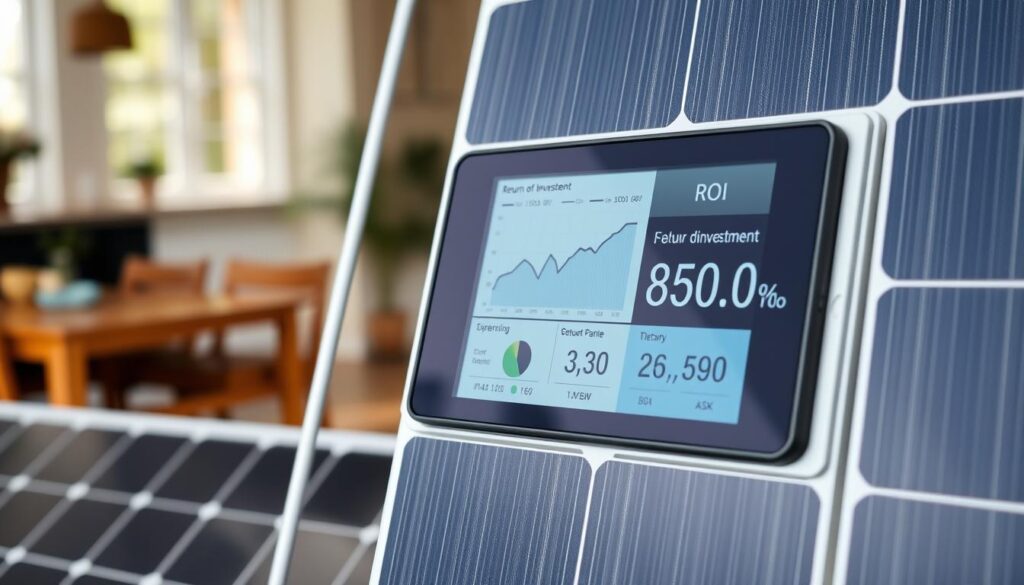
Analyzing Your Location’s Solar Potential
It’s key to know your area’s solar potential to make the most of solar power. Checking how much sun your area gets and the solar return on investment (ROI) is very important. This is because where you live and the environment around you can affect how well your solar panels work. This, in turn, can change how much you save and your overall ROI.
How Sunlight Exposure Affects ROI
Sunlight exposure is crucial for solar panel effectiveness. Places with a lot of sunlight usually make more energy, which means better financial returns. Analyzing your place’s sunlight hours over the year helps you see if solar energy is a good choice. In general, areas with less clouds and more sunny days have a higher solar ROI.
Local Climate Considerations
The local climate can change how well solar panels work, too. Seasons like winter or times with a lot of rain can block the sun and lower energy production. Knowing your area’s usual weather patterns helps set the right expectations for solar power. It’s important to consider these climate factors when planning your solar project.
Evaluating Your Roof’s Suitability
When thinking about putting solar panels on your roof, you need to look at the roof’s angle, direction, and shading. The best setup is a roof that faces south and doesn’t have anything blocking the sun. You should watch out for trees or buildings that might cast shadows because this can seriously cut down on your solar power. A good roof setup can mean more energy made and better ROI.
Long-Term Benefits of Solar Investments
Investing in solar technology brings many long-term perks, not just lower energy bills. These benefits include boosting your property’s value and promoting a greener planet.
Increasing Property Value
Why do homeowners go solar? Often, it’s because it can raise their home’s value. Solar panels make a home more attractive by cutting energy costs and showing a commitment to the environment. On average, a solar installation can lift a home’s value by 3-4%.
Energy Independence and Stability
Moving to solar energy means less worry about the changing costs of energy. Solar panels make you less dependent on utility companies. This brings stability to your monthly bills. As the demand for energy grows, solar energy remains a steadfast option, keeping you safe from price swings.
Environmental Impact of Solar Energy
Choosing solar energy is a big step for the planet’s health. It means cleaner air and a better environment for everyone in the future. Also, as more people choose renewable energy, it lowers overall greenhouse gas emissions. This supports worldwide efforts to protect our environment.

Understanding Different Types of Solar Panels
When you look into solar panels, it’s key to know the kinds you’ll find. Each type has unique features that affect your choice. Learning about these differences helps you pick the best solar panels for your return on investment (ROI).
Monocrystalline vs. Polycrystalline Panels
Monocrystalline panels stand out for their efficiency and long life. They’re made from single-crystal silicon and use less space to produce more energy. This makes them great for homes with small roofs. Polycrystalline panels, made from many silicon crystals, cost less but are a bit less efficient. Think about your budget and how much roof space you have when choosing.
Thin-Film Solar Technology
Thin-film solar panels offer unique benefits. They’re light and flexible, fitting into different settings, including as part of building materials. Though not as efficient as crystalline panels, their affordability makes them suitable for big projects. Knowing when thin-film technology works best is crucial for making smart choices.
Choosing the Right Panels for Your Home
Selecting the best panels for your home involves looking at your solar needs and financial goals. Begin by checking your roof space and your area’s solar capability. This informs your panel type choice. Balance long-term savings and ROI when you compare options. Look for brands with solid warranties and customer support for more Security.
Financing Options for Solar Panels
Understanding the different ways to pay for solar panels is key. These methods let homeowners use solar power without the stress of big costs. You can choose from solar loans, leases, or Power Purchase Agreements. Each one has its own benefits for different money needs.
Solar Loans and Leases
Solar loans help you buy solar panels, making you the owner right away. These loans have set interest rates and can last 5 to 20 years. Often, your monthly loan payment is less than your old electric bill. This makes solar loans good for those wanting to invest in solar.
Leases for solar work a bit differently. You pay a set monthly fee to use the solar system on your home. The leasing company handles upkeep and repairs, which means less worry for you. But, while upfront costs are lower, you won’t save as much in the long run since you don’t own the panels.
Power Purchase Agreements (PPAs)
A Power Purchase Agreement is another way to go solar without big upfront costs. A third-party owns the solar system, and you buy the power it makes at a set price. This way, you can save on your electric bill each month. It’s a good choice for those looking for an easy, affordable switch to solar.
Benefits of Purchasing Solar Panels Outright
Buying solar panels outright can save you a lot of money over time. It’s a bigger cost at first, but you get tax credits, rebates, and lower energy bills. You have total control over the system, which lets you get the most out of your solar investment. Plus, your property value goes up and you become more energy independent. These benefits make buying solar panels outright very attractive.
Common Misconceptions About Solar ROI
It’s important for homeowners to get the real scoop on solar ROI before investing. Many wonder if solar panels are worth the upfront cost. They often hold onto myths about how long it takes to see savings. Clearing up these myths and looking at all the costs can help you make a smart choice about solar energy.
Are Solar Panels Worth the Investment?
Some people think solar panels don’t give a good return on investment. But many homeowners save a lot on their energy bills, leading to a strong solar ROI. By looking at how much energy you use and how much you can save, you can see if solar panels meet your financial needs.
Clarifying the Myths About Payback Periods
Payback periods for solar panels cause a lot of confusion. Some expect a quick payback, while others think it takes many years to break even. The truth is, payback periods vary due to many factors like electricity costs, incentives, and how well your system performs. Getting accurate info and looking into your own situation can clear things up.
Understanding Variable Costs
Variable costs complicate the solar investment discussion further. Market conditions change energy prices, affecting savings and ROI. Knowing these costs helps you understand the long-term money side of going solar. It can also clear up false beliefs about solar ROI.
Making the Decision to Go Solar
Thinking about going solar? It’s key to look at your money situation first. This means checking your budget for getting and keeping your solar setup. It’s also smart to understand the rules about solar power in your area. Doing this helps you avoid any problems and make sure your investment is a good fit for both your wallet and where you live.
Factors to Consider Before Installation
Before saying yes to solar, consider a few key things. The state and direction of your roof matter a lot, as does your local weather. These factors decide how well solar panels will work for you. Knowing this helps pick the right solar tech for your home. Plus, it’s smart to think about how much money you’ll save and if there are any government perks to lower costs.
Engaging with Solar Providers
Choosing the right solar provider takes some homework. Look for trusted companies that know a lot about home solar setups. A good provider will tailor their service to your needs, be clear about costs, and explain how to pay for it all. A strong partnership with a reliable company ensures your solar setup is top-notch, which boosts your investment value.
Final Thoughts on Maximizing Your ROI
Going solar offers big rewards, like saving money and helping the planet. To get the most out of it, be well-informed and take an active role in the process. Assess your energy needs, work with experts, and weigh all factors. This ensures a smooth move to solar power.