
Have you ever thought about how switching your light bulbs can cut your energy bills and improve your living space? Smart lighting offers homeowners control and flexibility like never before. These devices can change brightness, colors, and schedules. They’re a major shift, not just a passing trend. Switching to energy-efficient lighting not only saves money, but it can also make you happier. As you explore IoT lighting, think about how these innovations can create the perfect setting for every part of your day.
Key Takeaways
- Smart lighting can lead to reduced energy costs and improved energy efficiency.
- Customization of lighting can significantly enhance your mood and overall living experience.
- IoT lighting technologies offer advanced control options for easier management of your home environment.
- Adjusting color temperature and brightness can positively impact emotional well-being.
- Smart lighting serves a dual purpose: saving energy and providing ambient support for various activities.
Understanding Smart Lighting and Its Benefits
Smart lighting is changing how we light up our homes, making it simpler and smarter. It uses advanced LED bulbs and sensors. These can be controlled from anywhere with smartphones or connected devices. This makes life easier, saves energy, and improves your living space’s comfort.
What Is Smart Lighting?
Smart lighting lets you control lighting fixtures through an app or a smart home system. It gives you the power to change brightness and colors. This adds flexibility and convenience not found in old lighting systems. With smart lighting, your home can become more eco-friendly and comfortable.
Key Features of Smart Lighting Systems
- Dimming Capabilities: Adjust the light intensity allows you to set the mood for various occasions.
- Color Customization: Choose from a wide array of colors to reflect your personal style or match your decor.
- Automation: Schedule your lights to turn on or off at specific times, improving energy efficiency and security.
- Remote Control: Access and control your lighting from anywhere using your smartphone, facilitating convenience.
Adding smart lighting to your home leads to big energy savings. It also helps you live more sustainably. Check out connected lighting to make your home smarter.
How Smart Lighting Works
Smart lighting shows off cool tech in smart bulbs. These systems let you adjust light settings easily. You can change the brightness, color, and when the lights turn on or off. Smart bulbs connect to your home’s network or a hub, allowing you to control them from different devices.
The Technology Behind Smart Bulbs
Smart bulbs use neat technologies for better performance. The key parts of smart bulbs are:
- LED technology: They save energy and last a long time, perfect for smart lighting.
- Integrated microcontrollers: They handle the bulb’s operations and communication.
- Wireless protocols: They make sure the bulb connects quickly to your home network.
This design lets you make your lighting just how you like it. Plus, you save energy.
Connection Methods: Wi-Fi vs. Zigbee
Smart bulbs connect using Wi-Fi or Zigbee. Each has its perks:
| Connection Method | Advantages |
|---|---|
| Wi-Fi |
|
| Zigbee |
|
Choosing the right type impacts your lighting system’s performance. Smart bulbs add cool, modern benefits to your home lighting.
Energy Efficiency of Smart Lighting
Switching to smart lighting improves your space’s look and saves energy. These systems adjust based on how many people are in a room and the light level. This can use less energy than old-style lights.
How Smart Lighting Reduces Energy Costs
Smart lighting is great at cutting waste. For example, smart bulbs turn off when a room is empty. This smart feature stops unneeded energy use and saves money. Households with smart lighting often cut their energy bills by 30% or more.
Comparing Smart Lighting to Traditional Options
Smart lighting and old lighting are very different. Old lights like incandescent and fluorescent use more power and don’t last as long. Below is a table that shows these differences:
| Lighting Type | Power Consumption (Watts) | Average Lifespan (Hours) | Estimated Annual Cost |
|---|---|---|---|
| Smart LED Bulb | 10 | 25,000 | $12 |
| Incandescent Bulb | 60 | 1,200 | $60 |
| Compact Fluorescent Bulb | 15 | 10,000 | $18 |
This analysis shows why smart lighting is a budget-friendly choice. Smart lights are cheaper in the long run than traditional lights.
Enhancing Your Mood with Smart Lighting
Light shapes how you feel every day. The impact of lighting on our moods is huge, with research showing links between light types and how good we feel. By learning to use lighting well, you can make your space boost your happiness.
The Psychological Effects of Lighting
Different lights make us feel different ways. Bright, harsh lights can make us feel more awake, helping us work or study. Soft lights, on the other hand, help us relax and feel calm. Smart lighting lets you change light settings to match what you’re doing, improving both mood and how much you get done.
Color Temperature and Its Impact on Emotions
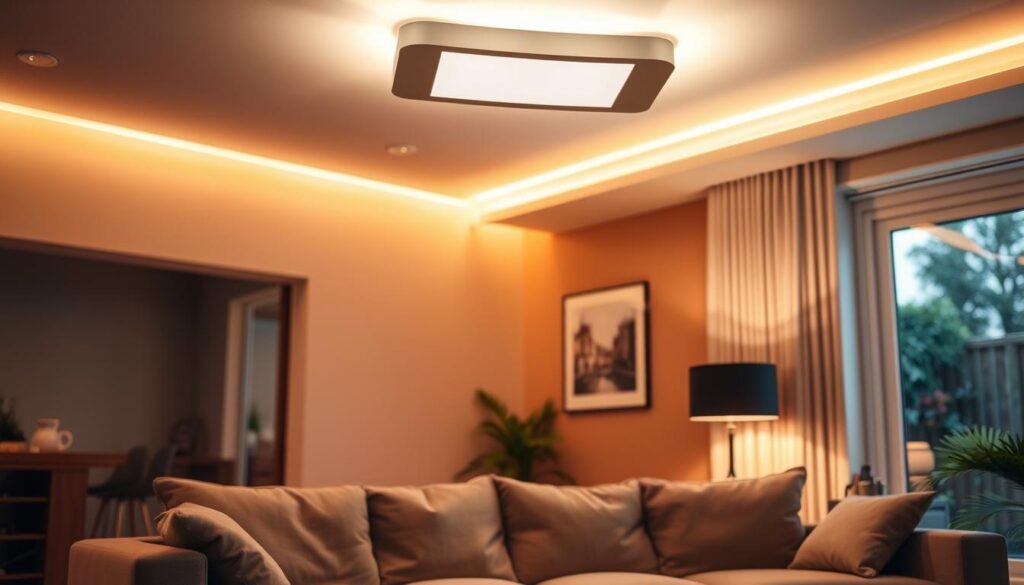
The effect of light’s color temperature is important. Warm white light makes a space cozy, perfect for relaxing at the end of the day. Cool white light, however, wakes us up and is good for mornings or when we need to focus. By using these ideas, you can control how you feel throughout the day.
| Color Temperature (Kelvin) | Effect on Mood | Best Use Cases |
|---|---|---|
| Warm (2700K-3000K) | Promotes relaxation and comfort | Evening, bedrooms, cozy spaces |
| Neutral (3500K-4100K) | Encourages focus without fatigue | Workspaces, kitchens, living areas |
| Cool (5000K-6500K) | Boosts energy and alertness | Mornings, offices, task-oriented environments |
Customizing Your Smart Lighting Experience
Creating a personalized lighting experience improves your space and fits your lifestyle. Smart lighting systems let you set up special lighting scenes for different activities. This makes your home feel special. Whether it’s a cozy movie night, a reading session, or an elegant dinner party, the right lighting can uplift the mood.
Creating Lighting Scenes for Different Activities
Smart lighting lets you customize your space with unique lighting scenes. You can change brightness and colors to get the perfect mood. For a quiet evening, maybe a soft, warm light works best. For a party, bright, colorful lights might be the choice. You can save your favorite setups for quick use later.
Automating Your Lighting Schedule
Automated lighting schedules make life easier. They let you set lights to turn on or off based on your routine. This increases convenience and saves energy. For example, porch lights can turn on at sunset. Bedroom lights can dim when it’s bedtime. This blends technology seamlessly into your life, making your home more comfortable.
Customized lighting and automated schedules create a home that’s both functional and pleasant. Smart lighting turns simple moments into special ones. Explore how smart lighting can change your living space.
Smart Lighting and Home Security
Making your home safer is important for many. Smart lighting helps by adding features that make your home more secure. These systems stop intruders and make you feel safe, whether you’re home or not.
How Smart Lighting Acts as a Deterrent
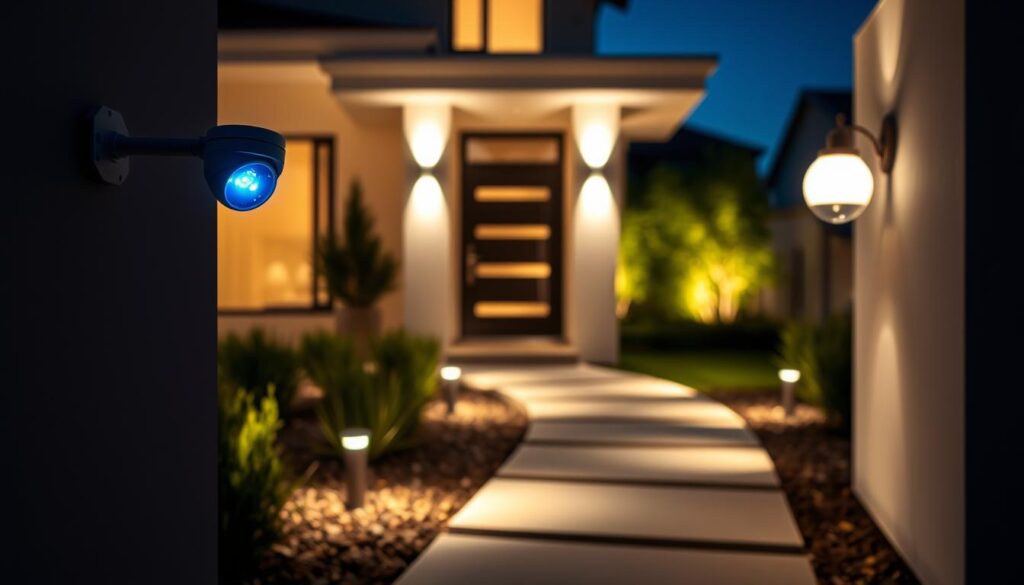
Smart lighting keeps unwanted guests away. You can set lights to turn on and off, making it look like someone is always home. Adding outdoor lights that turn on when they sense movement makes your home even safer.
Scheduling Lights to Mimic Occupancy
You can set times for your lights to turn on and off with smart lighting. This saves energy and boosts security. You could have your living room light up in the evening and your bedroom light up at night. This works well with other security measures too.
| Smart Lighting Feature | Description | Security Benefit |
|---|---|---|
| Remote Control | Control your lights from anywhere via a smartphone app. | Turn lights on/off anytime to simulate your presence. |
| Motion Sensors | Lights activate when movement is detected. | Illuminates pathways and alerts you to movement. |
| Custom Schedules | Create specific lighting schedules throughout the week. | Deters burglars by mimicking habitual lighting patterns. |
Using smart lighting makes your home safer and more comfortable. It is a great addition to your home security plan.
Integrating Smart Lighting with Other Smart Devices
Creating a smart home is more than installation. It’s about linking devices for smooth control. By integrating smart devices, lights can sync with smart speakers, displays, and thermostats. This creates comfort and boosts efficiency.
Connecting with Smart Speakers and Displays
Connecting lights to Amazon Echo or Google Nest makes control easy. Just use your voice to control the lights. This convenience makes your smart home more intuitive.
Synchronizing with Smart Thermostats
Linking your lights with a smart thermostat helps save energy. They work together to adjust settings when you’re away. This ensures a comfortable home that’s energy-efficient.
Choosing the Right Smart Lighting System for Your Home
Choosing the right smart lighting system means knowing different smart lighting brands and matching them with your needs. You also need to plan your budget carefully to get the best solutions without spending too much. By carefully checking all options, you can make your home much nicer.
Popular Brands to Consider
When looking into smart lighting, it’s important to pick brands known for their quality and new ideas. Philips Hue is at the top because it offers customizable colors and works well with other smart devices. LIFX is notable for its bright colors and easy connection without hubs. Wyze is great for those watching their spending, offering good options at low prices.
Budgeting for Your Smart Lighting Upgrade
Planning your budget for smart lighting means looking at upfront costs and how much you might save later. Start by figuring out what you want, then look at how much different brands cost. To help you plan, comparing costs briefly can show which systems are affordable for you:
| Brand | Initial Cost (approx.) | Key Features |
|---|---|---|
| Philips Hue | $15-$50 per bulb | Color customization, versatile integration |
| LIFX | $25-$60 per bulb | No hub required, vivid color options |
| Wyze | $10-$30 per bulb | Affordable, user-friendly app |
Knowing what each brand offers helps in making choices that meet your budgeting goals for smart lighting. Each brand has unique lighting solutions for all kinds of preferences and budgets. This ensures you’ll find the best fit for your home.
Installation and Setup of Smart Lighting
Setting up smart lighting is exciting but can be challenging. Some prefer DIY, using easy tech. Others hire pros for perfect setup. Knowing the good and bad of each choice helps you decide what’s right for you.
DIY Installation vs. Professional Help
Deciding on DIY or professional help for smart lighting depends on your skills and system complexity. Consider these points:
- Skill Level: Basic electrical skills mean you can handle DIY lighting projects.
- Time Commitment: DIY might take longer as you learn.
- Cost Savings: DIY can save money, letting you buy more smart devices.
- Peace of Mind: A pro guarantees smooth installation with no trouble.
Setting Up Your Smart Lighting App
Setting up the app is key to a great lighting experience. Brands offer easy apps for smart light control. Here’s how to get your setup right:
- Download and Install: Start by getting the app for your lights.
- Create an Account: Make an account with your email or connect an existing one.
- Connect Devices: Add your smart bulbs or fixtures as instructed, making sure they are on.
- Customize Settings: Change settings like brightness, color, and schedules to fit your taste.
Planning your smart lighting setup carefully will make your home more enjoyable and energy-efficient.
Smart Lighting Trends to Watch
Smart lighting is always getting better as new ideas come to life. This means we see cool, new tech that makes our homes better. Things like smart sensors and AI are here to make lights work better and save energy.
New Technologies on the Horizon
There are exciting techs coming up for smart lighting. Lights that change brightness for the time of day and if people are in the room are one. They use less power and feel nicer to be around. Also, lights that learn what you like and adjust on their own are becoming popular.
The Future of Lighting in Smart Homes
Smart lighting will blend more with other home gadgets in the future. This means everything works together smoothly. New lights will be greener and use less power. As tech gets better, lights will not only look good. They will help the planet too.
Conclusion: The Long-term Impact of Smart Lighting
Smart lighting systems can greatly reduce your energy use and improve your mood. Thinking about this change, it’s key to see how smart lighting affects your life every day. By looking at the costs and possible energy savings, you can choose wisely to boost your home’s efficiency and coziness.
The value of smart lighting goes beyond saving money. It also enhances your day-to-day life quality.
Evaluating Your Investment in Smart Technology
When thinking about smart tech, consider more than just saving money. Saving on energy bills is a plus, but the personal benefits matter too. Smart lighting lets you customize settings, boosting your mood and making your home nicer and more flexible.
This makes a strong point for updating your lighting with smart tech.
Final Thoughts on Mood and Energy Savings
Choosing smart lighting means more than just an upgrade; it’s a step towards a greener and happier home. Smart lights bring energy savings and better mood, balancing your home life well. Think about how these systems can change your space, offering both money benefits and improved life quality.