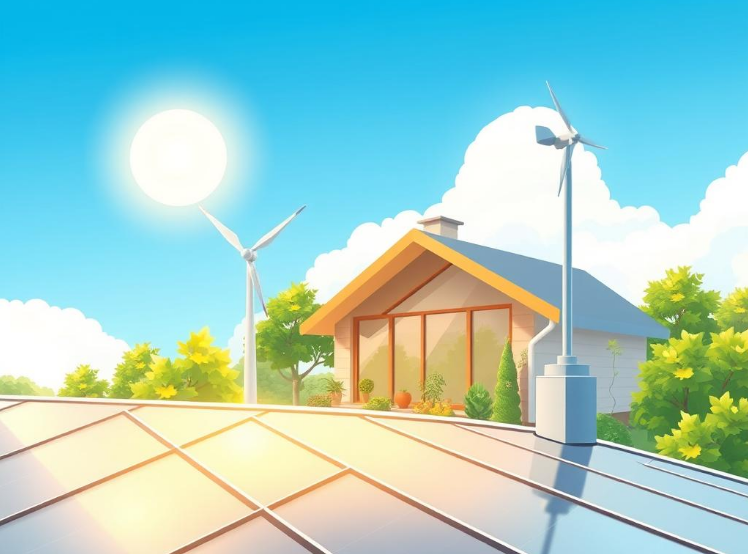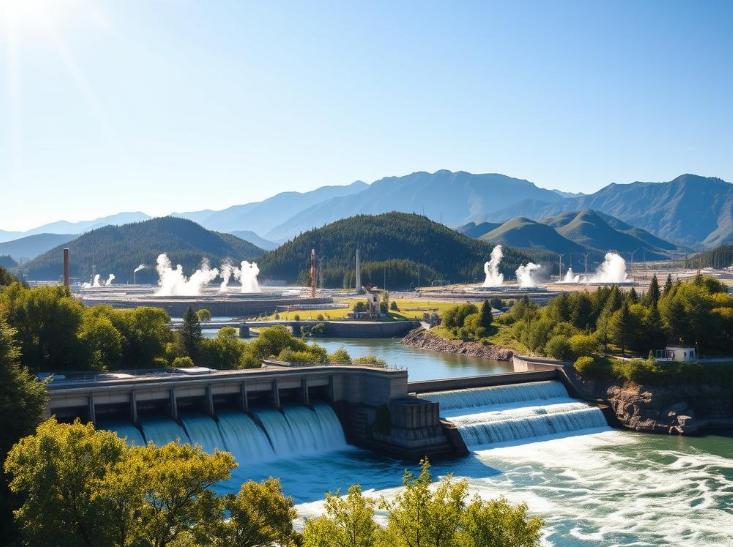


Nearly 60% of American homeowners want to reduce their carbon footprint but feel unsure where to start. The good news is that net zero sustainable energy solutions are no longer just a dream. They are becoming real and affordable for everyday families across the United States.
Achieving carbon neutral living means your home produces as much clean energy as it uses each year. This shift away from fossil fuels creates energy-independent households while protecting the environment. Renewable energy homes use technologies like solar panels, wind turbines, and geothermal systems to make this possible.
The transition to net zero sustainable energy solutions involves multiple parts working as one system. You need renewable energy generation to create power. You need storage systems to save energy for later. You need smart home technology to manage everything efficiently. When combined properly, these components eliminate your reliance on the grid.
Homeowners choose carbon neutral living for three main reasons. First, they want to protect the planet for future generations. Second, they see long-term savings on energy bills. Third, they value energy independence and security.
This guide explores the full range of renewable energy homes available today. You will learn how solar, wind, geothermal, and green hydrogen technologies work. You will discover how to combine them into a complete system. You will understand the financial benefits and incentives waiting for you. Whether you are just starting your journey or ready to go all in, net zero sustainable energy solutions offer a practical path to a cleaner future.
Understanding the Net-Zero Living Movement
The net-zero living movement represents a fundamental shift in how homeowners think about energy consumption and environmental responsibility. This approach transforms residences into efficient power producers that balance their energy needs with renewable generation. Understanding this concept is essential for anyone interested in sustainable living practices and reducing their household’s impact on the planet.
Net zero energy homes operate on a simple principle: they produce as much renewable energy as they consume over the course of a year. This balance between production and consumption creates homes that maintain net energy neutrality with the electrical grid. The movement reflects growing awareness of climate change and the need for immediate action at the household level.
What Does Net-Zero Really Mean
Net-zero refers to residential buildings that generate enough renewable energy to match their annual energy consumption. These homes rely on technologies such as solar panels, wind turbines, or geothermal systems to produce clean power. The excess energy produced during peak generation periods flows back to the grid, earning credits that offset consumption during lower production times.
Understanding the terminology helps clarify different approaches to home energy independence. Several categories exist in the net-zero space:
- Net-Zero Energy Homes generate as much energy as they use annually
- Net-Zero Carbon Homes eliminate carbon emissions through renewable energy and offsets
- Net-Zero Ready Homes are designed to achieve net-zero status when renewable systems are added later
The calculation process involves measuring energy production and consumption across twelve months. Grid connections allow homeowners to bank excess energy during sunny or windy periods and withdraw it during less productive seasons.
The Environmental Imperative for Change
Residential energy use accounts for approximately 20 percent of U.S. greenhouse gas emissions. Buildings consume significant electricity for heating, cooling, and powering appliances. This consumption directly contributes to climate change and environmental degradation affecting communities nationwide.
Carbon footprint reduction at the household level creates meaningful impact. When homeowners adopt net zero energy homes and sustainable living practices, they eliminate thousands of pounds of annual carbon emissions. Individual actions compound into collective environmental protection:
- Reducing reliance on fossil fuel power plants
- Decreasing demand for coal, natural gas, and oil extraction
- Lowering overall greenhouse gas concentrations in the atmosphere
- Supporting national climate goals and international commitments
The urgency of climate action makes residential energy transformation critical. Every household that transitions to renewable energy accelerates progress toward environmental sustainability. This movement aligns with scientific consensus about necessary emissions reductions and demonstrates how individual choices drive systemic change.
Solar Power Systems for Residential Energy Independence
Solar energy systems represent the most practical path toward achieving net-zero living in American homes. Residential solar panels convert sunlight into usable electricity through photovoltaic technology, making them an accessible renewable energy solution for homeowners nationwide. Understanding how these systems work helps you make informed decisions about your energy future.
Photovoltaic technology operates through semiconductor materials that create an electric current when exposed to sunlight. This process, known as the photovoltaic effect, powers everything from small residential installations to large-scale solar farms. Modern residential solar panels come in three main types:
- Monocrystalline panels offer the highest efficiency rates and work well in limited roof space
- Polycrystalline panels provide excellent value and balance between cost and performance
- Thin-film panels deliver flexibility and perform adequately in cloudy conditions
Sizing your solar energy systems requires calculating your household’s annual energy consumption. Most American families need between 15 to 25 residential solar panels to reach net-zero status, though this varies by location, roof orientation, and seasonal sunlight patterns. A south-facing roof with minimal shade produces optimal results.
Installation options include rooftop mounting, ground-mounted arrays, and innovative solutions like solar shingles. Your choice depends on available space, structural capacity, and aesthetic preferences. Professional installers assess roof condition and determine the best panel angle for your geographic region.
| Component | Function | Impact on Performance |
|---|---|---|
| String Inverters | Converts DC electricity to AC power | Cost-effective for standard systems |
| Microinverters | Optimizes individual panel output | Better performance with partial shading |
| Power Optimizers | Enhances panel-level efficiency | Balances cost and monitoring capability |
Quality residential solar panels typically last 25 to 30 years with minimal maintenance. Most manufacturers warranty their products for 25 years, guaranteeing 80 percent output at the end of this period. Annual cleaning and occasional inspections keep your solar energy systems operating at peak efficiency.
Investing in photovoltaic technology for your home delivers long-term energy independence. Modern solar panels require little upkeep beyond occasional debris removal and professional inspections every few years. This reliability makes residential solar panels an intelligent choice for homeowners committed to net-zero living.
Wind Energy Integration in Modern Homes
Wind energy offers homeowners a powerful way to achieve net-zero living goals. Residential wind power harnesses the kinetic energy from moving air and converts it into clean electricity. This renewable source works well alongside solar systems to create a more complete energy solution for your home. Understanding how wind turbines function helps you decide if this technology fits your property and lifestyle.
Wind viability depends on several key factors. Your location’s average wind speed matters most—properties need winds averaging at least 10 miles per hour for effective performance. Property size, local zoning regulations, and neighborhood building height restrictions also play important roles. Before investing in wind technology, check with your local municipality about permit requirements and setback rules.
Small-Scale Wind Turbines for Urban Settings
Small wind turbines bring renewable energy possibilities to properties with limited space. These systems typically range from 400 watts to 10 kilowatts in capacity. Two main types serve residential needs:
- Vertical-axis wind turbines (VAWTs)—capture wind from any direction, operate quietly, and have a lower profile that often faces fewer zoning restrictions
- Horizontal-axis wind turbines (HAWTs)—more efficient in consistent wind conditions and generate higher power output
Small wind turbines work best when mounted 30 feet or higher to catch stronger, more consistent winds. Urban settings benefit from VAWTs because they adapt to turbulent wind patterns common in cities. Installation height and noise levels depend on your neighborhood regulations, so research local rules before purchasing equipment.
Hybrid Wind-Solar Solutions
Combining small wind turbines with solar panels creates hybrid renewable systems that deliver year-round energy. Wind and solar resources naturally complement each other:
| Energy Source | Peak Production Season | Peak Production Time |
|---|---|---|
| Wind Power | Winter months | Nighttime and cloudy days |
| Solar Power | Summer months | Daytime hours |
This natural partnership means your home generates electricity consistently throughout the day and across seasons. Proper hybrid renewable systems require compatible charge controllers and inverters that manage multiple power sources efficiently. Smart monitoring systems track performance from both wind and solar components, optimizing your overall energy production and storage.
Deciding whether residential wind power makes sense for your home requires honest assessment. Not every property receives adequate wind resources. Consulting with renewable energy specialists helps determine if small wind turbines fit your net-zero strategy alongside other clean energy solutions.
Geothermal Heating and Cooling Technologies
Geothermal heat pumps represent one of the most efficient solutions for heating and cooling in net-zero homes. These systems tap into the earth’s stable temperature, which remains constant below the frost line at roughly 45-75°F depending on your location. This natural resource provides an excellent heat source during winter and a heat sink during summer, making ground source heating an ideal choice for homeowners committed to sustainable energy solutions.
Geothermal HVAC systems work through a closed-loop network of buried pipes filled with water or antifreeze solution. This liquid exchanges heat with the earth and transfers it to or from your home through a heat pump unit. The result is exceptional efficiency—these systems deliver 3-5 units of heating or cooling energy for every unit of electricity consumed.
Types of Geothermal Systems
Different properties require different approaches. Here are the main configurations:
- Horizontal closed-loop systems—ideal for properties with adequate land area
- Vertical closed-loop systems—perfect for smaller lots using boreholes drilled 100-400 feet deep
- Pond or lake systems—suitable for properties with water bodies
- Open-loop systems—utilize well water directly for heat exchange
Each configuration offers distinct advantages. Vertical systems work well in urban and suburban settings where space is limited. Horizontal systems suit rural properties with larger footprints. Pond systems work beautifully where geology permits.
| System Type | Best For | Installation Depth | Land Requirements |
|---|---|---|---|
| Horizontal Closed-Loop | Large properties with space | 4-6 feet underground | One-half to one acre minimum |
| Vertical Closed-Loop | Small lots and urban areas | 100-400 feet deep | Minimal surface area needed |
| Pond or Lake | Properties with water bodies | 8-12 feet below water surface | Depends on water availability |
| Open-Loop | Areas with abundant well water | Well-dependent | Requires suitable groundwater |
Performance and Efficiency Benefits
The efficiency of geothermal heat pumps far exceeds conventional HVAC systems. Coefficients of performance (COP) typically range from 3 to 5, meaning for every unit of electricity consumed, you get 3-5 units of heating or cooling output. This exceptional performance significantly reduces the renewable electricity generation needed for net-zero homes, since heating and cooling account for roughly 40-50% of residential energy use.
“Geothermal systems are among the most efficient heating and cooling technologies available, making them crucial for achieving true net-zero energy performance,” according to the U.S. Department of Energy’s Office of Energy Efficiency and Renewable Energy.
Cost and Payback Considerations
Installation costs for geothermal heat pumps run higher than conventional systems, ranging from $15,000 to $30,000 depending on system type and soil conditions. Ground loop installation represents the largest expense. Despite upfront costs, the long-term savings are substantial. Most homeowners experience payback periods of 5-10 years through lower energy bills.
System longevity adds to the value. Ground loops carry 50-year warranties, while heat pump units typically last 20-25 years. This durability makes ground source heating a smart investment for net-zero living goals.
Important Installation Factors
Successful geothermal HVAC installation requires careful planning. Property assessment is essential—soil composition, rock conditions, and local geology all affect system design and cost. Qualified contractors must properly size your system based on your home’s heating and cooling needs and geographic location.
- Have a professional conduct a site assessment
- Test soil and groundwater conditions
- Verify contractor licensing and experience
- Ensure proper system sizing for your climate zone
- Review warranty coverage thoroughly
Geothermal heat pumps integrate beautifully with other renewable energy systems in net-zero homes. When paired with solar panels and wind turbines, ground source heating ensures your home stays comfortable year-round while maintaining energy independence.
Net Zero Sustainable Energy Solutions for Everyday Living
Reaching net-zero energy at home requires more than installing a single renewable technology. Real-world sustainable living depends on combining different energy sources that work together as one system. An integrated renewable energy approach creates reliability throughout the year by using each technology’s strengths at the right times. Multi-source power systems perform better than standalone solutions because they adapt to changing seasons and weather patterns.
The most effective homes use energy management technology to coordinate all these different sources. Smart systems monitor what your home produces and uses in real time. They automatically shift power between sources and storage to minimize waste. This combination of hardware and software transforms separate components into one intelligent ecosystem.
Combining Multiple Renewable Sources
Multi-source power systems give homeowners energy security that single-technology approaches cannot match. Solar panels produce peak power during sunny days, while wind turbines generate electricity during cloudy seasons and nighttime hours. Pairing these two sources creates more consistent energy production across months.
Consider a typical residential setup. A 5-kilowatt solar array combined with a 1-kilowatt wind turbine serves a 2,000-square-foot Midwest home effectively. Coastal California properties benefit from solar arrays paired with battery storage and high-efficiency heat pumps. Geothermal heat pumps handle heating and cooling loads year-round while working alongside solar generation.
This diversified approach reduces dependence on any single weather pattern. When winter clouds limit solar output, wind often increases. Summer peaks favor solar production. The integrated renewable energy combination ensures steady power availability regardless of season.
Smart Energy Management Systems
Energy management technology acts as the brain controlling your entire renewable energy setup. Smart home energy management systems monitor real-time production from all sources. They track consumption appliance-by-appliance and automatically route power to maximize self-consumption.
Key features include:
- Load shifting that runs dishwashers and washing machines during peak solar production hours
- Weather forecasting algorithms that optimize battery charging and HVAC scheduling
- Mobile apps providing detailed energy insights and remote system control
- Integration with smart thermostats, efficient appliances, and electric vehicle chargers
These systems create seamless coordination between generation, storage, and consumption. Multi-source power systems paired with intelligent controls transform net-zero living from complicated to nearly automatic, giving homeowners true energy independence.
Energy Storage Systems and Battery Technology
Energy storage solutions form the backbone of true energy independence for homes pursuing net-zero living. While solar panels and wind turbines generate renewable power, you need a reliable way to store that energy for use during nighttime hours or calm days. Home battery storage systems make this possible, transforming your home into a self-sufficient energy powerhouse that works around the clock.
Lithium-ion batteries dominate the residential market because they deliver impressive efficiency rates between 90-95%. This means you get back nearly all the energy you store, making them the smart choice for homeowners. These batteries pack tremendous energy into compact sizes, and their costs continue dropping year after year, making them more affordable than ever before.
Popular home battery storage brands available across the United States include Tesla Powerwall, LG Chem RESU, Enphase IQ Battery, Generac PWRcell, and sonnenBatterie. Most whole-home systems store between 10-20 kilowatt-hours (kWh) of energy, enough to power essential appliances overnight or during extended cloudy periods.
Key Battery Specifications to Understand
Understanding battery specifications helps you select the right energy storage solutions for your home’s needs:
- Usable capacity versus total capacity determines how much stored energy you can actually use
- Continuous power ratings show what appliances you can run simultaneously
- Peak power output handles high-demand devices like air conditioners and electric water heaters
- Cycle life expectations range from 10-15 years or 10,000+ charging cycles
- Degradation rates show how battery performance declines over time
Battery Chemistry and System Configuration
Lithium iron phosphate (LFP) batteries offer enhanced safety and longer lifespans compared to standard lithium-ion options. These emerging technologies represent the future of home energy storage.
Two installation approaches exist for energy storage solutions. AC-coupled systems connect batteries to your home’s main electrical panel, offering flexible retrofit options. DC-coupled systems connect directly to solar panels’ direct current output, delivering superior efficiency rates.
Practical Installation Considerations
Installing home battery storage requires careful planning. Temperature-controlled locations work best, protecting your investment from extreme heat and cold. You may need electrical panel upgrades to accommodate the system safely.
Battery management systems protect your investment by monitoring performance and optimizing charging cycles. Smart monitoring capabilities track energy storage and usage patterns, helping you understand your household power consumption and adjust habits accordingly.
Home battery storage provides another critical benefit: backup power during grid outages. Some systems power your entire home, while others focus on keeping essential circuits running through blackouts.
| Battery System | Storage Capacity | Round-Trip Efficiency | Warranty Period |
|---|---|---|---|
| Tesla Powerwall | 13.5 kWh | 90% | 10 years |
| LG Chem RESU | 10-16 kWh | 93% | 10 years |
| Enphase IQ Battery | 10.08 kWh | 92% | 10 years |
| Generac PWRcell | 12-18 kWh | 91% | 10 years |
| sonnenBatterie | 10-20 kWh | 94% | 10 years |
Financial Considerations and Incentives
Home battery storage typically costs between $7,000 and $15,000 depending on capacity and brand. The federal Investment Tax Credit applies to batteries charged by solar systems, reducing your out-of-pocket expenses significantly.
Energy storage solutions deliver long-term value through several channels. Time-of-use electricity rates charge premium prices during peak demand hours. Your battery stores power during cheap-rate periods, then supplies energy during expensive peak times, cutting electricity bills substantially.
Understanding lithium-ion batteries and energy storage solutions empowers you to make informed decisions about your home’s power infrastructure. These technologies transform renewable energy into reliable, available power that supports true net-zero living while providing security during grid disruptions.
Green Hydrogen as a Clean Energy Carrier
Green hydrogen production represents an emerging technology for homeowners seeking complete energy independence. Unlike traditional hydrogen made from natural gas, green hydrogen comes from splitting water using renewable electricity. This process creates hydrogen and oxygen with zero carbon emissions. Hydrogen fuel cells convert this stored hydrogen back into electricity when you need power, making it a reliable clean energy carrier for your home.
Hydrogen offers something batteries cannot easily provide: long-duration energy storage. While lithium batteries work well for daily storage, hydrogen can store excess renewable energy for weeks or even seasons. This capability makes green hydrogen particularly valuable for homes with abundant solar or wind resources.
Production Methods for Home Use
Small-scale electrolyzers are becoming practical for residential applications. These compact devices use electricity to split water into hydrogen and oxygen. Most home systems use proton exchange membrane (PEM) electrolyzers, which range from 1 to 5 kilowatts in capacity.
The production process requires specific inputs and produces measurable outputs:
- Approximately 1 gallon of purified water generates about 1 kilogram of hydrogen
- Current technology consumes 50-55 kilowatt-hours per kilogram of hydrogen produced
- Systems work best with excess solar or wind power during peak generation periods
- Conversion rates continue improving as technology matures
Right now, residential hydrogen systems cost more than battery storage. The technology remains in early stages with limited commercial availability. Costs will likely decrease as manufacturing scales up and competition increases. For homeowners with surplus renewable generation that goes unused, hydrogen production provides a practical solution.
Storage and Safety Considerations
Storing hydrogen safely at home requires proper equipment and understanding. Compressed gas tanks hold hydrogen at high pressures between 350 and 700 bar. Metal hydride storage systems offer an alternative by absorbing hydrogen into solid materials, providing safer storage at lower pressures.
Safety matters when handling hydrogen. This gas is colorless and odorless, burns easily, and disperses rapidly in air. Proper ventilation around equipment prevents dangerous buildup. Leak detection systems alert you to any problems. All residential hydrogen equipment requires proper installation and safety certifications.
Hydrogen fuel cells convert stored hydrogen back to electricity with 40-60% efficiency. Many systems also capture waste heat for home heating or hot water. Maintenance remains straightforward for modern residential fuel cells.
| Storage Method | Pressure Level | Safety Features | Best Use Cases |
|---|---|---|---|
| Compressed Gas Tanks | 350-700 bar | Reinforced containers, pressure relief valves | Homes with adequate space for tanks |
| Metal Hydride Systems | Low pressure | Solid absorption, lower flammability risk | Residential properties prioritizing safety |
| Liquid Organic Carriers | Ambient | Emerging technology, stable at normal conditions | Future residential applications |
Compare hydrogen to natural gas or propane used in many homes. Hydrogen actually disperses faster in air, which provides safety advantages. Residential hydrogen systems already meet established safety standards used in industrial settings worldwide.
Most homeowners today find battery storage more practical and affordable. Hydrogen systems make sense for specific situations: off-grid properties needing seasonal storage, homes with abundant renewable resources, or early adopters exploring clean energy technologies. As prices drop and technology improves, hydrogen fuel cells may become standard components of residential net-zero energy systems.
Building Design and Energy Efficiency Strategies
Achieving net-zero living requires more than just installing solar panels or wind turbines. The smartest approach starts with reducing how much energy your home needs in the first place. Think of it like this: the energy you never use is always free. By using smart building design and energy efficient construction methods, you can cut your energy needs dramatically. This means you need less renewable energy to reach net-zero status.
A strong building envelope forms the foundation of any energy-efficient home. This means using superior insulation, air sealing, and high-performance windows. In cold climates, zero energy buildings often use wall insulation rated R-40 to R-60, with roof insulation reaching R-60 or higher. Triple-pane windows with special coatings keep heat from escaping while blocking unwanted summer heat. Proper air sealing stops drafts and leaks that waste energy.
Passive house design takes these ideas to the next level. This strategy focuses on using natural heat and cooling to maintain comfort. Your home’s location and orientation matter greatly. In the Northern Hemisphere, positioning your home to capture southern exposure allows winter sun to warm your living spaces naturally. Strategic window placement captures this free heat during cold months while overhangs shade windows during summer.
Energy efficient construction also means choosing the right mechanical systems. Heat recovery ventilation (HRV) systems bring fresh air into your home while capturing 70 to 95 percent of heating energy from outgoing air. This keeps your air fresh and clean without losing warmth. Heat pump water heaters work 2 to 3 times better than standard electric models. ENERGY STAR appliances and LED lighting throughout your home cut electricity use significantly.
Smart Integration of Design Elements
These features work together as one system. Better insulation and air sealing reduce heating and cooling loads. Smaller HVAC systems can then handle these reduced loads at lower cost. You need less renewable energy capacity to reach net-zero performance. It all connects.
- Thermal mass materials like concrete absorb and release heat slowly
- Calculated overhangs block summer sun while allowing winter sun entry
- Continuous insulation eliminates weak spots where heat escapes
- Right-sized HVAC systems cost less and use less power
- Fresh air ventilation maintains indoor air quality
Standards and Certifications
Several programs guide builders toward high performance. Passive House certification demands rigorous testing and verification. LEED for Homes and the DOE Zero Energy Ready Home program provide frameworks for efficient construction. These certifications ensure your home actually performs as designed.
New construction offers the best chance to include all these features from the start. Existing homes can still improve dramatically through upgrades like adding insulation, replacing windows, sealing air leaks, and installing efficient systems. While energy efficient construction may add 5 to 10 percent to building costs, the reduced energy bills and smaller renewable energy systems needed typically save money over time.
| Energy Efficiency Strategy | Performance Benefit | Climate Suitability |
|---|---|---|
| Passive house design with thermal mass | Reduces heating/cooling loads by 50-80% | Cold and mixed climates |
| Triple-pane windows with low-E coating | U-value of 0.14-0.20 (superior insulation) | All climates, especially cold regions |
| Heat recovery ventilation system | Recovers 70-95% of heating/cooling energy | All climates |
| Enhanced wall insulation (R-40 to R-60) | Minimizes thermal bridging and heat loss | Cold climates |
| Heat pump water heater | 200-300% more efficient than electric resistance | All climates |
| Air sealing to 0.6 ACH50 or lower | Prevents unwanted air infiltration | All climates |
Zero energy buildings represent the future of home construction. By combining passive house design principles with modern efficient systems, homeowners create spaces that need minimal outside energy. This holistic approach works because demand reduction and renewable energy supply support each other. Lower energy needs mean smaller and less expensive renewable systems. Everything aligns toward the same goal: comfortable homes that produce as much energy as they use.
Financial Incentives and Return on Investment
Investing in net-zero sustainable energy systems requires significant upfront costs. The good news is that numerous renewable energy incentives and declining technology prices make these investments increasingly attractive for American homeowners. Understanding the available financial support helps you see the real value of switching to clean energy.
The path to net-zero living becomes much more affordable when you factor in tax credits, rebates, and long-term savings. Let’s explore how renewable energy incentives can reduce your initial investment and how energy investment returns add up over time.
Federal Tax Credits and State Rebates
The federal government offers substantial solar tax credits that make renewable energy systems more accessible. The Investment Tax Credit (ITC) allows homeowners to deduct 30% of solar installation costs from their federal taxes through 2032. This percentage then steps down to 26% in 2033 and 22% in 2034.
Solar tax credits cover more than just panels. The credit applies to:
- Solar panels and mounting equipment
- Inverters that convert DC to AC power
- Battery storage systems charged by solar
- Installation labor costs
One important detail: you need sufficient tax liability to use the credit. If you cannot claim the full amount in one year, you can carry it forward to future years. Your system must be placed in service during the tax year you claim the credit, and your home must be located in the United States.
Beyond solar, other renewable energy incentives exist. Geothermal heat pumps qualify for the same 30% federal tax credit through the ITC. Energy efficiency improvements like insulation and efficient windows may qualify for residential energy efficiency tax credits up to $1,200 annually for qualified improvements.
State and local renewable energy incentives vary significantly by location. Many states offer their own programs:
| State Program | Primary Incentive Type | Key Benefit |
|---|---|---|
| California SGIP | Battery Storage Rebates | Direct rebates for energy storage systems |
| New York NY-Sun | Solar Installation Rebates | Rebates reducing upfront solar costs |
| Massachusetts SMART | Performance-Based Incentives | Payments for actual energy production |
| New Jersey Successor Solar | Solar Renewable Energy Certificates | Tradable certificates from solar generation |
Many states offer property tax exemptions for renewable energy systems. This means adding solar panels doesn’t increase your property tax assessment. Some states also provide sales tax exemptions on renewable energy equipment purchases.
Utility companies provide additional renewable energy incentives including rebates for solar installations, battery storage, or heat pumps. Net metering policies allow you to earn credits when your system produces excess energy sent back to the grid. Payment rates vary by state and utility.
Use the Database of State Incentives for Renewables & Efficiency (DSIRE) to research available programs in your area. Your solar installer can also identify current incentives specific to your location.
Long-Term Cost Savings Analysis
Looking beyond incentives, the real financial benefit appears over decades of operation. Understanding energy investment returns helps you see the complete picture of net-zero living.
The payback period—how long before savings equal your initial investment—varies by system type and location:
- Residential solar systems: typically 6-10 years depending on location and electricity rates
- Geothermal heat pumps: usually 5-10 years compared to conventional HVAC systems
- Battery storage systems: generally 10-15 years as costs decline and electricity rates rise
- Comprehensive net-zero retrofits: typically 10-20 years depending on project scope
Consider a realistic example. A homeowner installs a $20,000 solar system (after applying a 30% solar tax credit). In an area with $0.14 per kilowatt-hour electricity rates, this system might save $1,500 to $2,000 annually. Over 25 years, that accumulates to $37,500 to $50,000 in total savings.
Electricity rates rarely stay flat. Utility rates historically increase 2-3% each year. Your renewable energy system has fixed costs, making it increasingly valuable as grid electricity prices climb. This rate escalation significantly boosts your energy investment returns over time.
Home value gains offer another financial benefit. Solar installations typically increase home values by approximately the cost of the system itself. In areas with high electricity rates and strong environmental awareness, homes may appreciate even more from renewable energy upgrades.
Remember ongoing costs when calculating returns. Solar systems require minimal maintenance and occasional cleaning. Geothermal systems need regular maintenance. Battery systems typically last 10-15 years and may need replacement. Inverters in solar systems often need replacement after 10-15 years of operation.
Monitor your system’s performance to ensure it meets projected returns. Solar panels typically lose about 0.5% efficiency annually—a minor decline over decades. Changes in utility rate structures or net metering policies can affect your actual savings.
Beyond financial returns, many homeowners value energy independence, reduced environmental impact, and protection against power outages through battery backup systems. These non-financial benefits matter as much as the dollars saved for many families.
Conclusion
The path toward a sustainable energy future requires combining multiple renewable technologies into one unified system. Solar panels, wind turbines, geothermal systems, and battery storage work best when integrated together. Adding smart energy management systems ties everything together for maximum efficiency. This comprehensive approach allows homeowners to achieve true energy independence while reducing their environmental footprint.
Your net zero transition doesn’t need to happen overnight. Many American homeowners start with one high-impact project like solar installation or building efficiency upgrades. You can expand your system over time as your budget allows and your knowledge grows. Beginning with a home energy audit helps identify which upgrades will deliver the biggest benefits first. Research local incentives and utility programs in your area. Get quotes from multiple qualified installers. Connect with neighbors who have already completed their clean energy adoption to learn from their real-world experiences.
The financial case for net-zero living keeps getting stronger. Technology costs continue falling each year. Federal tax credits and state rebates reduce your upfront expenses. Long-term savings on utility bills add up significantly. Your home value increases. You gain protection against rising electricity rates. These benefits combine to make net-zero solutions a smart investment rather than a sacrifice.
Thousands of American households have already embraced clean energy adoption. Installer expertise is expanding. Technology options are improving. The sustainable energy future is becoming reality right now. Your decision to explore net-zero living represents an investment in a home that is more resilient, economical, and environmentally responsible. Start today with one simple step. Your sustainable energy future awaits.
FAQ
What exactly does “net-zero living” mean?
Net-zero living refers to residential properties that generate enough renewable energy on-site to offset their total annual energy consumption. This means a home produces as much clean energy as it uses throughout the year, creating energy independence from fossil fuels. Net-zero calculations measure the balance between energy production and consumption over a 12-month period. Homes connected to the electrical grid can use net metering to bank excess energy during high-production periods (like sunny days) and draw power back during low-production periods (like nighttime). It’s important to understand that net-zero differs from net-zero carbon (which accounts for all emissions) and net-zero ready (homes designed to easily achieve net-zero with future renewable installations).
How do solar panels work in a residential net-zero system?
Solar panels use photovoltaic technology to convert sunlight directly into electricity through semiconductor materials. When photons from sunlight strike the panel’s surface, they knock electrons loose, creating an electric current. Residential solar systems typically use one of three panel types: monocrystalline (highest efficiency, typically 20-22%), polycrystalline (moderate efficiency, 15-17%), or thin-film (lower efficiency but flexible). The electricity generated is converted from DC to AC power by an inverter, making it usable for household appliances. Modern solar systems also include monitoring technology that tracks real-time energy production, allowing homeowners to see exactly how much power their panels generate throughout the day and across seasons.
What is the difference between monocrystalline and polycrystalline solar panels?
Monocrystalline solar panels are made from single-crystal silicon, offering superior efficiency rates (typically 20-22%) and better performance in low-light conditions. They also have a longer lifespan and take up less roof space to generate the same power, making them ideal for homes with limited space. However, they command a premium price. Polycrystalline panels are manufactured from multiple silicon crystals, making them less efficient (typically 15-17%) but significantly more affordable. Polycrystalline panels require more roof space to generate equivalent power and may degrade slightly faster than monocrystalline versions. For homeowners prioritizing cost-effectiveness and having adequate roof space, polycrystalline panels offer good value, while those with space constraints or wanting maximum performance typically choose monocrystalline technology.
How do I determine the right size solar system for my home?
Proper solar system sizing begins with understanding your household’s energy consumption through reviewing past utility bills, typically looking at average annual usage measured in kilowatt-hours (kWh). Once you know your annual usage, professionals account for your geographic location’s solar potential using irradiance data (sunlight intensity), roof orientation and angle, and shading from trees or structures. A typical residential system ranges from 5-10 kilowatts depending on household size and consumption patterns. Geographic factors matter significantly—a home in Arizona generates more solar power annually than an identical system in Maine. Professional installers use specialized software to model your specific property’s solar potential, accounting for seasonal variations and creating projections for year-round performance. You can also use online solar calculators from organizations like the National Renewable Energy Laboratory (NRPL) to get preliminary estimates before consulting with installers.
What role does an inverter play in a solar power system?
The inverter is essential equipment that converts the direct current (DC) electricity produced by solar panels into alternating current (AC) electricity that powers household appliances and integrates with the electrical grid. Three main inverter types serve residential systems: string inverters (single inverter managing entire array, most affordable), microinverters (individual inverters on each panel, optimizing performance if panels experience different shading), and power optimizers (hybrid approach combining benefits of both). Inverter efficiency is crucial—quality units convert 95-98% of DC power to usable AC power. Modern inverters include built-in monitoring that tracks system performance, identifies issues, and provides real-time data accessible via smartphone apps. The inverter also includes critical safety features like automatic shutdown during grid outages (preventing backfeeding dangerous voltage to utility lines) and surge protection for electrical equipment.
How long do residential solar panels last and what maintenance do they require?
Solar panels typically last 25-30 years, with most manufacturers warranting panels for 25 years at 80% original efficiency. In reality, panels degrade very slowly—studies show annual degradation of approximately 0.5%, meaning a panel producing 100% efficiency when installed might produce 87% after 25 years. Maintenance requirements are minimal, primarily involving occasional cleaning to remove dust, pollen, or bird droppings that might reduce light penetration (typically 2-4 times annually depending on location and environment). Most homeowners simply rinse panels with a garden hose, though professionals can perform more thorough cleaning. Inverters, however, typically require replacement after 10-15 years of operation, representing the primary maintenance cost. Most quality inverter manufacturers provide 10-year warranties with optional extended coverage available. Panel frames and mounting systems are extremely durable, with expected lifespans exceeding 40 years, making solar an exceptionally long-lasting home investment.
Are residential wind turbines practical for typical homes?
Residential wind turbines can be practical, but specific property conditions determine viability. Wind power requires average wind speeds of at least 10-12 mph at your property to be economically worthwhile. Unlike solar, which works well in many locations, wind power is highly location-dependent and may not suit suburban or densely forested areas where wind is blocked or turbulent. Small-scale wind turbines for residential use typically range from 400 watts to 10 kilowatts in capacity. Vertical-axis wind turbines (VAWTs) work well in urban settings, accepting wind from any direction with quieter operation and lower profile less likely to trigger zoning restrictions. Horizontal-axis wind turbines (HAWTs) are more efficient but require more height and face greater permitting challenges. Zoning regulations vary dramatically by municipality, with many urban areas prohibiting residential turbines or requiring setbacks of 1.5 times tower height from property lines. Professional wind resource assessment using on-site anemometer data for several months provides the best determination of whether wind power suits your property before investment.
How do hybrid wind-solar systems work together?
Hybrid renewable systems combining solar panels and wind turbines create more reliable year-round energy generation by leveraging complementary seasonal and daily patterns. Solar production peaks during summer months and daytime hours, while wind power often strengthens during winter months and evening/nighttime hours when solar production diminishes. This complementary nature reduces gaps in generation and provides more consistent renewable supply throughout the year compared to either technology alone. Properly sized hybrid systems require careful consideration of appropriate capacity ratios—a typical residential hybrid might pair a 5-kilowatt solar array with a 1-2 kilowatt wind turbine. The systems require compatible equipment including charge controllers managing multiple input sources, inverters that can process power from both generation types, and advanced monitoring systems optimizing performance from each source. Hybrid systems are most economical for properties with both good solar exposure and consistent wind resources, where dual generation sources work synergistically to minimize battery storage requirements and maximize self-consumption of generated power.
What are geothermal heat pumps and why are they efficient?
Geothermal heat pumps leverage the earth’s relatively stable underground temperature—typically 45-75°F depending on location below the frost line—as a consistent heat source in winter and heat sink in summer. This system uses buried pipes filled with water or antifreeze solution that exchange heat with the earth, then transfers this thermal energy to or from the home through a heat pump unit. The exceptional efficiency comes from requiring minimal energy to move heat from a stable thermal source rather than generating heat from electricity directly. Geothermal systems deliver 3-5 units of heating or cooling energy for every unit of electricity consumed, achieving coefficients of performance (COP) of 3-5, far superior to conventional air-source heat pumps (COP of 2-3) or resistance heating (COP of 1). This outstanding efficiency significantly reduces the renewable electricity generation capacity required in net-zero homes, often allowing smaller and more affordable solar arrays or wind systems. For net-zero living, geothermal systems frequently represent the best investment in reducing total energy demand since heating and cooling typically consume 40-50% of residential energy.
What types of geothermal systems are available for residential properties?
Four main geothermal system types suit different property configurations: Horizontal closed-loop systems work well for properties with at least 0.75-1 acre of available land, using trenches dug 4-6 feet deep where pipes snake back and forth to maximize ground contact area. This is often the most economical option for available land. Vertical closed-loop systems suit smaller properties, using boreholes drilled 100-400 feet deep with pipe U-bends extending downward, requiring minimal surface space. Though drilling costs more per foot, total material and labor may be competitive for small lots. Pond or lake systems provide an economical option for properties with suitable water bodies, suspending loops in water that maintains relatively stable temperature. Open-loop systems use groundwater directly from wells as a heat exchange medium, returning water after thermal exchange, and can be exceptionally efficient but requires suitable water availability and local groundwater regulations approval. Each configuration’s suitability depends on soil/rock characteristics, water availability, property size, local geology, and local drilling costs, making professional site assessment essential before system selection.
How much does a geothermal heat pump system cost and how long is the payback period?
Geothermal system installation costs typically range from $15,000-$30,000+ depending on system type, property size, and required ground loop extent. Vertical bore-hole systems often cost more due to drilling expenses (typically $3,000-$8,000 for drilling alone), while horizontal systems with adequate land may cost less due to simpler excavation. This represents significantly higher upfront investment than conventional HVAC systems ($5,000-$10,000), but long-term operational savings create favorable economics. Typical payback periods range from 5-10 years when accounting for energy savings, available tax incentives (30% federal Investment Tax Credit), and some states’ rebates. Beyond payback periods, system longevity adds substantial value—ground loops are often warrantied for 50+ years with expected lifespans exceeding 75 years, while heat pump units typically last 20-25 years before requiring replacement. Over a 25-year period, geothermal systems often save homeowners $15,000-$40,000+ in heating and cooling costs compared to conventional systems, making them excellent long-term investments particularly in regions with significant heating/cooling demands.
What is a smart home energy management system (HEMS)?
A smart home energy management system (HEMS) monitors real-time energy production from multiple renewable sources and tracks consumption by individual appliances, then automatically optimizes energy use to maximize self-consumption and efficiency. These systems create an intelligent ecosystem where various components communicate continuously to balance generation, storage, and usage. Key features include load shifting, automatically running energy-intensive appliances like dishwashers and washing machines during peak solar production hours to avoid drawing grid power. Predictive algorithms use weather forecasts to anticipate solar production changes and optimize battery charging and HVAC operation proactively. Mobile applications provide homeowners detailed insights—showing which appliances consume most energy, when generation peaks, storage levels, and providing remote control capabilities. Modern HEMS integrate with smart thermostats, smart appliances, and electric vehicle charging systems, creating coordinated efficiency throughout the home. These systems are crucial for maximizing value of integrated renewable systems, often improving overall system efficiency by 10-15% through intelligent optimization that would be impossible for humans to manage manually.
Why is home battery storage important for net-zero living?
Home battery storage is essential for true energy independence and maximizing renewable energy value by enabling self-consumption of solar or wind power during periods when generation is unavailable. Without storage, excess daytime solar production is either exported to the grid at low compensation rates (often 50% less than retail electricity prices) or wasted entirely. Batteries allow homeowners to shift their consumption timing—storing excess renewable generation and using it during evening hours, nighttime, cloudy periods, or grid emergencies. This is especially valuable as utilities increasingly implement time-of-use rates that charge premium prices (often 2-3 times standard rates) during peak demand periods (typically 4-9 PM). Home batteries provide backup power during grid outages, critical protection as extreme weather events and infrastructure failures create longer and more frequent blackouts. Battery storage also allows homeowners to arbitrage electricity pricing in some regions—charging during low-cost off-peak hours and discharging during high-cost peak periods when not using renewable generation. Without storage, achieving true net-zero performance throughout the year becomes extremely difficult in most climates, making batteries a fundamental component of practical net-zero systems.
What types of residential battery systems are available?
Lithium-ion batteries currently dominate the residential energy storage market, offered by manufacturers like Tesla Powerwall (13.5 kWh usable capacity), LG Chem RESU (5.1-16 kWh depending on model), Enphase IQ Battery (3.36-10.1 kWh modular system), Generac PWRcell (modular 5.4-19.8 kWh), and sonnenBatterie (5-25 kWh). Lithium-ion technology dominates due to high energy density, excellent efficiency (90-95% round-trip), declining costs, and relatively compact size. Lithium iron phosphate (LFP) batteries represent an advanced chemistry option offering enhanced safety (non-flammable electrolyte), longer cycle life (up to 10,000+ cycles versus 3,000-5,000 for standard lithium-ion), and improved thermal stability at higher temperatures, though typically at slightly higher cost. Alternative technologies like lead-acid batteries and flow batteries serve specific applications—lead-acid offers lower cost but shorter lifespan and lower efficiency, while flow batteries excel at very large storage capacities and long discharge durations. Emerging solid-state batteries promise superior energy density, faster charging, and improved safety but remain years away from residential commercialization. Most homeowners choose lithium-ion systems balancing upfront cost, performance, reliability, and available warranties typically covering 10-15 years.
How much usable capacity do I need in residential battery storage?
Determining appropriate battery capacity requires analyzing your household’s energy consumption patterns, daily usage profile, and desired autonomy level. Most homeowners purchasing whole-home backup capability install 10-20 kWh usable capacity batteries—sufficient to store a full day of moderate household consumption or 3-4 days of critical-load-only power (lighting, refrigeration, communications). If your home uses 20-30 kWh daily and you want to maintain normal usage during a full day without sunlight, you’d need at least 20-30 kWh capacity. However, most modern homes don’t need to store full daily consumption—intelligent energy management systems shift consumption to peak solar production hours, reducing required battery size. A more realistic scenario involves 10-15 kWh capacity covering peak evening usage hours plus backup for outages. Some homeowners install smaller 5-10 kWh systems providing partial backup for critical loads only (refrigerator, freezer, lights, communications). Starting with a smaller battery system and expanding later as budgets allow is a practical approach—most quality battery systems are modular and can be expanded. Professional installers analyze your specific consumption patterns and production forecast to recommend appropriate capacity, avoiding both undersizing (insufficient emergency backup) and oversizing (excess battery capital cost unused).
What does “usable capacity” mean versus total battery capacity?
Total capacity represents the battery’s theoretical maximum energy storage, while usable capacity is the practical amount available for your home—the difference matters significantly. Manufacturers intentionally prevent deep discharge of lithium-ion batteries to extend lifespan, typically allowing discharge only to 80-90% depth before protection systems stop discharge. For example, a Tesla Powerwall has 13.5 kWh total capacity but approximately 13.5 kWh usable when used for daily cycling (the distinction is minimal), while some other batteries may have significantly larger disparities. Batteries with better depth of discharge (DoD) ratings allow accessing greater percentage of total capacity—a battery with 95%