
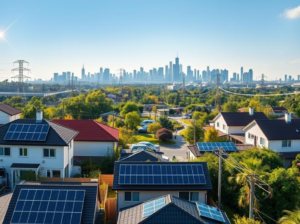
Did you know that renewable energy systems could potentially power 80% of global electricity needs by 2050? The clean energy transition is no longer a distant dream but a rapidly evolving reality transforming how we generate and consume power across various scales.
Sustainable power infrastructure has dramatically changed in recent years, offering innovative solutions that adapt seamlessly from residential rooftops to expansive urban grids. Scalable sustainable energy solutions are revolutionizing our approach to power generation, making renewable technologies more accessible and efficient than ever before.
The United States is experiencing a remarkable shift in energy strategy. Modern renewable technologies now provide flexible, cost-effective alternatives that can be implemented at multiple levels – whether you’re a homeowner looking to reduce electricity bills or a city planner designing comprehensive green infrastructure.
This exploration will reveal how cutting-edge renewable technologies are breaking traditional energy barriers, creating integrated systems that can power everything from individual homes to entire metropolitan areas with unprecedented reliability and sustainability.
The Growing Need for Energy Transformation Across All Scales
The United States stands at a critical juncture in its energy journey. Sustainable energy demand is rapidly reshaping how communities approach power generation and consumption. Climate change mitigation has become a pressing priority, driving unprecedented interest in renewable energy adoption across residential, commercial, and municipal sectors.
Key drivers of energy transformation include:
- Increasing environmental awareness
- Volatile fossil fuel prices
- Grid reliability challenges
- Technological advancements in clean energy
Energy independence is no longer a distant dream but an achievable goal. Technological innovations have made renewable energy solutions more accessible and economically viable. Homeowners, businesses, and city planners are recognizing that sustainable energy systems offer significant long-term benefits beyond environmental conservation.
Renewable energy is not just an alternative—it’s becoming the primary solution for sustainable power generation.
The economic landscape is shifting. Renewable technologies are becoming increasingly cost-competitive, with solar and wind energy prices dropping dramatically over the past decade. Communities nationwide are witnessing a fundamental transformation in how they generate, distribute, and consume energy.
- Solar panel installations have increased by 35% annually
- Wind energy now provides over 8% of U.S. electricity
- Battery storage technology continues to improve rapidly
This comprehensive approach to energy transformation represents a critical strategy for addressing climate challenges while building more resilient, efficient power infrastructure across all scales.
Understanding Scalable Sustainable Energy Solutions
Scalable energy technology represents a critical breakthrough in renewable energy development. Modern green energy solutions must adapt seamlessly across different implementation scales, from individual homes to entire urban infrastructures.
Sustainable energy systems require specific characteristics to be truly adaptable and efficient. The key energy scalability factors include:
- Modular energy systems design
- Standardized component integration
- Flexible infrastructure compatibility
- Cost-effective green energy deployment
What Makes an Energy Solution Truly Scalable
A scalable energy solution must maintain performance and efficiency regardless of its size. This means developing technologies that can be easily expanded without significant redesign or substantial additional investment.
The Economics of Scaling Green Energy
Renewable energy economics have transformed dramatically in recent years. Technological advances have dramatically reduced implementation costs across various green energy platforms.
| Energy Technology | Cost Reduction (2010-2020) | Scalability Potential |
|---|---|---|
| Solar Panels | 82% | High |
| Wind Turbines | 39% | Very High |
| Battery Storage | 87% | Moderate |
Innovative financing mechanisms and government incentives have further accelerated the adoption of scalable sustainable energy solutions, making green technology more accessible than ever before.
Solar Power Systems: From Rooftop Panels to Solar Farms
Solar power systems represent a versatile and scalable renewable energy solution transforming how we generate electricity. From compact residential solar panels to massive utility-scale solar farms, photovoltaic systems offer flexible energy production across multiple contexts.
Residential solar installations have become increasingly popular, allowing homeowners to generate clean electricity directly from their rooftops. These solar power systems typically range from 3 to 10 kilowatts, capable of offsetting significant portions of household energy consumption.
- Grid-tied systems with net metering
- Hybrid systems with battery backup
- Off-grid solar installations
Commercial solar installations take photovoltaic technology to the next level. Businesses, schools, and institutions deploy larger arrays on rooftops, parking structures, and adjacent land parcels. These mid-scale systems benefit from improved per-watt economics while serving higher energy demands.
Utility-scale solar farms represent the pinnacle of solar technology, generating megawatts of power for regional electrical grids. The Solar Star facility in California demonstrates how these massive installations can power entire communities through advanced solar farm technology.
The fundamental photovoltaic technology remains consistent across all scales, with primary differences in system size, mounting configurations, and grid interconnection approaches.
States like California and Arizona have been at the forefront of solar adoption, showcasing the potential of scalable solar power systems from residential rooftops to expansive commercial solar installations.
Wind Energy Integration at Residential and Municipal Levels
Wind energy solutions have revolutionized how communities and homeowners approach renewable power generation. The landscape of wind energy has dramatically expanded beyond massive wind farms to include innovative residential and urban applications.
Modern distributed wind generation offers flexible options for powering homes and communities. Residential wind systems have become increasingly sophisticated, providing sustainable energy alternatives for property owners in wind-rich regions.
Small-Scale Wind Turbines for Homes
Homeowners can now leverage small wind turbines to generate electricity directly on their property. These compact wind energy solutions typically range from 1 to 10 kilowatts, making them ideal for supplementing household power needs.
- Minimum wind speed requirements: 10+ mph average
- Property size considerations for installation
- Zoning regulations and local permissions
- Hybrid renewable energy potential
“Small wind turbines represent a game-changing approach to residential energy production” – Renewable Energy Expert
Community Wind Projects and Urban Applications
Urban wind energy has emerged as a groundbreaking approach to power generation in city environments. Community wind power projects enable multiple stakeholders to benefit from collective wind energy investments.
- Innovative vertical-axis turbines for urban settings
- Building-integrated wind energy systems
- Cooperative wind energy models
- Strategic urban wind corridor installations
Cutting-edge urban wind technologies are transforming how cities approach sustainable energy infrastructure, creating new possibilities for distributed wind generation.
Energy Storage Technologies That Work at Every Level
Energy storage systems have become the critical backbone of modern renewable energy infrastructure. These technologies bridge the gap between intermittent energy generation and consistent power delivery, transforming how we think about electricity consumption and distribution.
Different battery technologies provide solutions across multiple scales:
- Home battery solutions like Tesla Powerwall enable residential energy independence
- Commercial battery banks support business energy management
- Grid-scale storage supports entire electrical networks
Lithium-ion batteries dominate the current energy storage landscape, offering reliable performance for both home and utility applications. Their rapidly declining costs have made battery technology increasingly accessible across residential and municipal levels.
Emerging technologies such as flow batteries promise even more flexible energy storage economics. These innovative systems can scale from small home installations to massive grid-scale storage projects, providing unprecedented adaptability in renewable energy management.
The future of energy lies in our ability to store and manage power efficiently across all implementation levels.
Key advantages of modern energy storage systems include:
- Reduced reliance on traditional power grids
- Enhanced renewable energy integration
- Improved power reliability
- Cost savings for consumers and utilities
As battery technology continues advancing, we can expect even more sophisticated and efficient storage solutions that make sustainable energy more practical and accessible than ever before.
Smart Grid Infrastructure Connecting Homes to Cities
The electrical grid is undergoing a radical transformation. Smart grid technology is revolutionizing how energy is generated, distributed, and consumed across residential, commercial, and municipal environments. These intelligent networks create a dynamic, responsive energy ecosystem that adapts to changing demand and integrates diverse energy resources.
Modern grid modernization efforts focus on creating flexible, resilient energy systems that can handle distributed energy resources efficiently. The traditional one-way electrical grid is evolving into a sophisticated network that enables two-way communication and real-time energy management.
Microgrids: Powering Local Resilience
Microgrid systems represent a breakthrough in energy infrastructure. These localized networks can operate independently or connect to the main grid, providing remarkable flexibility and reliability.
- Residential microgrids combine solar panels, battery storage, and intelligent controllers
- Community microgrids serve universities, hospitals, and neighborhood clusters
- Critical facilities gain enhanced energy security through independent power generation
Advanced Metering and Intelligent Response
Advanced metering infrastructure enables unprecedented insights into energy consumption. Demand response systems leverage smart technologies to optimize energy usage across different scales.
| Technology | Function | Benefits |
|---|---|---|
| Smart Meters | Real-time energy tracking | Precise consumption monitoring |
| Energy Management Systems | Automated energy optimization | Cost reduction and grid stability |
| Smart Thermostats | Dynamic temperature control | Peak demand reduction |
By integrating distributed energy resources and intelligent communication technologies, smart grid infrastructure creates a responsive, efficient energy network that connects individual homes to entire cities.
Geothermal Heating and Cooling Solutions
Geothermal energy represents a powerful renewable heating solution that transforms how we think about temperature control. Ground source heat pumps harness the earth’s stable underground temperatures to provide efficient heating and cooling for homes and businesses.
Residential geothermal HVAC systems work by installing underground loops that transfer heat between your home and the ground. These innovative systems offer remarkable benefits:
- 30-60% reduction in heating and cooling expenses
- System lifespan exceeding 25-50 years
- Minimal environmental impact
- Consistent performance across different climates
The technology adapts seamlessly across different scales. From single-family homes to district geothermal systems serving entire neighborhoods, these renewable heating solutions provide reliable energy infrastructure.
| Installation Type | Best Suited For | Efficiency Rating |
|---|---|---|
| Horizontal Ground Loops | Large Property Lots | High (4-5 COP) |
| Vertical Boreholes | Limited Space Properties | Very High (4-5.5 COP) |
| Pond/Lake Systems | Properties Near Water Bodies | Excellent (5-6 COP) |
Geothermal energy’s scalability makes it a standout renewable technology. Whether implemented in a single home or across municipal infrastructure, these systems deliver consistent, efficient temperature management with minimal visual disruption.
Hydrogen Fuel Cells and Their Multi-Scale Applications
Hydrogen fuel cells represent a cutting-edge sustainable energy technology that promises transformative potential across residential and municipal energy systems. These innovative power generators convert hydrogen into electricity through an electrochemical process, producing only water and heat as byproducts.
The emerging landscape of hydrogen energy storage offers multiple advantages for clean energy infrastructure. Green hydrogen production, powered by renewable sources, stands at the forefront of sustainable energy solutions.
Residential Hydrogen Systems
Residential hydrogen power is gaining traction as an alternative energy solution for homeowners. These compact fuel cell technology systems can provide:
- Reliable primary electricity generation
- Backup power during grid interruptions
- Integrated heating and electrical support
Advanced residential hydrogen systems enable homeowners to become micro-producers of clean hydrogen, potentially generating and storing their own energy through solar-powered electrolyzers.
Municipal Hydrogen Infrastructure
Cities are increasingly exploring hydrogen infrastructure as a comprehensive energy strategy. Municipal applications of fuel cell technology include:
- Public transportation fleet power
- Backup power for critical facilities
- Large-scale energy storage solutions
| Application | Energy Potential | Environmental Impact |
|---|---|---|
| Municipal Hydrogen Buses | Zero Emissions | Reduced Carbon Footprint |
| Hydrogen Power Plants | High Energy Density | Clean Energy Production |
| Seasonal Energy Storage | Long-Duration Capability | Grid Stabilization |
While hydrogen fuel cell technology remains an evolving field, its potential for scalable and sustainable energy solutions continues to attract significant investment and research interest.
Building-Integrated Renewable Energy Systems
Renewable building design is revolutionizing how structures generate and consume energy. Building-integrated photovoltaics (BIPV) represent a cutting-edge approach to solar architecture, transforming buildings from energy consumers to energy-generating systems.
BIPV systems are innovative solutions that seamlessly integrate solar technology directly into building materials. These integrated renewable systems offer multiple benefits:
- Aesthetic solar solutions that replace traditional building components
- Dual-purpose materials that generate electricity while serving structural functions
- Reduced installation costs by eliminating separate mounting systems
- Enhanced architectural design flexibility
Several pioneering technologies are reshaping energy-generating buildings:
| BIPV Technology | Application | Energy Potential |
|---|---|---|
| Solar Roof Tiles | Residential Roofing | 5-8 kW per installation |
| Solar Windows | Commercial Buildings | 10-15 kW per facade |
| Solar Facades | Urban Structures | 20-30 kW per building |
The future of sustainable architecture lies in seamless energy integration. As technology advances, BIPV systems will become more efficient, affordable, and widespread, transforming how we think about buildings and energy production.
Community Solar Programs and Shared Energy Models
Community solar programs are transforming how Americans access renewable energy. These innovative shared solar energy models provide a groundbreaking solution for individuals who cannot install traditional rooftop solar panels. By creating solar gardens and leveraging virtual net metering, these programs democratize sustainable energy access across diverse communities.
Shared solar energy works through a simple yet powerful concept. Participants can purchase or subscribe to portions of a larger solar installation located in their region. These solar subscription models offer several key advantages:
- No upfront installation costs
- Flexibility for renters and homeowners
- 5-15% potential electricity bill savings
- Access for properties with unsuitable roof conditions
Exploring Neighborhood Solar Dynamics
Community renewable energy projects range from small neighborhood installations to large utility-scale solar farms. Virtual net metering enables subscribers to receive electricity credits proportional to their investment, regardless of the physical installation’s location.
Different community solar models exist, including:
- Utility-sponsored programs
- Third-party developer models
- Community-owned cooperative initiatives
States like Minnesota and Colorado have pioneered robust community solar frameworks, demonstrating the scalable potential of these innovative energy-sharing approaches. By breaking down traditional barriers to renewable energy adoption, these programs are creating more inclusive and sustainable energy ecosystems.
Policy Frameworks Supporting Scalable Energy Transitions
The success of sustainable energy solutions depends critically on robust policy frameworks that enable and accelerate clean energy adoption. Renewable energy policy plays a pivotal role in creating economic incentives and removing barriers to scalable energy transitions.
Federal initiatives have been instrumental in driving clean energy incentives. The Investment Tax Credit (ITC) provides a substantial 30% tax credit for solar installations through 2032, making renewable energy more financially attractive for homeowners, businesses, and utilities. These federal tax credits have transformed the economics of sustainable energy across multiple implementation scales.
- Federal policies create foundational support for renewable energy development
- State-level renewable portfolio standards mandate specific renewable energy targets
- Local regulations streamline permitting and interconnection processes
State energy programs further accelerate the transition through innovative approaches. Renewable portfolio standards require utilities to source a percentage of electricity from renewable sources, creating market demand for green energy. Programs like California’s Self-Generation Incentive Program and New York’s NY-Sun initiative demonstrate how targeted state-level interventions can dramatically boost renewable energy adoption.
Local governments contribute to energy transition frameworks by implementing progressive policies such as:
- Streamlined solar permitting processes
- Solar-ready building codes
- Property-assessed clean energy (PACE) financing programs
The most effective policy approaches create coordinated frameworks that address regulatory challenges, remove economic barriers, and provide clear incentives for sustainable energy investments across residential, commercial, and municipal scales.
Conclusion
The journey toward a sustainable energy future has evolved from a distant vision to a practical reality. Renewable energy implementation now offers scalable solutions that bridge the gap between individual homeowners and entire urban infrastructure. The clean energy adoption landscape has transformed dramatically, presenting diverse options for every scale of energy needs.
Scalable renewable solutions have reached a critical turning point. Technologies like solar, wind, geothermal, and hydrogen systems now provide economically viable pathways for energy transition success. From rooftop solar panels to community wind projects, individuals and municipalities can select strategies that align with their specific environmental and economic contexts.
Advanced technologies and supportive policy frameworks are accelerating the shift toward sustainable infrastructure. Smart grid capabilities, innovative storage solutions, and flexible financing mechanisms are breaking down traditional barriers to renewable energy adoption. Each investment in clean energy represents a strategic move toward reduced carbon emissions and increased energy resilience.
The renewable energy revolution is no longer a future concept but a present-day opportunity. Technological advancements, declining implementation costs, and growing environmental awareness are creating unprecedented momentum. Whether through personal home systems or municipal-level projects, everyone can participate in this transformative energy landscape, contributing to a more sustainable and economically rational energy future.
FAQ
What makes an energy solution truly scalable?
A scalable energy solution maintains efficiency and cost-effectiveness across different implementation sizes. Key characteristics include modular design, standardization, interoperability with existing infrastructure, and the ability to incrementally expand capacity without complete system redesigns.
How do residential solar installations work?
Residential solar installations can range from a few panels to complete roof coverage, generating partial to total household electricity needs. They typically include grid-tied systems with net metering, hybrid systems with battery backup, or off-grid installations that provide complete energy independence.
Are community solar programs accessible to renters?
Yes, community solar programs are specifically designed to provide renewable energy access to renters, individuals with unsuitable roofs, or those unable to afford individual solar installations. Participants can purchase or subscribe to shares of a collective solar array and receive electricity bill credits.
What are the benefits of geothermal heating and cooling?
Geothermal systems offer significant energy efficiency, with 30-60% reductions in heating and cooling expenses. They have long system lifespans (25+ years for indoor components), minimal visual impact, and work effectively across residential, commercial, and municipal scales.
How do energy storage technologies improve renewable energy reliability?
Energy storage systems address the intermittency of renewable generation by storing excess energy for use during low generation periods. They enable power use when solar or wind aren’t actively producing, provide backup during outages, and help optimize energy costs through time-of-use management.
What federal incentives support sustainable energy adoption?
The Investment Tax Credit (ITC) provides a 30% tax credit for solar installations through 2032, making renewable energy more economically attractive. Additionally, the Production Tax Credit (PTC) supports wind energy projects, creating favorable economics for adoption across residential, commercial, and utility scales.
Can wind energy be used in urban environments?
Yes, innovative urban wind applications include building-integrated wind turbines, vertical-axis turbines designed for turbulent city wind conditions, and strategically placed installations that capitalize on wind corridors created by urban architecture.
What are building-integrated renewable energy systems?
These are systems where renewable energy generation is directly incorporated into building materials, such as solar roof tiles, solar facades, solar windows, and solar canopies. They serve dual purposes of protecting the building while generating electricity, creating structures that contribute to the electrical grid.
How do microgrids enhance energy resilience?
Microgrids are localized energy networks that can operate independently or in conjunction with the main grid. They combine distributed energy resources like solar, battery storage, and intelligent controllers to create self-sufficient energy systems that improve community resilience during power disruptions.
What role does hydrogen play in sustainable energy?
Hydrogen fuel cell technology offers a sustainable energy solution with applications from residential systems to municipal infrastructure. Green hydrogen, produced through renewable-powered electrolysis, can generate electricity with only water and heat as byproducts, providing a promising alternative for hard-to-electrify sectors.