
Agricultural operations generate approximately 10% of total greenhouse gas emissions in the United States, making sustainable farming practices a critical environmental strategy. Renewable energy agriculture carbon footprint reduction represents a transformative approach to addressing climate challenges in modern farming.
The agricultural sector stands at a crucial crossroads where technological innovation meets environmental responsibility. By integrating renewable energy technologies, farmers can dramatically reduce agricultural emissions reduction while simultaneously improving operational efficiency and economic sustainability.
Solar, wind, biomass, and geothermal systems offer farmers powerful tools to decrease their carbon footprint. These clean energy solutions not only mitigate environmental impact but also provide long-term economic benefits for rural communities committed to sustainable agricultural practices.
Farmers nationwide are discovering that renewable energy investments can lower operational costs, reduce dependency on fossil fuels, and create new revenue streams. The agricultural carbon footprint transformation is no longer a distant dream but an achievable, practical reality for forward-thinking agricultural professionals.
The Growing Environmental Challenge in Modern Agriculture
Agriculture stands at a critical crossroads in the global climate crisis. Farm carbon emissions have become a significant environmental challenge, with agricultural practices contributing approximately 10-12% of total greenhouse gas emissions in the United States. The intricate relationship between farming and climate change demands urgent attention and innovative solutions.
The complexity of agricultural environmental impact extends far beyond simple carbon calculations. Climate-smart agriculture has emerged as a crucial strategy to address these mounting challenges, offering farmers a pathway to reduce their carbon footprint while maintaining productive operations.
Understanding Agriculture’s Impact on Climate Change
Agricultural greenhouse gas reduction requires a comprehensive understanding of emission sources. Key contributors include:
- Diesel-powered farming equipment releasing direct carbon emissions
- Methane production from livestock digestion
- Nitrous oxide emissions from synthetic fertilizer applications
- Energy-intensive irrigation systems
“Every farm has the potential to be part of the climate solution, not just a source of emissions.” – Dr. Sarah Green, Agricultural Sustainability Expert
Why Carbon Reduction Matters for Farming Communities
The stakes for agricultural carbon management are increasingly high. Farmers face direct threats from climate change, including:
- Unpredictable weather patterns disrupting crop cycles
- Increased frequency of extreme weather events
- Shifting agricultural growing zones
- Potential economic losses from reduced crop yields
Proactive carbon reduction strategies not only mitigate environmental risks but also create economic opportunities for forward-thinking agricultural enterprises.
What Is Renewable Energy in the Agricultural Context
Renewable energy represents a transformative approach to clean energy farming that reimagines how agricultural operations generate and consume power. At its core, this concept involves sustainable agriculture solutions that harness naturally replenishing energy sources with minimal environmental impact.
Farmers are increasingly adopting renewable energy systems to power their daily operations. These innovative solutions include several key technologies:
- Solar Photovoltaic Systems: Panels that convert sunlight directly into electricity
- Wind Turbines: Generators that transform wind energy into electrical power
- Biomass Digesters: Systems that convert agricultural waste into usable energy
- Geothermal Heat Pumps: Underground systems that regulate temperature efficiently
- Small-Scale Hydroelectric Systems: Water-based power generation for rural settings
The scalability of these renewable energy technologies makes them incredibly versatile. Farmers can implement solutions ranging from small installations powering individual equipment to large-scale systems generating excess electricity for regional power grids.
Energy needs in agriculture are diverse, spanning irrigation pumping, crop drying, livestock facility management, refrigeration, and powering electric farm equipment. Renewable energy systems offer a comprehensive solution that addresses these varied requirements while significantly reducing carbon emissions.
The Connection Between Renewable Energy Agriculture Carbon Footprint
Agricultural sustainability has become a critical mission for modern farmers seeking to reduce their environmental impact. The integration of renewable energy into farming practices offers a powerful pathway to carbon-neutral farming and low-carbon agriculture.
Farmers are increasingly recognizing the importance of understanding and minimizing their carbon emissions. The agricultural sector contributes significantly to global greenhouse gas emissions, making carbon reduction strategies essential for environmental protection.
Measuring Carbon Emissions in Traditional Farming
Calculating carbon footprints involves a comprehensive assessment of energy consumption across agricultural operations. Farmers can track emissions through several key methods:
- Diesel fuel consumption for tractors and equipment
- Electricity usage for irrigation systems
- Natural gas consumption for heating and processing
- Propane use in farm facilities
Carbon accounting tools help farmers establish baseline measurements, enabling them to develop targeted strategies for emission reduction. Understanding current carbon intensity is the first step toward meaningful environmental improvement.
How Clean Energy Transforms Agricultural Operations
Renewable energy solutions provide farmers with opportunities to dramatically reduce their carbon footprint. Solar panels, wind turbines, and biomass systems offer clean alternatives to traditional fossil fuel-based energy sources.
Key transformation strategies include:
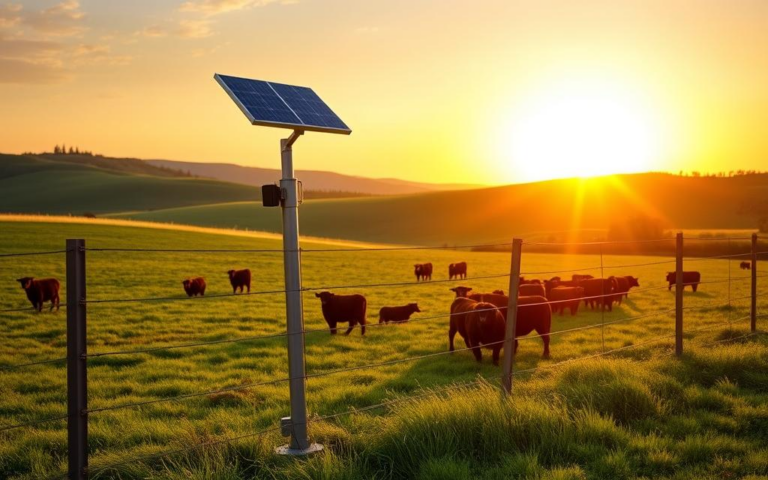
- Replacing diesel irrigation pumps with solar-powered systems
- Installing wind turbines for on-farm electricity generation
- Implementing biogas digesters to convert agricultural waste into energy
- Utilizing ground-source heat pumps for greenhouse operations
These innovative approaches not only reduce carbon emissions but also provide long-term economic benefits for agricultural operations committed to sustainability.
Solar Power Solutions for Sustainable Farming Operations
Modern farms are increasingly turning to solar panels for farms as a powerful green agriculture technology solution. Renewable energy has transformed agricultural operations by providing clean, sustainable power sources that reduce carbon emissions and cut energy costs.
Solar energy offers farmers multiple strategic advantages:
- Utilize unused land for power generation
- Reduce electricity expenses
- Create additional farm revenue streams
- Improve overall farm energy efficiency
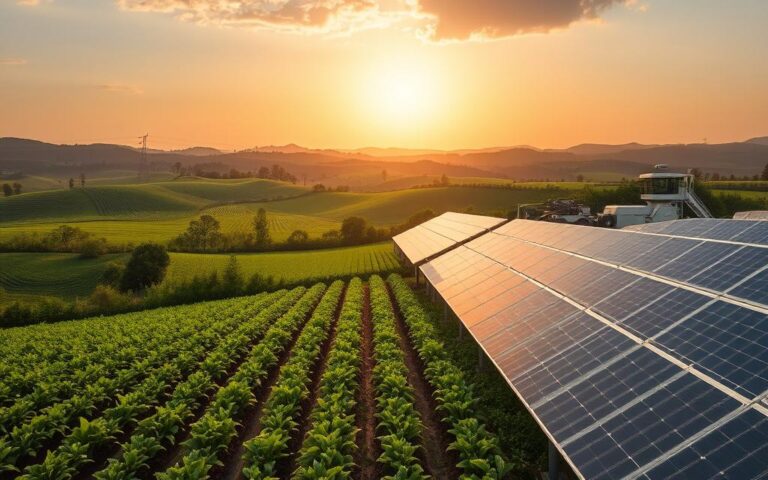
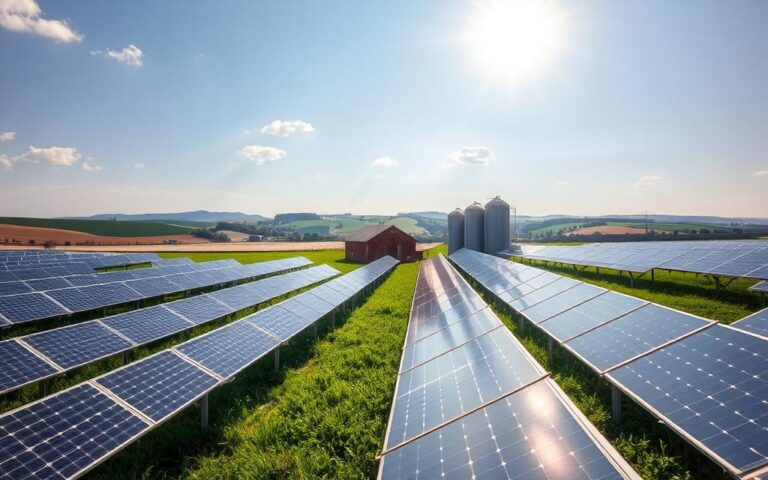
Farmers can implement solar technologies through various innovative approaches. Ground-mounted solar arrays can occupy marginal agricultural land, while rooftop installations on barns and storage facilities maximize existing infrastructure.
| Solar Application | Energy Usage | Efficiency Benefit |
|---|---|---|
| Irrigation Pumping | Water Management | 90% Energy Reduction |
| Crop Drying Systems | Post-Harvest Processing | 75% Cost Savings |
| Greenhouse Operations | Climate Control | 85% Power Offset |
The investment in solar technology typically generates returns within 5-10 years, with federal tax credits and USDA grants making implementation more accessible for agricultural businesses.
Solar energy represents the future of sustainable agricultural practices, offering farmers both environmental and economic benefits.
Wind Energy Applications in Agricultural Settings
Wind power agriculture represents a transformative approach to rural energy transition, offering farmers innovative ways to achieve agricultural energy independence. The vast open landscapes of American farmlands provide an exceptional opportunity for wind energy development, turning agricultural regions into powerful renewable energy hubs.

Farmers across the United States are discovering the potential of wind energy as a sustainable power source. The Great Plains and Midwest regions, with their consistent wind patterns, are particularly well-suited for wind turbine installations.
On-Farm Wind Turbine Implementation
Implementing wind turbines on agricultural land involves careful planning and strategic decision-making. Farmers have multiple options for wind energy integration:
- Small turbines (1-10 kW) for specific applications like water pumping
- Mid-size turbines (10-100 kW) for whole-farm power generation
- Large utility-scale turbines (1+ MW) for extensive power production
Critical considerations for wind turbine installation include:
- Average wind speed (minimum 10 mph annually)
- Tower height for accessing stronger wind currents
- Local zoning regulations
- Property line and structural setback requirements
Community Wind Projects Benefiting Rural Farmers
Community wind projects offer an innovative approach to agricultural energy independence. These collaborative models enable farmers to:
- Lease land to wind developers
- Generate additional income streams
- Participate in cooperative ownership structures
“Wind energy transforms agricultural landscapes from mere production sites to sustainable power generators.”
Typical land lease rates range from $3,000 to $8,000 per turbine annually, providing farmers with a valuable supplemental income while maintaining their primary agricultural operations.
Biomass and Biogas: Turning Agricultural Waste Into Clean Energy
Farmers are discovering powerful solutions for managing agricultural waste through innovative biogas systems. These cutting-edge technologies transform organic materials into valuable energy resources, creating sustainable pathways for organic farming energy production.
Agricultural waste energy represents a revolutionary approach to renewable power generation. Farms generate substantial organic waste, including:
- Crop residues
- Animal manure
- Food processing byproducts
- Damaged crop materials
Biogas systems work through an ingenious process called anaerobic digestion. Bacteria break down organic matter in oxygen-free environments, producing methane-rich gas that can generate electricity and heat. This process simultaneously addresses waste management and energy production.
Different farm types can benefit from these systems, especially:
- Dairy operations with concentrated manure production
- Farms near food processing facilities
- Operations willing to accept municipal organic waste
The environmental advantages are substantial. Biogas technologies reduce methane emissions from manure storage while displacing fossil fuel energy. Although initial investment costs range from $400,000 to over $1 million, farms can generate revenue through electricity sales and waste management fees.
Transforming agricultural waste into clean energy represents the future of sustainable farming practices.
The USDA and EPA offer supportive programs for farms exploring these innovative biogas systems, making renewable energy more accessible for agricultural communities.
Geothermal and Hydroelectric Options for Farm Energy Needs
Renewable energy solutions continue to expand across agricultural landscapes, with geothermal farming emerging as a sophisticated approach to sustainable energy production. While solar and wind technologies dominate the renewable energy conversation, geothermal and hydroelectric options offer unique advantages for farms with specific geographic conditions.
Precision agriculture demands innovative energy solutions that can provide consistent, reliable power. Geothermal and hydroelectric systems stand out as potential game-changers for farms seeking energy-efficient farming equipment and sustainable infrastructure.
Ground-Source Heat Pumps for Agricultural Operations
Ground-source heat pumps represent a breakthrough in agricultural energy management. These systems leverage the earth’s consistent underground temperatures to create highly efficient heating and cooling solutions for various farming environments.
- Typical system efficiency ranges from 300-500%
- Installation costs between $10,000-$30,000
- Potential operational cost savings of 30-50%
- Expected system lifespan of 20-25 years
“Ground-source heat pumps transform how we think about energy in agricultural settings, providing unprecedented efficiency and sustainability.” – Renewable Energy Research Institute
Farmers can implement these systems in multiple settings, including:
- Greenhouses
- Livestock facilities
- Cold storage buildings
- Crop processing centers
Exploring Hydroelectric Potential
Small-scale hydroelectric systems offer another innovative approach for farms with appropriate water resources. Micro-hydro installations can generate consistent baseload power, addressing the intermittency challenges faced by solar and wind technologies.
| Hydroelectric System Requirement | Typical Parameters |
|---|---|
| Minimum Water Flow | 1-2 cubic feet per second |
| Vertical Drop (Head) | 10-100 feet |
| Power Generation | Under 100 kW |
While not universally applicable, geothermal and hydroelectric technologies represent promising frontiers in agricultural renewable energy, offering farms targeted solutions for sustainable power generation.
Economic Benefits of Transitioning to Renewable Energy in Agriculture
Farmers today are discovering significant financial advantages in renewable energy investments. Farm energy costs have traditionally been a substantial expense for agricultural operations, but innovative clean energy solutions are changing the economic landscape.
The economic benefits of renewable energy extend far beyond environmental considerations. By implementing renewable energy systems, farmers can unlock multiple financial opportunities:
- Dramatically reduce ongoing farm energy costs
- Generate additional revenue through energy production
- Access valuable renewable energy incentives
- Increase farm property value
Renewable energy incentives play a crucial role in making these investments attractive. The federal Investment Tax Credit offers farmers up to 30% off solar and geothermal installations. The USDA Rural Energy for America Program provides grants covering 25% of project costs, making transition more financially feasible.
Financial returns can be impressive. Solar and wind systems typically achieve payback within 6-12 years, with some farms reporting total energy cost reductions of 50-100%. Farmers can also benefit from net metering credits, selling excess energy back to the grid.
Energy independence transforms agricultural economic strategies, allowing farmers to stabilize operational expenses and create new revenue streams. By embracing renewable energy, agricultural businesses position themselves as forward-thinking, sustainable enterprises attractive to environmentally conscious consumers and investors.
Real-World Success Stories and Case Studies
Thousands of farms across the United States are pioneering agricultural climate action through innovative renewable energy strategies. These remarkable success stories demonstrate the transformative potential of farm renewable energy installation across diverse agricultural landscapes.
Farms Leading the Renewable Energy Revolution
Several groundbreaking examples showcase the power of sustainable agricultural practices:
- Bowles Farming Company (California): Implemented a 500 kW solar array covering irrigation and processing facility energy needs, generating excess power for grid sale.
- Zinniker Family Farm (Wisconsin): Developed an anaerobic digester processing manure from dairy operations, generating 750 kW of electricity while producing pathogen-free fertilizer.
- Green Plains Farm (Iowa): Hosts utility-scale wind turbines generating $20,000 in annual land lease revenue while maintaining crop production.
Measurable Carbon Reduction Results
Carbon offset programs have enabled farmers to quantify and validate their environmental impact. The Wisconsin dairy’s biogas system eliminates 2,500 metric tons of CO2-equivalent emissions annually—equivalent to removing 540 cars from the road.
Agricultural renewable energy installations nationwide are eliminating millions of tons of greenhouse gas emissions. Farmers document these achievements through:
- Sustainability reports
- Carbon offset program registrations
- Supply chain sustainability initiatives
These success stories prove that renewable energy is not just an environmental necessity but a practical, economically viable strategy for modern agriculture.
Conclusion
The agricultural sector stands at a critical juncture in addressing climate change through sustainable farming practices. Renewable energy technologies offer farmers a powerful strategy for agricultural emissions reduction, transforming traditional energy consumption models across rural landscapes. By embracing diverse clean energy solutions, farms can significantly minimize their carbon footprint while creating economic opportunities.
Implementing renewable energy in agriculture is more than an environmental imperative—it’s a strategic business decision. Solar panels, wind turbines, biomass systems, and geothermal technologies provide farmers with flexible options to reduce energy costs and generate additional revenue streams. The renewable energy agriculture carbon footprint approach represents a holistic method of reimagining farm operations for the 21st century.
Farmers interested in this transition have unprecedented support through USDA programs, state energy offices, and agricultural extension services. Technical assistance and financial incentives make renewable energy adoption increasingly accessible. Each farm’s commitment to clean energy represents a meaningful step toward creating more resilient, sustainable food production systems that can withstand emerging climate challenges.
The future of agriculture depends on innovative approaches that balance productivity with environmental stewardship. By investing in renewable energy technologies, farmers can become leaders in climate solution strategies, demonstrating that sustainable agricultural practices can simultaneously protect our planet and support economic growth.
FAQ
What is renewable energy in agriculture?
Renewable energy in agriculture refers to power generated from naturally replenishing sources like solar, wind, biomass, geothermal, and hydroelectric systems that produce minimal greenhouse gas emissions. These technologies help farmers generate clean electricity, reduce carbon footprints, and lower operational energy costs.
How can renewable energy reduce farming’s carbon footprint?
Renewable energy reduces agriculture’s carbon footprint by replacing fossil fuel-based energy sources with clean alternatives. For example, solar panels can replace diesel-powered irrigation pumps, wind turbines can generate electricity without combustion, and biogas systems can convert agricultural waste into energy while preventing methane emissions.
What are the most common renewable energy technologies for farms?
The most common renewable energy technologies for farms include solar photovoltaic systems, wind turbines, biomass and biogas digesters, ground-source heat pumps, and small-scale hydroelectric systems. Each technology offers unique benefits depending on the farm’s location, energy needs, and available resources.
Are renewable energy systems cost-effective for farmers?
Yes, renewable energy systems can be highly cost-effective. With federal tax credits, USDA grants, and state incentives, farmers can offset initial installation costs. Many renewable energy systems provide payback periods of 6-12 years and can generate additional revenue through energy sales, carbon credits, and reduced operational expenses.
Can small farms implement renewable energy?
Absolutely. Renewable energy solutions are scalable and can be adapted to farms of all sizes. Small farms can start with modest installations like rooftop solar panels, small wind turbines, or biomass systems that match their specific energy requirements and budget constraints.
What types of agricultural waste can be used for renewable energy?
Agricultural waste suitable for renewable energy includes crop residues (corn stover, wheat straw), animal manure, food processing byproducts, and damaged crops. These materials can be used in biomass boilers or biogas digesters to generate heat, electricity, and fertilizer while reducing waste and emissions.
How do ground-source heat pumps work in agricultural settings?
Ground-source heat pumps utilize consistent underground temperatures to efficiently heat and cool agricultural facilities like greenhouses, livestock barns, and cold storage buildings. They can achieve 300-500% efficiency by transferring thermal energy between the ground and building, significantly reducing electricity consumption.
What government incentives are available for agricultural renewable energy?
Key incentives include the Federal Investment Tax Credit (26-30% for solar and other technologies), USDA Rural Energy for America Program (REAP) grants (up to 25% of project costs), accelerated depreciation schedules, and various state-level and utility rebate programs that make renewable energy more financially accessible for farmers.