
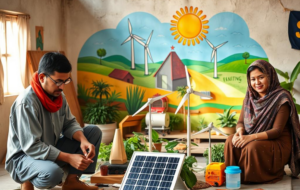
Nearly 60% of Americans say they want to switch to renewable energy but feel uncertain about how to start. This gap between desire and action is closing as communities across the United States discover the power of DIY renewable energy initiatives. When neighbors work together in local workshops and makerspaces, clean energy becomes accessible to everyone.
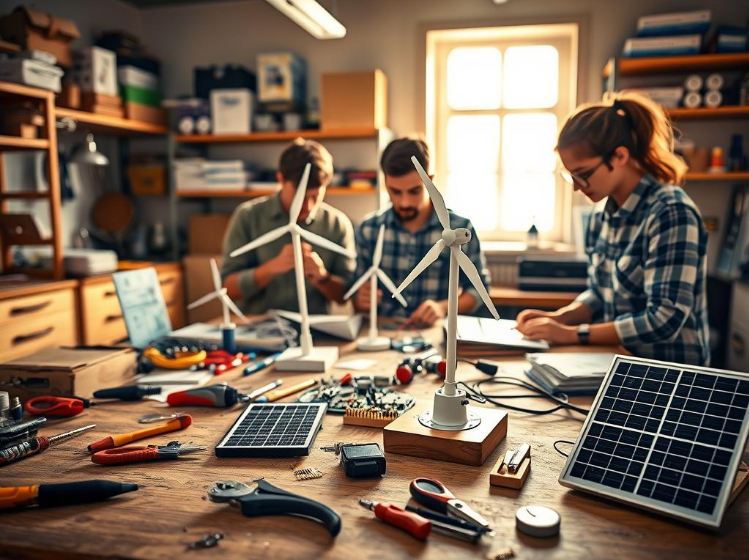
Community DIY renewable energy projects transform ordinary people into energy innovators. Workshops and makerspaces provide the perfect spaces for this work. These gathering places give citizens the tools, knowledge, and support needed to build solar panels, install small wind turbines, and create battery storage systems.
The benefits run deep. Participants share costs, cutting installation expenses significantly. They exchange skills and knowledge with one another. People develop practical abilities in electrical work and renewable technologies. Communities gain collective purchasing power that reduces material costs.
Community DIY renewable energy work empowers citizens to take control of their power supply. Families reduce their electricity bills. Neighborhoods become less dependent on traditional power grids. Environmental impact improves as fossil fuel use drops. Local economies benefit when energy dollars stay within the community.
This article guides you through building renewable energy projects within your community. You will learn practical instructions for solar panel construction. Safety protocols keep everyone protected during hands-on work. Organizational frameworks show how to structure community energy groups. Real-world strategies help you scale projects from workshop prototypes to neighborhood-wide systems.
The renewable energy movement belongs to everyday people like you. Workshop spaces and makerspaces level the playing field. Communities that embrace DIY renewable energy create lasting change for their families and their futures.
Understanding the Power of Community DIY Renewable Energy
Community-based renewable energy projects are reshaping how Americans think about power generation. Grassroots solar power projects and citizen-led sustainability initiatives are gaining momentum across neighborhoods and towns nationwide. These community-driven efforts differ significantly from traditional commercial solar installations because they emphasize shared learning, reduced costs, and local control over energy resources.
The appeal of grassroots solar power projects lies in their practical advantages. When communities work together on renewable energy installations, they benefit from bulk purchasing discounts on equipment and materials. Shared resources reduce individual costs dramatically. A single household installing solar panels alone pays higher per-watt expenses than a group of twenty households purchasing together.
Educational opportunities represent another major benefit of citizen-led sustainability initiatives. Workshop participants gain hands-on experience with solar photovoltaic systems, small wind turbines, and micro-hydro installations. These practical skills empower people to understand renewable energy technology rather than depending entirely on professional installers.
Common myths often discourage people from exploring DIY renewable energy. Many believe these projects require advanced engineering degrees or substantial budgets. Reality tells a different story. With proper guidance and community support, most people can successfully complete renewable energy installations.
Environmental impact measurements demonstrate real benefits. Community renewable energy projects reduce carbon emissions significantly. Studies show that citizen-led sustainability initiatives lower neighborhood carbon footprints by 15-30% annually. Beyond environmental gains, these projects strengthen local resilience and build pathways toward energy independence.
- Cost savings through group purchasing power
- Hands-on learning opportunities for participants
- Measurable carbon reduction in local communities
- Increased energy independence for neighborhoods
- Strengthened community connections and collaboration
The momentum behind grassroots solar power projects continues accelerating. Americans recognize that citizen-led sustainability initiatives create tangible change while building stronger, more resilient communities.
Essential Tools and Safety Equipment for Grassroots Solar Power Projects
Working on grassroots solar power projects demands serious attention to safety. Electrical systems carry real risks, and working at heights adds another layer of concern. Before your community workshop or makerspace begins any installation, your team needs the right equipment and knowledge. Safety is not optional. It protects your volunteers and ensures quality installations that last for years.
Building a strong safety foundation starts with understanding what gear people need. Proper equipment prevents injuries and builds confidence among team members. Grassroots solar power projects succeed when everyone feels secure and prepared.
Personal Protective Equipment Requirements
Your team members must wear proper protective gear at all times during grassroots solar power projects. This includes:
- Safety glasses with side protection to shield eyes from debris
- Electrical-rated gloves rated for the voltage you’re working with
- Hard hats for roof work and overhead hazards
- Non-slip, closed-toe footwear with good grip
- Fall arrest harnesses for any work above six feet
OSHA standards guide community workshops on proper PPE use. Check your local regulations before starting work. Replace damaged gloves and inspect harnesses before each use.
Basic Tool Kits for Solar Installation
Grassroots solar power projects need specific tools for proper installation and assembly:
| Tool Type | Purpose | Recommended Brand |
|---|---|---|
| Wire Stripper | Remove insulation from electrical wires | Klein Tools or Southwire |
| Crimping Tool | Create secure wire connections | Phoenix Contact or Ideal Industries |
| Cordless Drill | Drill holes and drive fasteners | DeWalt or Milwaukee |
| Multimeter | Measure electrical values | Fluke or Extech |
| Adjustable Wrench Set | Tighten mounting hardware | Snap-on or Stanley |
| Level | Ensure proper panel mounting angles | Stabila or Bosch |
Consider creating a shared tool library within your makerspace. This reduces costs and helps teams maintain equipment properly. Label everything clearly and establish a checkout system.
Electrical Safety Testing Devices
Testing equipment keeps your grassroots solar power projects safe and compliant. Essential devices include:
- Digital Multimeters – Measure voltage, current, and resistance to verify correct connections
- Non-contact Voltage Testers – Detect live electricity without touching wires
- Clamp Meters – Measure current flow in circuit wires
- Insulation Resistance Testers – Check wire integrity before connections
- Solar Irradiance Meters – Measure sunlight intensity for panel performance
Learn how to use each device properly. Misreadings create safety problems. Take time to understand what normal readings look like for your specific grassroots solar power projects setup.
Your workshop should develop a safety checklist before starting any installation work. This ensures nothing gets missed and everyone stays protected throughout the project.
Building Your First Homemade Solar Panel System
Creating homemade solar panel systems opens doors for communities to generate clean energy affordably. Building your own panels gives workshops and makerspaces the power to teach renewable energy hands-on. Whether you start with individual photovoltaic cells or pre-made panels, the process remains manageable for beginners.
Homemade solar panel systems require specific materials and tools. Understanding each component helps you choose the right approach for your skill level and budget. Two main paths exist: assembling panels from individual cells or combining manufactured panels into a system.
Essential Components for Your Project
Building homemade solar panel systems starts with gathering the right materials. You will need photovoltaic cells, tabbing wire, bus wire, flux pens, backing materials, and encapsulation supplies. Quality sourcing matters for performance and longevity.
- Photovoltaic cells (monocrystalline or polycrystalline)
- Tabbing wire for connecting cells
- Bus wire for main connections
- Flux pens for soldering
- Tempered glass or acrylic sheets
- Aluminum frame materials
- Silicone sealant for weatherproofing
- Junction box with bypass diodes
Assembly Steps for Success
Homemade solar panel systems require careful assembly. Soldering cells in series creates the electrical connection needed for power generation. Testing voltage output at each step prevents wasted effort later.
- Arrange cells in your desired configuration
- Solder tabbing wire to cell contacts carefully
- Connect cells in series strings
- Test voltage output with a multimeter
- Attach bus wire to combine strings
- Install the junction box with bypass diodes
- Mount cells on backing material
- Seal edges with silicone sealant
- Attach glass or acrylic cover
- Frame the completed panel
Performance Planning and Calculations
Determining how many homemade solar panel systems your community needs depends on your power goals. A single 100-watt panel produces roughly 400-500 watt-hours per day under good sunlight conditions. Multiply your daily energy needs by the number of panels required.
| Application Type | Recommended Wattage | Estimated Panels Needed (100W) | Approximate Cost Range |
|---|---|---|---|
| Charging station | 500-800W | 5-8 panels | $750-$1,200 |
| Workshop power | 1,000-1,500W | 10-15 panels | $1,500-$2,250 |
| Community building supplement | 2,000-3,000W | 20-30 panels | $3,000-$4,500 |
| Small off-grid cabin | 1,500-2,500W | 15-25 panels | $2,250-$3,750 |
Safety Considerations During Assembly
Working with homemade solar panel systems involves electrical and thermal hazards. Ensure proper ventilation when soldering to avoid inhaling fumes. Broken cells contain sharp edges that cut skin easily. Wear safety glasses and gloves throughout your project.
- Maintain good airflow during soldering operations
- Use flux with low-temperature soldering irons
- Handle broken cells with heavy gloves
- Keep a fire extinguisher nearby
- Never test panels while standing in wet conditions
- Ground yourself before handling components
Sourcing Materials Affordably
Building homemade solar panel systems costs less when you buy materials in bulk. Community purchasing cooperatives offer significant discounts. Online suppliers like Renogy, Victron Energy, and local solar distributors provide quality components at reasonable prices.
Many communities successfully build 100-watt panels for under $150 in materials. Group purchases through your makerspace lower per-unit costs substantially. Connecting with other DIY renewable energy groups expands your sourcing networks.
Troubleshooting Common Issues
Homemade solar panel systems sometimes underperform due to assembly mistakes. Testing helps identify problems early. Check for cold solder joints, broken cell connections, and improper bus wire placement.
- Low voltage output usually indicates broken cell connections
- Uneven power generation suggests shading problems
- Overheating points to poor ventilation in enclosures
- Water leaks mean reapplying silicone sealant
- Cracked cells lose efficiency and need replacement
Your community workshop can teach these skills to dozens of participants. Homemade solar panel systems empower people to take control of their energy future while building valuable technical knowledge together.
Neighborhood Wind Turbine Installation: A Step-by-Step Guide
Wind energy offers communities a powerful way to generate clean electricity. Before starting a neighborhood wind turbine installation, your group must assess whether your location has enough wind to make the project worthwhile. Wind speed matters most. Areas with average wind speeds above 10 miles per hour work best for turbines. You can measure wind patterns using simple anemometers or review data from local weather stations and the National Renewable Energy Laboratory.
Your community needs to understand wind energy potential before making big investments. Check seasonal wind patterns, nearby obstacles like buildings or trees, and local weather records. These steps help you decide if neighborhood wind turbine installation makes sense for your area.
Selecting the Right Turbine Size for Your Community
Choosing the correct turbine size depends on your community’s energy needs. Three main categories exist for residential and small community use:
- Micro turbines (under 1 kW) work for single households or small buildings
- Small turbines (1-10 kW) serve groups of homes or small neighborhoods
- Medium turbines (10-100 kW) power larger communities and neighborhoods
Calculate your community’s average power needs by adding up monthly electricity usage from all participating households. Divide by 730 hours (one month) to find your average kilowatt demand. A neighborhood wind turbine installation serving 20 homes using 500 kilowatts monthly needs a 0.68 kW average capacity. Start with small systems and expand as your community gains experience.
| Turbine Type | Power Output | Best For | Tower Height | Cost Range |
|---|---|---|---|---|
| Micro Horizontal-Axis | Under 1 kW | Single homes | 30-50 feet | $3,000-$8,000 |
| Small Horizontal-Axis | 1-5 kW | Small groups | 60-80 feet | $10,000-$25,000 |
| Small Vertical-Axis | 2-10 kW | Neighborhoods | 30-60 feet | $12,000-$30,000 |
| Medium Horizontal-Axis | 10-50 kW | Large communities | 80-120 feet | $40,000-$100,000 |
Horizontal-axis turbines look like airplane propellers and work well in open areas with steady wind. Vertical-axis designs resemble egg-beaters and handle wind from any direction. Both styles suit different neighborhood wind turbine installation scenarios. Research models from manufacturers like Southwest Windpower, Proven Energy, and Bergey Windpower for quality options.
Foundation and Mounting Considerations
Strong foundations prevent turbine failures and safety hazards. Your neighborhood wind turbine installation requires proper concrete footings that go deep into the ground. Frost lines vary by location. Northern states need foundations below 48 inches, while southern regions may need only 12-24 inches.
Tower selection affects both performance and safety. Free-standing towers stand alone without support wires. Guy-wire towers use cables anchored to the ground for stability. Guy-wire systems cost less but need more land area. Free-standing towers look better but cost more money. Tower heights matter for wind access. Turbines need placement at least 30 feet above surrounding obstacles.
Local zoning laws control turbine placement. Many communities require setbacks from property lines equal to tower height plus 10 feet. Talk with neighbors early in planning. Noise concerns, shadow flicker, and visual impact shape neighborhood opinions. Transparent communication builds support for your neighborhood wind turbine installation project.
Wiring and Grid Connection Basics
Electrical systems connect your turbine to homes or the electrical grid. Off-grid systems store power in batteries for homes not connected to utility lines. Grid-tied systems send extra power back to the utility for credits on electricity bills.
Essential electrical components include:
- Charge controllers that manage power flow to batteries
- Inverters that change direct current to alternating current
- Disconnect switches for safety during maintenance
- Meters that track power production and use
- Breakers and fuses for circuit protection
- Grounding systems that protect against lightning
Grid-connected neighborhood wind turbine installation needs utility approval and permits. Contact your local power company early. They require specific equipment and testing. Professional electricians should handle connections to prevent shock hazards and equipment damage. Lightning protection systems must include proper grounding cables running from turbine to ground rods buried several feet deep. Your neighborhood wind turbine installation success depends on safe, reliable electrical work that meets all codes and regulations.
Creating Local Renewable Energy Cooperatives
Local renewable energy cooperatives represent a powerful way for communities to take control of their power supply. Unlike traditional utility companies or individual solar installations, these organizations allow neighbors to pool resources and work together toward energy independence. Members collectively own and manage the energy infrastructure, sharing both costs and the benefits that come from clean power generation.
Energy cooperatives operate on democratic principles where each member has an equal voice in decision-making. This structure differs significantly from investor-owned utilities that prioritize shareholder profits. Members of local renewable energy cooperatives benefit from bulk purchasing power when buying solar panels, wind turbines, and battery systems. Shared technical expertise means experienced members can guide newer participants through installation and maintenance.
Starting a local renewable energy cooperative requires several key steps:
- Recruit founding members from your neighborhood who share environmental values
- Establish clear governance structures and decision-making processes
- Create detailed bylaws that outline member responsibilities and rights
- Determine your cooperative model (consumer, producer, or hybrid)
- Develop a financial plan including membership fees and funding sources
Different cooperative models serve different community needs. Consumer cooperatives focus on members who use renewable energy. Producer cooperatives include members who generate power for the group. Hybrid models combine both approaches, allowing some members to produce while others consume the clean energy.
Successful examples demonstrate the viability of this approach. Energy cooperatives in Minnesota, Colorado, and Vermont have grown significantly, serving hundreds of households and businesses. These organizations prove that local renewable energy cooperatives create lasting infrastructure that strengthens community bonds while reducing carbon emissions for generations to come.
Funding mechanisms for local renewable energy cooperatives include member equity contributions, specialized cooperative loans from credit unions, government grants, and community investment programs. These diverse funding sources make projects more accessible to lower-income households who might otherwise struggle with upfront renewable energy costs.
Beyond energy production, local renewable energy cooperatives serve an educational mission. They teach community members about renewable technology, installation techniques, and energy efficiency. This knowledge sharing builds skills that extend throughout neighborhoods and inspires additional green initiatives across the region.
DIY Off-Grid Solutions for Community Resilience
Communities facing power outages and grid failures need reliable backup energy systems. DIY off-grid solutions provide a path toward energy independence and emergency preparedness. These systems allow neighborhoods to generate, store, and manage their own electricity without relying on traditional power grids. When designed properly, off-grid configurations keep essential services running during natural disasters, equipment failures, or grid overloads.
Building DIY off-grid solutions requires understanding how to pair energy storage with renewable sources. A well-designed system ensures your community maintains power for critical functions like emergency communication, medical equipment, food storage, and lighting. Off-grid capabilities transform neighborhoods into resilient units that can survive extended outages.
Battery Storage Systems for Energy Independence
Battery banks serve as the heart of any off-grid energy system. Selecting the right battery technology depends on your community’s budget, space, and power requirements. Three main battery types dominate DIY off-grid solutions for neighborhoods:
- Lead-acid batteries offer affordability and proven reliability for small to medium projects
- Lithium-ion systems provide longer lifespans and higher efficiency ratings
- Emerging technologies like sodium-ion batteries present new cost-effective options
Calculating battery bank size requires understanding your daily energy consumption and desired backup duration. Most communities need between 3 to 7 days of autonomy to weather major outages. The formula involves multiplying daily kilowatt-hour usage by desired autonomy days, then dividing by the battery’s usable depth of discharge.
| Battery Technology | Typical Lifespan | Cost per kWh | Efficiency Rating | Best Use Case |
|---|---|---|---|---|
| Lead-Acid | 5-10 years | $200-$400 | 80-85% | Budget-conscious community projects |
| Lithium-Ion (LiFePO4) | 10-15 years | $400-$800 | 95-98% | High-performance neighborhood systems |
| Sodium-Ion | 10-12 years | $250-$500 | 90-92% | Medium-sized community installations |
Voltage configuration matters significantly for DIY off-grid solutions. Communities typically choose between 12V, 24V, or 48V systems. Higher voltages like 48V reduce wire size requirements and improve efficiency in larger installations. Proper charge controller selection ensures batteries charge safely from solar panels or wind turbines without overcharging or deep discharging.
Battery management systems monitor individual cell health, temperature, and charge states. These systems prevent dangerous conditions like thermal runaway in lithium batteries or hydrogen gas buildup in lead-acid units. Ventilation becomes critical for lead-acid installations, requiring dedicated battery rooms with adequate airflow.
Backup Power Configuration Options
Off-grid system architectures vary based on community needs and existing grid connections. Three primary configurations serve different resilience goals:
- Pure off-grid systems operate completely independent from utility grids, relying entirely on stored energy and renewable generation
- Grid-tied with battery backup combines grid power with battery storage that activates during outages
- Generator hybrid systems integrate backup generators with batteries to extend autonomy periods
Automatic transfer switches manage power flow between sources seamlessly. When grid power fails, these devices instantly redirect electricity from battery banks or generators to critical loads. Critical load panels separate essential circuits like emergency lighting, refrigeration, medical equipment, and communication systems from non-essential appliances.
A practical example shows how a community center uses DIY off-grid solutions to maintain operations during emergencies. Solar arrays generate daytime power while batteries store excess energy. During outages, the system automatically supplies lighting to evacuation areas, keeps freezers running for food preservation, and charges communication devices for emergency coordination. A small backup generator provides additional power during extended cloudy periods.
“Off-grid capabilities transform neighborhoods into resilient units capable of surviving extended outages and maintaining essential services when traditional power infrastructure fails.”
Integration between renewable generation sources and battery systems requires proper disconnect procedures and safety protocols. Communities must install disconnect switches at battery banks, charge controllers, and inverters. These switches allow safe maintenance and emergency shutdowns. Grounding systems protect against electrical faults and lightning strikes, essential for systems handling thousands of watts.
Implementing DIY off-grid solutions strengthens neighborhood resilience against natural disasters, equipment failures, and grid vulnerabilities. Communities that invest in these systems gain energy independence while ensuring critical functions continue operating when external power sources fail.
Collaborative Green Energy Projects: Funding and Resource Sharing
Collaborative green energy projects bring real financial benefits to communities. When groups work together on renewable energy installations, costs get split among many people. This approach makes clean energy affordable for neighborhoods that couldn’t fund projects alone.
Finding money for collaborative green energy projects starts with knowing what resources exist. Multiple funding paths can support your community’s renewable energy goals.
Funding Sources for Community Energy Initiatives
- Member contributions from project participants
- Crowdfunding platforms designed for renewable energy
- Local government sustainability grants
- Utility rebate programs and incentives
- USDA Rural Energy for America Program (REAP)
- Department of Energy community energy initiatives
- Private foundations supporting clean energy
- State-level renewable energy tax credits
Writing strong grant applications matters for securing funds. Your application should clearly explain how collaborative green energy projects benefit your specific community. Describe the environmental impact, cost savings, and job creation your project brings.
Smart Resource Sharing Strategies
Sharing equipment and knowledge cuts costs dramatically. Tool libraries let members check out expensive items like scaffolding and testing equipment. Groups can negotiate bulk discounts on solar panels and components through cooperative purchasing.
Experienced members mentoring newcomers builds community strength. Rotating expensive equipment among project teams maximizes your investment. Open-source hardware designs encourage communities to share successful renewable energy blueprints freely.
Managing Finances Transparently
| Financial Practice | Purpose | Benefit to Community |
|---|---|---|
| Transparent Accounting | Track all project expenses and income | Builds trust among members |
| Reserve Funds | Cover future maintenance costs | Ensures project sustainability |
| Fair Cost Allocation | Divide expenses equitably | Encourages continued participation |
| Member Agreements | Document roles and responsibilities | Prevents conflicts and confusion |
Collaborative green energy projects make renewable energy accessible to everyone. By pooling resources and sharing knowledge, communities build stronger, more sustainable energy futures together.
Establishing Residential Renewable Energy Networks
Communities across the United States are shifting from isolated solar panels and wind turbines toward integrated systems. Residential renewable energy networks connect multiple homes into coordinated power systems that work together. These networks represent a major step forward in how neighborhoods generate, share, and consume clean energy. Instead of each house operating alone, families join together to create stronger, more reliable energy systems that benefit everyone involved.
The evolution toward residential renewable energy networks reflects growing demand for energy independence and sustainability. When homes link their renewable systems, they create smart grids that optimize power flow throughout the neighborhood. This approach reduces waste and increases efficiency compared to traditional utility models. Communities gain flexibility, resilience, and lower energy costs by pooling resources and sharing generation capacity.
Peer-to-Peer Energy Sharing Models
Peer-to-peer energy sharing allows neighbors to trade electricity directly without utility company intermediaries. Smart meters and digital platforms enable homeowners to buy and sell excess solar power to nearby properties. This creates a local energy marketplace where renewable generation becomes a shared community resource.
Technology platforms support these transactions through blockchain systems and virtual net metering. Residents with solar arrays can offset their electricity costs by supplying power to neighbors. Brooklyn’s Red Hook neighborhood and pilot programs across California demonstrate how peer-to-peer models work in practice. These systems create several advantages:
- Lower transmission losses from localized energy exchange
- Better utilization of renewable generation capacity
- Reduced overall energy costs for participating households
- Greater control over personal energy sources
- Community resilience during grid outages
Pricing mechanisms vary across residential renewable energy networks. Some communities charge fixed rates for shared power. Others use dynamic pricing that adjusts based on real-time supply and demand. Fair pricing ensures equity among homes with different solar capacity and generation levels. Settlement systems process payments automatically through digital platforms, simplifying transactions between neighbors.
Microgrids for Neighborhood Power Distribution
Microgrids create small-scale electrical systems that operate independently from the main utility grid. These neighborhood networks include distribution lines, transformers, and advanced control systems that manage power flow locally. When the larger grid experiences outages, microgrids can island and continue supplying electricity to homes within their network.
Successful microgrids exist throughout the United States. Borrego Springs in California operates as a microgrid utilizing solar and battery storage. Brooklyn Navy Yard in New York created an industrial microgrid that demonstrates resilience and efficiency. These installations prove that residential renewable energy networks can provide reliable power while reducing dependence on distant power plants.
| Microgrid Location | Primary Energy Source | Key Capability | Operational Status |
|---|---|---|---|
| Borrego Springs, California | Solar and Battery Storage | Off-grid operation during outages | Fully operational |
| Brooklyn Navy Yard, New York | Solar, natural gas, batteries | Islanding capability with 8-hour backup | Fully operational |
| Pecan Street, Austin, Texas | Solar and smart storage systems | Real-time energy management and monitoring | Active demonstration |
| Santa Rita, New Mexico | Solar arrays with battery systems | Grid-connected with emergency backup | Fully operational |
Building residential renewable energy networks requires cooperation between homeowners and utility companies. Communities need special licensing and regulatory approval to operate microgrids. Local governments must update electrical codes to accommodate distributed energy systems. Despite these challenges, the benefits—improved reliability, lower costs, and environmental advantages—make microgrids increasingly attractive to neighborhoods seeking energy independence and sustainability.
Citizen-Led Sustainability Initiatives: Best Practices and Success Stories
Communities across America are proving that renewable energy projects succeed when people work together. Citizen-led sustainability initiatives show real results in cities, suburbs, and rural areas. These projects start with local passion and grow through smart planning, teamwork, and persistence.
Several communities stand out for their achievements. A makerspace in Portland, Oregon installed solar panels that now provide 80% of its power needs. The project trained over 200 community members in solar installation skills. In rural Minnesota, neighbors banded together to install small wind turbines that serve 15 households and cut their electricity costs significantly. An urban neighborhood in Detroit transformed a vacant lot into a community solar garden where residents own shares and enjoy the benefits.
These citizen-led sustainability initiatives share important lessons for starting your own projects:
- Engage the community early and keep talking with neighbors
- Find an experienced technical advisor who believes in your mission
- Start small with pilot projects before expanding
- Be honest about costs and what people will save
- Celebrate wins to keep energy and interest high
Real challenges appeared along the way. Groups faced permit delays, neighbor concerns, equipment problems, and money shortfalls. Smart communities solved these issues through creativity. They worked with local governments, held public meetings to address worries, brought in technical experts for help, and found grants plus crowdfunding to fill budget gaps.
The benefits spread beyond energy savings. These citizen-led sustainability initiatives built job skills, strengthened neighborhoods, revitalized areas, and inspired new green projects. Communities generated thousands of kilowatt-hours of clean energy while avoiding tons of carbon emissions annually.
| Community Project | Location | Energy Type | Annual Output | People Trained | CO2 Avoided (tons/year) |
|---|---|---|---|---|---|
| Makerspace Solar Array | Portland, Oregon | Solar | 45,000 kWh | 200+ | 32 |
| Neighborhood Wind Project | Rural Minnesota | Wind | 38,000 kWh | 45 | 27 |
| Community Solar Garden | Detroit, Michigan | Solar | 52,000 kWh | 150 | 37 |
Success did not require special resources. What mattered was determination, cooperation, and a willingness to learn. Ordinary people made extraordinary changes happen. Your community can do the same by studying these examples, connecting with neighbors, and taking that first step forward in building citizen-led sustainability initiatives that work for everyone.
Community-Owned Clean Energy: Legal and Organizational Frameworks
Building community-owned clean energy projects requires more than just technical knowledge. You need solid legal structures to protect your group, gain tax benefits, and ensure your project lasts for decades. The right organizational framework turns neighborhood energy dreams into working reality.
Community-owned clean energy initiatives operate best when built on strong foundations. This means choosing the right legal structure, understanding your local rules, and getting proper permits before installation begins. Taking time upfront saves headaches and keeps your project running smoothly.
Forming Energy Cooperatives
Energy cooperatives give communities real control over their power supply. When you form an energy cooperative, members own and manage the project together. Each member gets one vote, making decisions fair and democratic.
Several organizational structures work for community-owned clean energy projects:
- Nonprofit 501(c)(3) organizations offer tax breaks and grant opportunities
- Limited liability companies (LLCs) provide personal protection from legal claims
- Benefit corporations balance profit with social good
- Formal cooperatives follow traditional democratic governance models
To start your energy cooperative, you’ll need articles of incorporation and bylaws. These documents outline how your group makes decisions and handles money. You should also create membership agreements that explain member rights and responsibilities.
Decide how members contribute financially and how profits get shared. Some groups require equal capital contributions. Others let people invest what they can afford. Community-owned clean energy works best when everyone understands the money side upfront.
Navigating Local Regulations and Permits
Local rules shape what’s possible for your community-owned clean energy project. Before breaking ground, contact your city building department and planning commission. They’ll tell you exactly what permits you need.
Expect to handle these permits:
- Electrical permits for wiring and connections
- Building permits for structural installations
- Zoning approvals from local planning departments
- Utility interconnection agreements with your power company
Homeowner associations and restrictive covenants sometimes block solar panels or wind turbines. Talk to your HOA early. Many groups now support renewable energy projects. Historic districts have their own rules too—your installation might need to match neighborhood character.
Learn about net metering in your state. This policy lets you send excess power back to the grid and get credits. Understanding renewable energy credits and available incentives makes your community-owned clean energy project more affordable. Consult with lawyers who specialize in energy law for guidance on complex regulations.
| Permit Type | Who Issues It | Timeline | Key Requirements |
|---|---|---|---|
| Electrical Permit | City/County Electrical Inspector | 5-10 business days | Certified installer credentials, system specifications |
| Building Permit | Local Building Department | 7-15 business days | Site plans, structural calculations, installation drawings |
| Zoning Approval | Planning Commission | 20-30 days | Proof project fits local zoning codes |
| Utility Interconnection | Electric Utility Company | 30-60 days | System capacity details, net metering agreement |
Reach out to your state’s renewable energy association. These organizations provide guides and answer questions about local rules. They understand community-owned clean energy challenges specific to your region and can connect you with experienced professionals who’ve navigated similar projects.
Scaling Up: From Workshop Projects to Neighborhood Implementation
Moving community DIY renewable energy projects from small workshop settings to neighborhood-wide implementation requires careful planning and smart strategies. What works in a makerspace with a handful of enthusiasts needs adaptation when serving an entire community. The transition from learning projects to real-world installations demands new approaches to training, funding, and quality control.
Starting with pilot installations creates a strong foundation for scaling. Select volunteer homes or workshop buildings for initial projects. These early installations serve as proof of concept and learning opportunities. Document everything carefully, including successes, challenges, and lessons learned. This information becomes valuable when planning larger rollouts across your neighborhood.
Building your skilled workforce is essential for growth. Train additional community members through hands-on workshops and mentorship programs. Create standard operating procedures to ensure every installation meets quality standards. Experienced installers should guide newcomers, spreading knowledge throughout your community DIY renewable energy network.
Strategies for Faster Project Completion
- Use assembly-line approaches where teams focus on specific tasks
- Pre-fabricate components in workshop settings before field installation
- Schedule multiple installations in geographic clusters to reduce travel time
- Develop consistent checklists for quality assurance
Smart Funding for Growth
Reinvest savings from initial projects into future installations. Establish revolving loan funds where early participants’ payments finance later projects. Use successful pilots to attract larger grants and investments from foundations and government programs.
| Scaling Element | Small Workshop Phase | Neighborhood Implementation |
|---|---|---|
| Team Size | 5-10 volunteers | 25-50+ trained members |
| Monthly Projects | 1-2 installations | 4-8 installations |
| Budget Source | Donations, grants | Grants, loans, participant fees |
| Safety Oversight | Basic protocols | Inspection systems, certifications |
Quality and safety grow more important as your community DIY renewable energy work expands. Implement inspection protocols at each project stage. Require continuing education for installers. Create incident reporting systems to catch problems early and prevent mistakes in future work.
Engage beyond early adopters through neighborhood presentations, open house events at completed installations, and financial incentives for new participants. Share success stories to build enthusiasm and trust. Balance rapid growth with maintaining the collaborative, educational spirit that makes community DIY renewable energy projects meaningful and sustainable.
Conclusion
Community DIY renewable energy projects offer a practical path forward for everyday people who want to help the environment. Throughout this article, we explored how ordinary citizens can build solar panels, install wind turbines, and create local energy networks. These projects prove that you don’t need to be an engineer or have deep pockets to make a real difference in reducing fossil fuel use.
The benefits of community DIY renewable energy extend far beyond saving money on electricity bills. When neighbors work together on renewable energy projects, they share knowledge, split costs, and build stronger relationships. Local energy production makes communities more resilient when storms or grid failures happen. Working with your hands in makerspaces and workshops teaches valuable skills that last a lifetime. Best of all, reducing reliance on fossil fuels protects our planet for future generations.
Real communities across America have already started this journey. From Boston to San Diego, thousands of neighborhoods have overcome regulatory hurdles and technical challenges to build shared renewable energy systems. Your community can do the same. Start small by attending a local renewable energy workshop or visiting a makerspace near you. Gather a few neighbors for a planning meeting. Take on a demonstration project to build momentum and confidence. Small steps lead to big achievements.
Community DIY renewable energy represents more than just clean power generation. This movement strengthens local economies, deepens social bonds, and shows what’s possible when people work together toward common goals. The transition to renewable energy doesn’t require waiting for large corporations or government mandates. Your community has the power to build a sustainable future right now. Take action today and join the growing movement of neighbors creating energy independence and environmental protection together.
FAQ
What exactly are community DIY renewable energy projects and how do they differ from commercial installations?
Community DIY renewable energy projects are grassroots solar power projects and citizen-led sustainability initiatives where neighborhood residents collaborate to design, build, and install renewable energy systems together rather than purchasing from commercial providers. Unlike commercial installations where a company handles everything, DIY projects emphasize hands-on learning, collaborative participation, and shared ownership. Community members learn technical skills while building systems for their workshops, makerspaces, or neighborhoods. The key differences include lower costs through bulk purchasing, educational value, stronger community bonds, and greater control over energy production. These projects can be organized through local renewable energy cooperatives or informal residential renewable energy networks that distribute both the work and benefits among participants.
How much does it cost to start a community DIY renewable energy project?
Costs vary significantly depending on project scope and scale, but community collaboration dramatically reduces per-person expenses. A basic homemade solar panel system using DIY construction can be built for under $150 in materials for a 100-watt panel when sourcing through bulk purchasing cooperatives. A small neighborhood wind turbine installation for a community might range from $5,000 to $15,000 depending on turbine size (1-10 kW systems are typical for community projects). Collaborative green energy projects reduce individual burden through shared costs—when ten households fund equipment collectively, each person’s investment becomes manageable. Many communities use revolving loan funds, grants from programs like the USDA Rural Energy for America Program (REAP), state renewable energy incentives, and crowdfunding to finance projects. Starting with a pilot demonstration project in a workshop costs significantly less than neighborhood-wide implementation.
What personal protective equipment do I need when working on renewable energy projects?
When conducting grassroots solar power projects or neighborhood wind turbine installation work, essential personal protective equipment includes safety glasses to protect eyes from dust and debris, electrical-rated gloves (rated for the voltage being handled), hard hats for protection against falling objects, non-slip footwear with good grip, and fall protection equipment including harnesses and lanyards for any roof or tower work. Long sleeves and pants protect skin from direct sun exposure and minor abrasions. For soldering work in homemade solar panel systems, you’ll need respiratory protection or adequate ventilation to avoid fume inhalation. OSHA standards provide guidance on appropriate PPE selection and maintenance. Your community workshops and makerspaces should maintain a safety checklist ensuring all PPE is available, properly sized, and in good condition before any project work begins. Different tasks require different equipment—always assess hazards specific to your particular installation before starting work.
What tools do I need to successfully build a homemade solar panel system?
Building homemade solar panel systems requires a basic tool kit including wire strippers for preparing electrical connections, crimping tools for securing wire terminals, screwdrivers (both Phillips and flathead), a power drill for mounting hardware, measuring devices like tape measures and rulers, levels for ensuring proper panel angle, and soldering equipment if building from individual photovoltaic cells. You’ll also need multimeters for testing voltage output, wire cutters, pliers, and clamps for holding components during assembly. Quality tools from brands like DeWalt, Milwaukee, or Makita offer good value for community workshop budgets. Rather than each participant purchasing tools individually, community workshops can establish tool libraries where members check out equipment as needed, significantly reducing collective costs. Specialized tools like solar irradiance meters for measuring sunlight intensity may be shared among multiple projects. Creating a shared equipment inventory prevents duplication and builds community assets.
How do I know if my location is suitable for a wind turbine installation?
Assessing wind potential is the critical first step for neighborhood wind turbine installation. You need to measure average wind speeds at your proposed installation height over at least a three-month period using an anemometer. Most locations need average wind speeds of at least 10-12 miles per hour at hub height to make small turbines economically viable. Topography significantly affects wind resources—hilltops and open areas have better wind access than valleys or locations surrounded by trees and buildings. Online wind resource maps from the National Renewable Energy Laboratory (NREL) provide preliminary estimates for your area. Additionally, you must evaluate zoning considerations including setback requirements (turbines typically need spacing from property lines), height restrictions, and local noise ordinances. Check if your local regulations and permits restrict residential wind installations. Survey your neighbors’ attitudes early—wind turbines generate some noise and visual impact, so gaining community support before investing in equipment is essential. If wind potential is limited, grassroots solar power projects may be a better alternative for your community.
What is a local renewable energy cooperative and how do I form one?
A local renewable energy cooperative is a member-owned organization where residents collectively own and democratically govern shared renewable energy infrastructure. Unlike traditional utilities or private companies, cooperatives distribute both ownership and profits among member-participants using a one-member-one-vote model. Cooperatives provide significant advantages including bulk purchasing power for equipment at discounted rates, shared technical expertise where experienced members guide newcomers, distributed financial risk where costs are shared across many participants, and collective bargaining strength with utilities and regulators. To form a cooperative, follow these steps: recruit founding members who share your vision, establish governance structures through bylaws defining voting rights and decision-making, consult with an attorney specializing in cooperative law (state renewable energy associations often recommend specialists), and file incorporation documents with your state. Successful examples include cooperatives in Minnesota, Colorado, and Vermont that serve dozens to hundreds of households. Cooperatives can operate as consumer cooperatives (members use the energy), producer cooperatives (members generate energy), or hybrid models combining both. Your cooperative may purchase community-owned clean energy systems collectively or coordinate member installations.
What are DIY off-grid solutions and why are they important for community resilience?
DIY off-grid solutions are renewable energy systems that operate independently from the main electrical utility grid, providing complete energy autonomy and resilience during grid outages or in remote locations. These systems typically combine renewable generation (solar or wind) with battery storage systems for energy independence, allowing communities to maintain power during emergencies. Off-grid capability is crucial for community resilience because it ensures continued access to electricity during natural disasters, grid failures, or other disruptions—maintaining lighting, refrigeration, medical equipment, and communication systems. Communities can design pure off-grid systems that operate independently year-round, grid-tied installations with battery backup that normally use grid power but switch to stored energy during outages, or hybrid systems combining renewable generation, batteries, and backup generators. Backup power configuration options might include critical load panels that automatically prioritize essential circuits during outages, ensuring refrigeration and emergency lighting function even if less critical systems go without power. For example, a community center with off-grid backup can serve as an emergency shelter providing light, phone charging, and safe space during extended outages. This transforms communities from dependent consumers into energy-resilient participants capable of maintaining basic functions during crises.
How can my community fund renewable energy projects without requiring large individual investments?
Collaborative green energy projects distribute costs across many participants, making renewable energy affordable when individual budgets are limited. Diverse funding mechanisms include member contributions (smaller amounts from many people instead of large amounts from few), crowdfunding platforms specifically designed for renewable energy projects like Wefunder or Kickstarter that reach thousands of potential supporters, local government sustainability grants, utility rebate programs offering discounts for renewable installations, and state-level renewable energy incentives. Specific named programs include the USDA Rural Energy for America Program (REAP) offering grants and guaranteed loans for agricultural renewable projects, Department of Energy initiatives supporting community energy, and private foundations like the Bullitt Foundation supporting sustainable communities. Many communities establish revolving loan funds where early participants’ energy savings repay loans that then finance additional installations for other households. Resource sharing dramatically reduces costs—rather than each person purchasing expensive equipment, communities maintain shared tool libraries, bulk purchasing cooperatives negotiating volume discounts on solar panels and components, and equipment rotation schedules where scaffolding, specialized meters, and other expensive items circulate among multiple project teams. This collaborative approach makes renewable energy accessible to communities and individuals who couldn’t afford standalone installations.
What is peer-to-peer energy sharing and how can my neighborhood implement it?
Peer-to-peer energy sharing models allow neighbors to directly trade renewable energy without traditional utility intermediaries, optimizing generation and consumption collectively. When one neighbor’s solar system produces excess energy, nearby households can purchase it directly at negotiated rates rather than sending it to the grid or letting it go unused. This requires smart metering technology and regulatory approval, which is currently available in innovative states like New York and California. Some systems use blockchain-based platforms to automatically match energy supply and demand among neighbors, calculating fair prices and settlement automatically. Virtual net metering arrangements allow one property’s generation to offset another property’s consumption, effectively sharing a solar array across multiple homes. Implementation requires utility cooperation or special licensing depending on your jurisdiction. Practical considerations include establishing fair pricing mechanisms—typically lower than utility rates but higher than wholesale rates—creating settlement systems that fairly compensate producers, and ensuring equity when participants have different generation capacities. Residential renewable energy networks might operate as formalized systems with dedicated distribution infrastructure or informal arrangements using existing utility lines with utility permission. To begin, engage with your utility company to understand what peer-to-peer models they currently allow, connect with state renewable energy associations for guidance on your jurisdiction’s specific regulations, and consider starting with a pilot program among interested neighbors before expanding.
Can you provide real examples of successful community renewable energy projects?
Successful citizen-led sustainability initiatives demonstrate that community DIY renewable energy works in diverse American contexts. A makerspace in Portland, Oregon installed a substantial solar array providing 80% of its electricity needs while training over 200 community members in solar installation skills, creating a permanent infrastructure for teaching renewable energy to newcomers. A rural Minnesota community collectively installed small wind turbines serving 15 households, dramatically reducing energy costs while maintaining complete community ownership and governance. An urban Detroit neighborhood transformed a vacant lot into a solar garden where community members purchased ownership shares providing lifetime energy bill reductions proportional to their investment, revitalizing neighborhood appearance while generating clean power. Brooklyn Navy Yard in New York operates an advanced microgrid that generates 60% of its power from renewable sources including rooftop solar and can island from the main grid during emergencies. A Colorado renewable energy cooperative grew from 50 founding members to over 800 households within five years through successful project completion and demonstration effects. These projects succeeded through early community engagement, securing experienced technical advisors, starting with pilot installations before scaling, maintaining transparent communication about costs and benefits, and celebrating milestones to maintain momentum. They overcame challenges including permit delays, neighbor objections, technical setbacks, and funding shortfalls through creative problem-solving, persistence, and willingness to adapt.
What legal structure should my community use for renewable energy projects?
Choosing appropriate legal and organizational frameworks protects your community, provides tax advantages, and ensures long-term project sustainability. Options include nonprofit 501(c)(3) organizations (tax-exempt status for mission-driven groups but restricted profit distribution), limited liability companies or LLCs (flexible, can have member participation, pass-through taxation), benefit corporations (legally required to consider community benefit alongside profits), and formal cooperatives (democratic governance, member-owned, potential cooperative tax status). For forming energy cooperatives, work with an attorney experienced in energy law to establish articles of incorporation, bylaws defining governance structures, and membership agreements clarifying rights and obligations. Decide your voting model—one-member-one-vote provides equal democratic voice regardless of investment, while equity-based voting allocates voting power proportional to financial contribution, each model serving different community values and structures. Address financial matters including how much capital members contribute, whether profits are distributed to members or reinvested, and how to maintain cooperative tax status if forming as a registered cooperative. Resources include template documents from state cooperative development centers, the National Cooperative Business Association providing guidance, and legal service organizations like the Cooperative Development Institute specializing in cooperative formation. Your choice of legal structure affects liability protection, tax implications, member rights, and governance flexibility—investing in proper legal setup prevents costly problems later. Before finalizing your structure, connect with your state’s renewable energy association for guidance on frameworks successfully used by similar projects in your region.
How do I transition from workshop training projects to actual neighborhood-wide renewable energy implementation?
Scaling up from community workshops and makerspaces to meaningful neighborhood impact requires strategic planning beyond initial learning projects. Begin with pilot installations on workshop buildings or volunteer homes that serve dual purposes—generating real power while providing ongoing learning opportunities and proof of concept demonstrating project viability. Document pilots thoroughly, capturing successes and lessons learned to inform larger rollouts. Build capacity by training additional community members to expand your skilled workforce, developing standard operating procedures ensuring consistent quality across multiple installations, and creating mentorship programs where experienced installers guide newcomers. Increase project pace through strategies like assembly-line approaches where teams specialize in specific tasks (one team handles electrical work, another handles mounting, etc.), pre-fabrication of components in workshop settings before field installation, and clustering multiple installations geographically to reduce travel time and mobilization costs. Finance scaling through progressive approaches: use savings from initial projects to fund subsequent installations, establish revolving loan funds where early participants’ energy bill savings repay loans financing later projects, and leverage successful pilots to attract larger grants and institutional investments. Maintain quality and safety by implementing inspection protocols, requiring continuing education for volunteer installers, and establishing incident reporting systems capturing problems for resolution before they become widespread issues. Expand participation beyond early adopters through neighborhood presentations, open house events at completed installations, and financial incentives for new participants. Balance growth ambitions with maintaining the collaborative, educational spirit that makes community DIY renewable energy meaningful and sustainable.
What battery technologies work best for community off-grid renewable energy systems?
Battery storage systems for energy independence employ several technologies each with distinct advantages and limitations for community projects. Lead-acid batteries (the oldest technology) are affordable, well-understood, and recyclable, but require regular maintenance, proper ventilation due to hydrogen gas generation, and have relatively short lifespans of 5-10 years. Lithium-ion batteries offer higher efficiency, longer lifespans (10-15+ years), require minimal maintenance, and occupy less physical space, but currently cost 2-3 times more than lead-acid. Emerging technologies like lithium iron phosphate (LiFePO4) provide enhanced safety characteristics valuable in community settings. For community resilience applications, lithium-ion increasingly makes economic sense despite higher upfront costs due to longer lifespan reducing replacement costs. Sizing your battery storage systems requires calculating total energy consumption (kilowatt-hours per day), determining desired autonomy (how many days of backup power you want), and accounting for depth of discharge (you don’t drain batteries completely in normal use). A community center needing 50 kilowatt-hours of backup power for three days of autonomy with 80% depth of discharge requires approximately 186 kilowatt-hours of installed battery capacity. Voltage configuration matters—12-volt systems suit small installations, 24-volt systems balance flexibility and component availability, while 48-volt systems minimize transmission losses in larger installations. Proper installation includes appropriate charge controllers preventing overcharging, battery management systems monitoring cell health, disconnect switches enabling safe maintenance, and ventilation for lead-acid batteries or thermal management for lithium systems.
How do microgrids work and can communities realistically build them?
A microgrid for neighborhood power distribution is a small-scale electrical system connecting multiple renewable generation sources, energy storage, and loads (buildings consuming power) that can operate connected to the main utility grid or independently when the grid fails. Technical components include distributed renewable sources (rooftop solar, small wind turbines), energy storage (batteries or other systems), smart controls managing power flow, distribution lines or wiring connecting participants, and switching equipment enabling island mode (disconnection from main grid). The Brooklyn Navy Yard microgrid in New York generates 60% of its power from rooftop solar and can separate from the grid supplying its 600+ residents and businesses with locally-generated power during outages. The Borrego Springs microgrid in California similarly operates a sophisticated system managing renewable generation and battery storage for community resilience. Yes, communities can realistically build microgrids, though complexity and cost increase with scale. Regulatory challenges are significant—utilities must approve interconnection, and some jurisdictions lack clear authority for community microgrids requiring new legislation. Communities successfully implementing microgrids typically partner with their utilities rather than operating against them, or operate in communities with progressive energy policies. Starting smaller with residential renewable energy networks connecting individual households through peer-to-peer arrangements may be more achievable initially while building toward full microgrids. Early feasibility studies, utility engagement, regulatory research, and connection with microgrid development organizations familiar with your region’s specific challenges are essential prerequisites.
How do I get started if I’m new to renewable energy and live in a neighborhood interested in community projects?
Starting requires no prior expertise—community learning is the entire point of community DIY renewable energy. First, attend local renewable energy workshops through community colleges, makerspaces,