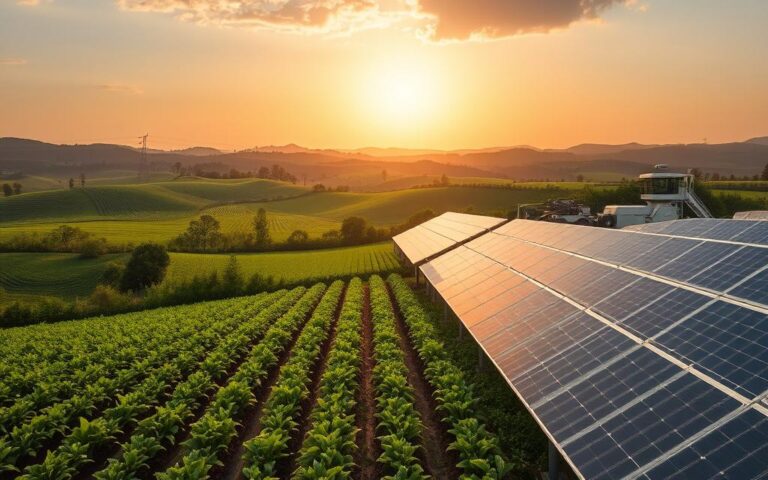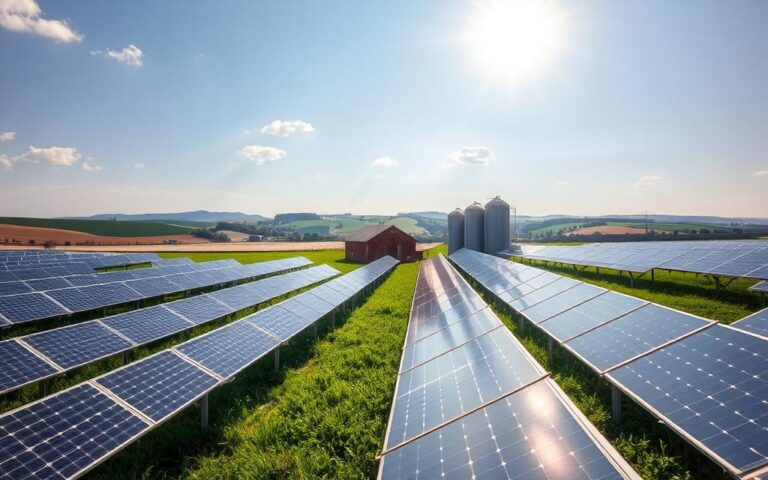

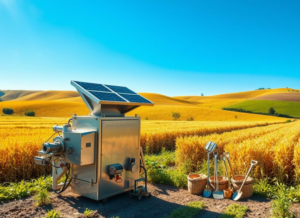
Did you know that American farms could reduce their carbon emissions by up to 40% by implementing solar powered farm equipment? The agricultural sector is experiencing a revolutionary transformation as sustainable agriculture equipment becomes increasingly critical in addressing climate challenges.
Modern farmers are rapidly embracing solar technology to create more efficient, environmentally friendly operations. This shift represents more than an ecological choice—it’s a strategic economic decision that dramatically reduces operational costs while enhancing farm independence.
Solar powered farm equipment offers unprecedented opportunities for agricultural businesses across the United States. From advanced irrigation systems to processing machinery, renewable energy solutions are reshaping how farmers approach production, management, and sustainability.
This comprehensive guide will explore the expansive world of sustainable agriculture equipment, providing farmers and agricultural stakeholders with practical insights into integrating solar technology. Readers will discover the transformative potential of solar solutions in creating more resilient, cost-effective farming practices.
As energy costs continue to rise and environmental concerns intensify, solar-powered farm equipment represents the future of agriculture—a future where technological innovation meets ecological responsibility.
The Rise of Renewable Energy in Modern Agriculture
American agriculture is undergoing a transformative shift toward renewable energy solutions. The traditional farming landscape, once dependent on fossil fuels, is rapidly evolving to embrace sustainable power sources that reduce carbon footprints and operational costs.
Several key drivers are accelerating the adoption of renewable energy solutions in agricultural settings:
- Volatile fossil fuel prices
- Increasing environmental regulations
- Growing consumer demand for sustainable food production
- Technological advancements in solar technology
Farmers are discovering significant benefits from integrating renewable energy solutions into their operations. Solar power has emerged as the most practical and scalable option, offering farmers unprecedented energy independence and economic advantages.
| Energy Source | Cost Reduction | Carbon Emission Impact |
|---|---|---|
| Solar Power | Up to 70% | Significant Reduction |
| Wind Energy | 50-60% | Moderate Reduction |
Government initiatives like the Infrastructure Investment and Jobs Act have created favorable conditions for agricultural renewable energy adoption. These programs provide financial incentives and support for farmers transitioning to clean energy technologies.
“Renewable energy is no longer just an alternative—it’s becoming the standard for forward-thinking agricultural operations.” – Agricultural Sustainability Research Institute
Understanding Solar Technology for Farm Applications
Solar technology has revolutionized agricultural operations, offering farmers innovative solutions for sustainable energy production. The integration of solar panel farm equipment has transformed how modern farms generate and utilize electricity, providing a clean and efficient alternative to traditional power sources.
Farmers are increasingly adopting photovoltaic systems to power their agricultural operations, recognizing the significant advantages of renewable energy technologies.
How Photovoltaic Systems Work on Farms
Photovoltaic systems convert sunlight directly into electricity through specialized solar panels. The process involves several key components:
- Solar panels with photovoltaic cells
- Inverters for converting DC to AC power
- Battery storage systems
- Charge controllers
- Monitoring equipment
Farms can implement different solar configurations:
| System Type | Key Characteristics | Best Use |
|---|---|---|
| Grid-Tied | Connected to local electricity grid | Farms near utility infrastructure |
| Off-Grid | Completely independent power generation | Remote farming locations |
| Hybrid | Combines grid and independent power | Flexible energy management |
Benefits of Solar Energy in Agricultural Settings
Solar panel farm equipment offers multiple advantages for agricultural operations:
- Economic Savings: Reduced electricity costs
- Energy Independence: Protection against price fluctuations
- Environmental Impact: Lower carbon emissions
- Reliability: Consistent power in remote locations
Modern solar technologies provide farmers with a sustainable, long-term investment that supports both economic and environmental goals.
Solar Powered Farm Equipment: A Comprehensive Overview
Modern agriculture is experiencing a revolutionary transformation through solar powered agricultural machinery. Farmers across the United States are discovering innovative eco-friendly farm tools that maximize efficiency while reducing environmental impact.
Solar technology has expanded dramatically in agricultural applications, offering versatile solutions for farmers of all scales. The range of solar powered agricultural machinery now covers multiple farming needs:
- Water Management Systems
- Livestock Monitoring Equipment
- Crop Processing Tools
- Farm Transportation Devices
- Facility Operations Technology
Critical components of modern solar farm equipment include specialized devices designed for specific agricultural challenges. Precision farming now integrates solar-powered technologies that can dramatically improve productivity and sustainability.
| Equipment Type | Power Requirements | Primary Applications |
|---|---|---|
| Solar Water Pumps | 50-500 Watts | Irrigation, Well Water Extraction |
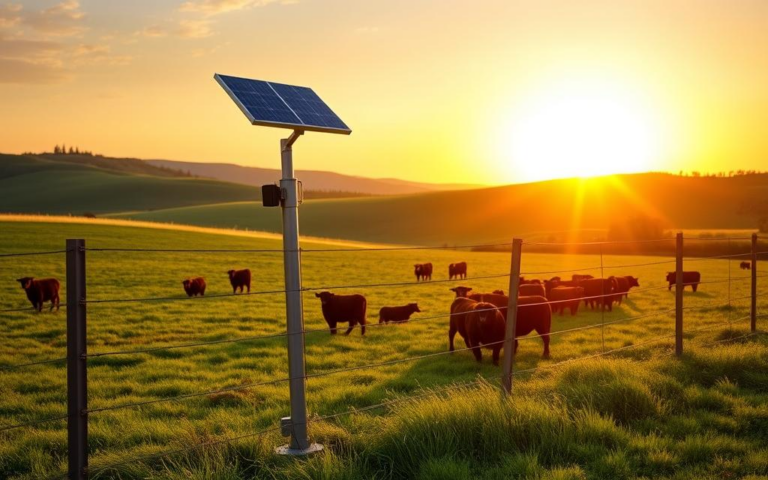
| Solar Fence Chargers | 5-20 Watts | Livestock Containment |
| Solar Monitoring Sensors | 2-10 Watts | Crop Health Tracking |
When selecting eco-friendly farm tools, farmers should consider key factors like panel efficiency, battery capacity, durability ratings, and manufacturer reputation. Regional solar availability plays a crucial role in determining the most suitable solar powered agricultural machinery for specific farming environments.
Emerging technologies such as autonomous solar-powered robots and agricultural surveillance drones represent the cutting edge of sustainable farming innovations. These advanced systems demonstrate the incredible potential of solar energy in transforming agricultural practices.
Solar-Powered Irrigation Systems for Water Management
Water management represents a critical challenge for modern agriculture. Solar powered irrigation systems offer an innovative solution that addresses both water conservation and energy efficiency. These cutting-edge technologies transform how farmers approach irrigation, providing sustainable alternatives to traditional water delivery methods.
Farmers across the United States are discovering the remarkable benefits of solar powered irrigation systems. The technology leverages renewable energy to pump water efficiently, reducing operational costs while minimizing environmental impact.
Drip Irrigation with Solar Pumps
Drip irrigation powered by solar technology represents a game-changing approach to water management. This precision method delivers water directly to plant roots, dramatically reducing water waste and maximizing crop yields.
- Minimizes water consumption by 30-50%
- Reduces energy costs through solar-powered pumps
- Enables precise nutrient delivery
- Works effectively in remote agricultural locations
Solar-Powered Sprinkler Systems
Solar powered irrigation systems extend beyond drip methods to include advanced sprinkler technologies. These systems provide comprehensive water distribution for diverse crop types and field configurations.
Farmers can implement solar-powered sprinkler solutions that:
- Adapt to various field sizes and crop requirements
- Integrate seamlessly with existing agricultural infrastructure
- Provide consistent water distribution
- Reduce reliance on traditional electrical grids
The future of agricultural water management lies in sustainable, energy-efficient technologies that protect our most valuable resources.
Livestock Management with Solar-Powered Solutions
Green farming equipment is revolutionizing livestock management through innovative solar technologies. Farmers now have powerful tools to overcome traditional energy challenges in remote pasture locations.
Solar-powered solutions offer unprecedented advantages for livestock operations. These systems provide critical support across multiple farm management areas:
- Water pumping and distribution
- Fence charging and perimeter control
- Barn ventilation and climate management
- Lighting and security systems
Modern green farming equipment integrates sophisticated solar technologies specifically designed for agricultural environments. Farmers can now deploy reliable power sources that eliminate traditional electricity constraints.
| Solar Solution | Farm Application | Energy Efficiency |
|---|---|---|
| Solar Water Pumps | Remote Pasture Hydration | 90% Reduced Energy Costs |
| Solar Fence Chargers | Livestock Boundary Control | Continuous Perimeter Protection |
| Solar Barn Ventilation | Animal Health Management | Consistent Climate Regulation |
Solar-powered monitoring systems represent another breakthrough in green farming equipment. Wireless cameras, temperature sensors, and automated feeding platforms enable farmers to track livestock conditions remotely, dramatically improving operational efficiency.
Farmers investing in these technologies gain substantial long-term benefits: reduced operational costs, increased sustainability, and enhanced animal welfare through advanced technological solutions.
Solar Energy for Crop Processing and Storage
Farmers are increasingly turning to environmentally friendly farm machinery to revolutionize post-harvest operations. Solar technology offers innovative solutions for crop processing and storage, dramatically reducing energy costs while maintaining high-quality agricultural products.
Modern agriculture demands efficient preservation techniques that protect crop quality and minimize environmental impact. Solar-powered technologies have emerged as game-changing solutions for farmers seeking sustainable processing methods.
Solar Dryers and Dehydrators
Solar dryers represent a breakthrough in environmentally friendly farm machinery for crop preservation. These advanced systems provide multiple advantages over traditional drying methods:
- Protection from contamination
- Faster drying times
- Consistent product quality
- Better nutrient retention
“Solar drying technology transforms agricultural processing, offering farmers precision and sustainability in one innovative solution.” – Agricultural Innovation Magazine
Solar-Powered Grain Storage Ventilation
Grain storage presents significant challenges for farmers. Solar-powered ventilation systems provide critical solutions by maintaining optimal storage conditions through:
- Continuous airflow management
- Moisture control
- Temperature regulation
- Reduced electricity expenses
Environmentally friendly farm machinery like solar ventilation systems enable farmers to protect their harvests while minimizing operational costs. Automated sensors ensure precise environmental control, maximizing grain quality and reducing potential spoilage.
Investing in solar crop processing technologies represents a forward-thinking approach to sustainable agriculture.
Off-Grid Farming Technology and Energy Independence
Off-grid farming technology represents a revolutionary approach to agricultural independence, empowering farmers to break free from traditional electrical infrastructure. This innovative strategy enables agricultural operations to generate and manage their own power completely autonomously.
The core of off-grid farming technology focuses on creating self-sufficient energy systems that provide reliable power for diverse agricultural needs. Farmers increasingly recognize the advantages of disconnecting from utility companies and developing sustainable energy solutions.
- Reduce dependency on external power sources
- Minimize electricity costs
- Increase farm resilience during grid failures
- Support environmental sustainability
Critical components of successful off-grid farming technology include:
- Solar panel arrays
- High-capacity battery storage systems
- Efficient inverters
- Energy management software
Modern off-grid systems can power everything from irrigation pumps to refrigeration units, transforming how farms operate. Advanced battery technologies like lithium-ion enable farmers to store significant energy reserves, ensuring consistent power even during extended periods of low sunlight.
Implementing off-grid farming technology requires careful planning and investment. Farmers must conduct comprehensive energy audits, calculate precise power requirements, and design systems that can handle seasonal variations in energy consumption.
“Energy independence isn’t just a technology—it’s a strategic farming advantage.” – Agricultural Energy Innovation Research
Electric Farm Vehicles and Solar Charging Stations
The agricultural landscape is experiencing a transformative shift with the emergence of electric farm vehicles powered by solar energy. Solar powered farm equipment is revolutionizing how farmers approach transportation and equipment management, offering sustainable and cost-effective solutions.
Modern farms are increasingly adopting electric vehicles that dramatically reduce operational costs and environmental impact. These innovative solar powered farm equipment options provide farmers with powerful alternatives to traditional diesel machinery.
Solar-Powered Tractors and Utility Vehicles
Electric farm vehicles are rapidly becoming more sophisticated, with several key manufacturers developing cutting-edge solutions:
- Monarch Tractor offers fully electric autonomous tractors
- Solectrac provides compact electric tractor models
- John Deere is developing electric utility vehicles
The advantages of electric farm vehicles include:
- Zero direct emissions
- Reduced maintenance costs
- Quieter operation
- Precise control and instant torque
Implementing Solar Charging Infrastructure
Developing a robust solar charging system requires strategic planning. Farmers must consider solar array sizing, dedicated charging stations, and battery storage solutions to maximize electric vehicle performance.
| Charging Level | Voltage | Charging Speed | Typical Use |
|---|---|---|---|
| Level 1 | 110V | Slow | Small utility vehicles |
| Level 2 | 240V | Medium | Tractors and larger equipment |
Strategic solar infrastructure allows farmers to future-proof their equipment while reducing long-term energy expenses.
Cost Analysis and Return on Investment for Solar Farming Equipment
Investing in sustainable agriculture equipment powered by solar technology requires careful financial analysis. Farmers must evaluate the long-term economic benefits of solar-powered solutions beyond initial purchase costs.
The initial investment for solar farm equipment varies widely depending on the specific application. Key considerations include:
- Upfront equipment costs
- Installation expenses
- Available government incentives
- Potential energy savings
Typical solar equipment investments for farms range from $500 for small systems to $100,000 for comprehensive installations. Payback periods typically span 4-8 years, with most solar farming equipment generating substantial returns over its 25-year lifespan.
Farmers can explore multiple financing options to manage sustainable agriculture equipment investments:
- Cash purchases
- Solar-specific loans
- Power purchase agreements
- USDA agricultural equipment financing programs
Factors influencing solar equipment return on investment include local electricity rates, regional sunlight exposure, system efficiency, and maintenance practices. Beyond financial benefits, solar solutions offer increased farm resilience and potential carbon credit opportunities.
Smart solar investments transform agricultural operations from energy consumers to sustainable, self-sufficient enterprises.
Farmers should leverage online solar calculators and consult professional feasibility studies to make informed decisions about sustainable agriculture equipment investments.
Government Incentives and Grants for Sustainable Agriculture Equipment
Farmers embracing renewable energy solutions now have unprecedented financial support from government programs. These incentives make solar farming equipment more accessible and affordable for agricultural businesses across the United States.
Federal Tax Credits Powering Solar Farm Installations
The federal government offers substantial tax incentives to encourage renewable energy solutions in agriculture. The Investment Tax Credit (ITC) allows farmers to deduct 30% of solar installation costs directly from their federal tax liability.
- 30% tax credit for solar installations
- No maximum dollar limit on credit
- Applies to both new installations and system upgrades
The Inflation Reduction Act of 2022 extended these credits, providing farmers with significant financial benefits. Farmers can also leverage the Modified Accelerated Cost Recovery System (MACRS), which enables rapid depreciation of solar equipment.
State-Level Programs Supporting Green Farming Equipment
State governments have developed targeted renewable energy solutions to support agricultural solar initiatives. These programs vary by location but often include grants, rebates, and tax exemptions.
- California’s Self-Generation Incentive Program (SGIP)
- New York’s NY-Sun Initiative
- North Carolina’s renewable energy tax credits
- Massachusetts’ SMART solar incentive program
Farmers should consult the Database of State Incentives for Renewables & Efficiency (DSIRE) to discover specific programs in their state. Timing is crucial, as some incentives are first-come, first-served with limited annual funding.
Maintenance and Longevity of Solar Agricultural Machinery
Solar powered agricultural machinery represents a groundbreaking approach to sustainable farming. The remarkable durability of these systems offers farmers significant advantages in long-term equipment management.
Maintaining solar powered agricultural machinery is surprisingly straightforward. The key maintenance aspects include:
- Regular panel cleaning (2-4 times annually)
- Inspection of mounting hardware
- Checking electrical connections
- Monitoring system performance
Farmers can expect impressive longevity from their solar equipment. Solar panels typically maintain 80-85% efficiency after 25 years, making them an incredibly reliable investment for agricultural operations.
| Component | Expected Lifespan | Maintenance Frequency |
|---|---|---|
| Solar Panels | 25-40 years | Quarterly inspection |
| Batteries | 3-15 years | Annual check |
| Inverters | 10-15 years | Biennial inspection |
Seasonal maintenance is crucial for optimal performance. Farmers should protect equipment from extreme weather conditions and ensure proper drainage. Professional inspections every few years can help identify potential issues before they become significant problems.
Investing in solar powered agricultural machinery means embracing a low-maintenance, high-efficiency farming solution.
Annual maintenance costs remain minimal, typically ranging from $150-$300 for standard systems. This investment pales in comparison to the ongoing expenses of traditional diesel-powered equipment.
Conclusion
The future of farming is green, powered by innovative eco-friendly farm tools that transform agricultural operations. Solar technology has evolved from a futuristic concept to a practical solution for farmers seeking sustainable and cost-effective energy solutions. Farms across the United States are discovering the remarkable potential of green farming equipment that reduces operational costs while minimizing environmental impact.
Transitioning to solar-powered agricultural technology represents more than an equipment upgrade—it’s a strategic investment in farm resilience. The integration of solar systems across irrigation, livestock management, crop processing, and transportation demonstrates the versatility of renewable energy solutions. Farmers who embrace these technologies position themselves at the forefront of agricultural innovation, with opportunities to reduce energy expenses and increase operational efficiency.
Financial incentives make solar adoption more accessible than ever. Federal tax credits, state-level programs, and USDA support can offset a significant portion of installation costs. The long-term benefits extend beyond immediate savings, encompassing increased property values, enhanced operational reliability, and alignment with growing consumer demands for sustainably produced food.
American agriculture stands at a pivotal moment. By exploring solar technologies, farmers can create more sustainable, efficient, and resilient operations. Whether starting with a single solar-powered tool or implementing a comprehensive system, the journey toward renewable energy begins with curiosity and a commitment to progressive farming practices. The future of agriculture is bright—powered by the sun and driven by innovative, environmentally conscious farmers.
FAQ
What are the primary benefits of using solar-powered farm equipment?
Solar-powered farm equipment offers multiple advantages, including reduced energy costs, decreased carbon emissions, increased farm independence, minimal maintenance requirements, and protection against energy price volatility. These eco-friendly tools can significantly lower operational expenses while supporting sustainable agricultural practices.
How much does solar farm equipment typically cost?
Costs vary widely depending on equipment type and scale. Solar irrigation pumps range from $2,000 to $15,000, solar fence chargers cost $100 to $500, and complete farm solar installations can range from $15,000 to $100,000. However, federal tax credits and USDA incentives can offset up to 30% of installation costs, making solar investments more financially accessible.
Can solar equipment work effectively in regions with less consistent sunlight?
Modern solar technologies are designed to be highly efficient and can generate power even in regions with variable sunlight. Hybrid systems with battery storage and backup generators ensure consistent energy supply. Proper system design, considering local climate conditions and seasonal variations, can optimize performance across different geographic locations.
What maintenance is required for solar farm equipment?
Solar equipment requires minimal maintenance. Panels typically need cleaning 2-4 times annually to remove dust and debris. Battery systems may need periodic checks, and overall system performance should be monitored. Most solar panels maintain 80-85% efficiency after 25 years, with warranties covering long-term performance.
Are there government incentives for purchasing solar farm equipment?
Yes, multiple incentives are available. The federal Investment Tax Credit offers a 30% tax deduction for solar installations. The USDA Rural Energy for America Program (REAP) provides grants covering up to 25% of project costs. Many states also offer additional tax credits, rebates, and renewable energy incentives for agricultural solar investments.
What types of farm operations can benefit from solar-powered equipment?
Solar equipment is versatile and beneficial for various agricultural operations, including crop farms, livestock operations, vineyards, orchards, and mixed-use farms. Applications range from irrigation systems and water pumps to barn lighting, electric vehicle charging, crop processing equipment, and complete off-grid power solutions.
How long do solar farm equipment components typically last?
Solar panels usually last 25-30 years, maintaining around 80% of their original efficiency. Batteries typically last 3-15 years depending on type, inverters last 10-15 years, and mounting hardware can last 25+ years with proper installation. This longevity makes solar equipment a sound long-term investment for agricultural operations.
Can solar equipment completely replace traditional power sources on a farm?
Many farms are successfully transitioning to off-grid solar systems or hybrid systems that combine solar with grid power or backup generators. The feasibility depends on the farm’s energy requirements, local solar availability, and specific operational needs. Professional energy audits can help determine the most effective solar integration strategy.