
American agriculture faces a critical transformation, with 30% of farms now actively exploring renewable energy solutions to combat climate challenges. The convergence of renewable energy regenerative agriculture represents a groundbreaking approach to sustainable farming practices that promises to revolutionize food production.
Farmers across the United States are discovering that agricultural sustainability is no longer just an environmental goal but an economic necessity. By integrating clean energy technologies, farms can simultaneously reduce carbon emissions, enhance soil health, and create more resilient agricultural ecosystems.
Modern agricultural challenges demand innovative solutions. Renewable energy technologies are emerging as powerful tools that enable farmers to generate their own power, reduce operational costs, and create more sustainable farming practices. From solar-powered irrigation systems to wind energy solutions, these innovations are reshaping how we think about food production.
The potential for transformation is immense. Small and large-scale farms are proving that sustainable farming practices can deliver both environmental benefits and economic advantages. By embracing renewable energy, agricultural operations are becoming more efficient, independent, and environmentally responsible.
The Intersection of Clean Energy and Sustainable Farming
Clean energy agriculture represents a transformative approach to modern farming. Farmers are increasingly recognizing the critical connection between renewable energy systems and sustainable food production. This innovative strategy addresses multiple challenges facing agricultural ecosystems.
The core principles of climate-smart farming drive this agricultural revolution. Renewable energy technologies offer farmers powerful tools to:
- Reduce operational costs
- Minimize environmental impact
- Enhance crop productivity
- Create resilient farming systems
Economic pressures are pushing farmers toward renewable energy integration. Rising electricity costs and grid unreliability in rural areas make alternative energy solutions increasingly attractive. Sustainable food production now depends on innovative energy strategies that work harmoniously with natural agricultural ecosystems.
Modern agricultural operations consume significant energy resources. Renewable technologies provide a strategic pathway to address these consumption patterns while supporting regenerative principles. The philosophical alignment between renewable energy and regenerative agriculture centers on creating closed-loop systems that maximize efficiency and minimize waste.
Farming is no longer just about growing food—it’s about cultivating sustainable energy solutions that protect our planet.
By embracing clean energy agriculture, farmers can simultaneously improve their economic performance and contribute to broader environmental conservation efforts. This holistic approach transforms agricultural landscapes into dynamic, sustainable production environments.
Solar Power Systems Transforming Farm Operations
Modern agricultural landscapes are experiencing a revolutionary transformation through innovative solar farming systems. Farmers across the United States are discovering powerful ways to integrate renewable energy technologies into their daily operations, creating more sustainable and efficient agricultural practices.
Farm solar panels are becoming increasingly sophisticated, offering multifaceted solutions for agricultural challenges. These advanced systems provide farmers with opportunities to reduce energy costs, improve water management, and create more resilient farming environments.
Photovoltaic Arrays for Irrigation and Water Management
Solar-powered irrigation systems represent a groundbreaking approach to water management in agriculture. These systems offer several key benefits:
- Reduced electricity costs for water pumping
- Enhanced water distribution efficiency
- Reliable performance in remote agricultural locations
- Minimal environmental impact
Solar-Powered Greenhouse Climate Control
Agrivoltaic systems are revolutionizing greenhouse management by providing sustainable climate control. Photovoltaic technologies now enable farmers to:
- Regulate temperature precisely
- Control humidity levels
- Optimize plant growth conditions
- Reduce traditional energy consumption
Agrivoltaics: Dual-Use Land for Crops and Energy Production
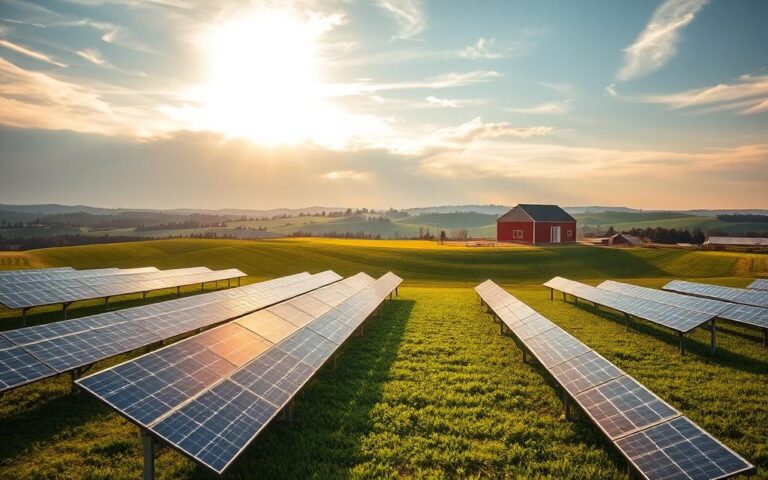
The innovative concept of agrivoltaics allows farmers to maximize land productivity by simultaneously generating solar energy and growing crops. Strategic panel placement can create microclimates that protect crops while generating clean electricity.
Agrivoltaics represents the future of sustainable agricultural practices, seamlessly integrating renewable energy production with food cultivation.
Wind Energy Solutions for Agricultural Landscapes
Wind energy represents a powerful renewable power systems solution for modern agricultural operations. Farmers are increasingly exploring wind turbines agriculture as a strategic approach to enhance farm energy efficiency and generate additional income streams.
Wind energy technologies offer unique advantages for rural agricultural landscapes. Small-scale wind turbines can provide sustainable electricity while occupying minimal ground space, allowing continuous crop production around their bases.
- Individual farm wind turbines generate 10-100 kilowatts
- Community wind projects support regional agricultural economies
- Minimal land use disruption for farming activities
Farmers can benefit from wind energy through multiple economic models, including direct electricity generation and lease arrangements with wind energy companies. These partnerships create supplemental revenue while supporting sustainable agricultural practices.
| Turbine Size | Power Output | Farm Application |
|---|---|---|
| Small Turbine | 10-20 kW | Individual Farm Operations |
| Medium Turbine | 50-100 kW | Community Agricultural Projects |
| Large Turbine | 250-500 kW | Multi-Farm Wind Installations |
Wind resource assessment remains crucial for successful implementation. Farmers must evaluate local wind patterns, terrain characteristics, and electrical infrastructure compatibility to maximize renewable energy potential.
Wind energy transforms agricultural landscapes from mere production spaces to sustainable power generation sites.
Renewable Energy Regenerative Agriculture: A Symbiotic Relationship
The convergence of renewable energy and regenerative farming represents a groundbreaking approach to sustainable agriculture. Carbon-neutral farming emerges as a powerful strategy for transforming agricultural landscapes, addressing climate challenges while maintaining productive ecosystems.
Farmers are discovering innovative ways to integrate clean energy solutions with soil carbon sequestration techniques. This synergistic relationship offers multiple benefits for both environmental sustainability and agricultural productivity.
Carbon Sequestration Through Energy-Efficient Practices
Regenerative farming methods provide unique opportunities for capturing and storing carbon within agricultural systems. Key strategies include:
- Implementing no-till cultivation techniques
- Utilizing cover crops to enhance soil organic matter
- Integrating renewable energy infrastructure
- Developing precision agriculture technologies
The process of soil carbon sequestration becomes more efficient when powered by clean energy sources. Renewable energy systems enable farmers to reduce their carbon footprint while simultaneously improving soil health and crop resilience.
Reducing Farm Carbon Footprints with Clean Power
Modern agricultural operations can dramatically decrease their environmental impact by transitioning to renewable energy sources. Solar panels, wind turbines, and biomass systems provide sustainable alternatives to traditional fossil fuel-based energy.
By embracing carbon-neutral farming practices and renewable energy technologies, agricultural producers can transform their fields into powerful carbon sinks, contributing to global climate mitigation efforts.
Biogas and Biomass Energy from Agricultural Waste
Farms are transforming agricultural waste into powerful renewable energy through innovative biogas production technologies. Anaerobic digestion has emerged as a critical strategy for converting organic waste into valuable energy resources. This process turns animal manure, crop residues, and food waste into methane-rich biogas that can generate electricity and heat for farm operations.
The potential of farm waste energy is significant. Farmers can now implement digesters that convert organic materials into clean, sustainable power sources. These systems offer multiple benefits:
- Renewable energy generation
- Waste management improvement
- Reduced environmental pollution
- Creation of nutrient-rich fertilizer
Different types of digesters suit various farm scales, from small dairy operations to large community systems serving multiple agricultural enterprises. The digestate produced during anaerobic digestion becomes an excellent organic fertilizer, creating a closed-loop sustainable farming approach.
| Waste Type | Biogas Potential | Energy Output |
|---|---|---|
| Cattle Manure | High | 50-100 m³ per ton |
| Crop Residues | Medium | 30-75 m³ per ton |
| Food Waste | Very High | 100-150 m³ per ton |
Economic considerations remain crucial for farmers exploring biogas production. Initial investments can be substantial, but long-term benefits include potential revenue from electricity sales, reduced energy costs, and improved waste management strategies.
Geothermal Systems for Year-Round Growing Environments
Geothermal agriculture represents a groundbreaking approach to sustainable energy transition in farming. Green energy solutions are transforming how farmers manage crop production by harnessing the earth’s natural thermal resources. Underground heating technologies create innovative growing environments that extend seasonal limitations.
Farmers are discovering powerful advantages of geothermal systems in agricultural settings. These renewable energy technologies leverage consistent underground temperatures to create optimal growing conditions with minimal energy input.
Underground Heating for Soil Health
Geothermal ground-source heat pump technology offers remarkable benefits for soil management:
- Accelerates seed germination rates
- Improves root development systems
- Enhances soil microbial activity
- Maintains consistent soil temperature
Effective installation requires strategic planning of underground heat exchange networks. Depth and soil composition play critical roles in system performance.
Geothermal Greenhouses and Extended Growing Seasons
Innovative greenhouse designs powered by geothermal energy enable year-round crop production. Controlled environment agriculture reaches new heights with these sustainable technologies.
| Geothermal Greenhouse Feature | Performance Benefit |
|---|---|
| Consistent Temperature Control | Enables warm-season crop growth in cold climates |
| Energy Efficiency | Reduces fossil fuel consumption by 70-80% |
| Crop Diversity | Supports multiple cultivation cycles annually |
Geothermal agriculture emerges as a powerful strategy for sustainable farming, demonstrating how renewable energy can revolutionize food production systems.
Microgrids and Energy Independence for Rural Farms
Farm microgrids are revolutionizing energy management in agricultural settings, offering rural farmers unprecedented control over their power infrastructure. These localized energy systems provide a reliable alternative to traditional grid connections, enabling energy-efficient farming through innovative renewable energy technologies.
Agricultural renewable energy strategies are transforming how farms generate, store, and distribute electricity. Microgrids integrate multiple renewable sources such as solar panels, wind turbines, and biogas generators to create a robust and flexible power network.
- Ensure continuous power supply during grid disruptions
- Reduce dependence on external electricity providers
- Lower overall energy costs for farming operations
- Increase resilience against power infrastructure challenges
“Microgrids represent the future of agricultural energy independence, providing farmers with unprecedented control over their power infrastructure.” – Renewable Energy Expert
The economic benefits of farm microgrids extend beyond simple energy production. Farmers can potentially generate revenue by selling excess power back to the electrical grid, creating an additional income stream while supporting regional energy sustainability.
| Microgrid Component | Function | Benefits |
|---|---|---|
| Solar Arrays | Primary Energy Generation | Clean, renewable power source |
| Battery Storage | Energy Preservation | Continuous power availability |
| Smart Control Systems | Energy Management | Optimized power distribution |
Community microgrid models are emerging as powerful solutions, allowing multiple farms or rural communities to share renewable energy resources. These collaborative approaches create economies of scale and enhance regional energy resilience.
Battery Storage Technologies Enabling Off-Grid Agriculture
Modern agriculture is experiencing a transformative shift with battery storage farms becoming crucial for sustainable farming practices. Off-grid agriculture relies increasingly on advanced energy storage solutions that empower farmers to become more self-sufficient and environmentally responsible.
The evolution of battery technologies has dramatically improved the potential for eco-friendly agriculture. Farmers can now leverage sophisticated energy storage systems that provide reliable power for critical agricultural operations.
Lithium-Ion and Alternative Storage Solutions
Current battery storage technologies offer farmers multiple options for powering their operations:
- Lithium-ion batteries with high energy density
- Flow batteries for long-duration storage
- Lead-acid batteries for cost-effective solutions
- Emerging solid-state battery technologies
Each battery type presents unique advantages for different agricultural contexts, allowing farmers to select the most suitable solution for their specific needs.
| Battery Type | Energy Density | Lifecycle | Cost Efficiency |
|---|---|---|---|
| Lithium-Ion | High | 1000-2000 cycles | Moderate |
| Flow Batteries | Medium | 5000-10000 cycles | High |
| Lead-Acid | Low | 500-1000 cycles | Low |
Energy Management Systems for Peak Efficiency
Smart energy management systems have revolutionized off-grid agriculture by providing sophisticated monitoring and optimization capabilities. These intelligent platforms enable farmers to:
- Track renewable energy generation
- Predict energy demand
- Optimize battery charging strategies
- Ensure uninterrupted power supply
Advanced battery storage technologies are not just about power—they’re about empowering farmers to create more sustainable, resilient agricultural systems.
By integrating cutting-edge battery storage farms, farmers can significantly reduce their carbon footprint while maintaining operational reliability. The future of agriculture is green, intelligent, and powered by innovative energy storage solutions.
Hydrogen Fuel Cells Powering Farm Equipment
The agricultural sector is rapidly embracing clean energy agriculture through innovative renewable power systems. Hydrogen fuel cell technology emerges as a groundbreaking solution for powering farm equipment, offering a sustainable alternative to traditional diesel machinery.
Hydrogen farming equipment represents a significant leap forward in agricultural technology. These advanced systems convert hydrogen and oxygen into electricity, producing only water as a byproduct. This zero-emission approach addresses critical environmental challenges in modern farming.
- Eliminates direct carbon emissions from farm machinery
- Provides long-duration power for heavy agricultural equipment
- Enables more sustainable farming practices
Cutting-edge manufacturers are developing prototype tractors and harvesters powered by hydrogen fuel cells. These innovations promise to transform agricultural operations, addressing the substantial energy demands of farming equipment that traditional battery technologies struggle to meet.
| Equipment Type | Hydrogen Power Potential | Emission Reduction |
|---|---|---|
| Tractors | High | 95-100% |
| Harvesters | Moderate to High | 90-98% |
| Agricultural Machinery | Growing Potential | 85-95% |
The infrastructure for hydrogen-powered farming continues to evolve. Farms can potentially produce their own hydrogen through electrolysis powered by renewable energy, creating a truly closed-loop, carbon-neutral agricultural ecosystem.
Hydrogen fuel cells represent the future of sustainable agricultural machinery, bridging the gap between technological innovation and environmental responsibility.
Smart Energy Monitoring and Precision Agriculture Integration
Precision agriculture technology is revolutionizing how farmers manage energy and crop production. Modern farms are transforming through intelligent monitoring systems that integrate cutting-edge data analytics and IoT sensors to optimize farm energy efficiency.
Smart energy monitoring platforms provide farmers unprecedented insights into their operational performance. These advanced systems track energy consumption, renewable power generation, and agricultural processes in real-time, enabling climate-smart farming strategies.
- Real-time energy consumption tracking
- Automated system performance optimization
- Predictive maintenance capabilities
- Comprehensive data visualization
Key technologies driving this integration include wireless sensor networks, cloud-based analytics platforms, and machine learning algorithms. These tools help farmers make data-driven decisions that enhance both energy management and agricultural productivity.
| Technology | Function | Benefits |
|---|---|---|
| IoT Sensors | Continuous data collection | Improved operational visibility |
| Cloud Analytics | Data processing and insights | Strategic decision making |
| Machine Learning | Predictive performance optimization | Increased efficiency |
Mobile applications now allow farmers to monitor and control their agricultural systems remotely, providing unprecedented flexibility and efficiency in managing renewable energy resources and crop production.
Financial Incentives and Policy Support for Renewable Farm Energy
Farmers across the United States are discovering powerful financial opportunities to integrate renewable energy into their agricultural operations. Renewable energy incentives have become increasingly accessible, providing critical support for sustainable farming practices through strategic policy frameworks.
The landscape of agricultural policy support has dramatically transformed, offering farmers multiple pathways to reduce energy costs and generate additional revenue streams. These incentives are designed to make clean energy investments more attractive and economically viable for agricultural businesses.
Tax Credits and Grant Programs
Farmers can leverage several key financial mechanisms to support renewable energy adoption:
- Federal Investment Tax Credit (ITC) for solar installations
- Production Tax Credit (PTC) for wind energy systems
- USDA Rural Energy for America Program (REAP) grants
- State-specific renewable energy incentives
| Program | Potential Benefit | Typical Coverage |
|---|---|---|
| Federal ITC | Solar System Deduction | 30% of installation costs |
| REAP Grants | Renewable Energy Projects | Up to $500,000 |
| State Rebates | Variable Incentives | 10-50% of project costs |
Community Solar Programs for Small-Scale Farmers
Community solar initiatives provide innovative solutions for farmers with limited installation capabilities. These programs enable participation in renewable energy projects without significant upfront investments, allowing farmers to benefit from shared solar installations and virtual net metering.
Strategic engagement with these programs can transform renewable energy from a challenging investment to an accessible opportunity for agricultural sustainability.
Conclusion
The landscape of American agriculture is undergoing a profound transformation through renewable energy regenerative agriculture. Innovative technologies are reshaping how farmers approach sustainable food production, creating a powerful synergy between clean energy and agricultural practices that promise both environmental protection and economic resilience.
Agricultural sustainability has emerged as a critical pathway for addressing climate challenges. Farms are no longer just food producers but are becoming integrated energy ecosystems. Solar arrays, wind turbines, biogas systems, and emerging technologies like hydrogen fuel cells are enabling farmers to dramatically reduce carbon footprints while generating their own clean power.
Technological advances and supportive policy frameworks are making renewable energy more accessible for farms of all sizes. The economic potential is substantial, with opportunities to create more resilient agricultural operations that generate income through energy production while maintaining high-quality crop yields. Farmers who embrace these innovations are positioning themselves at the forefront of a sustainable agricultural revolution.
Looking ahead, the future of agriculture lies in holistic approaches that integrate renewable energy, soil health, and ecosystem restoration. By continuing to invest in innovative technologies and supportive policy environments, the United States can lead global efforts in creating a more sustainable, energy-independent agricultural sector that feeds communities while protecting our planet.
FAQ
What is the connection between renewable energy and regenerative agriculture?
Renewable energy and regenerative agriculture are symbiotically linked, with clean energy technologies supporting sustainable farming practices that improve soil health, reduce carbon emissions, and enhance overall ecosystem productivity. By powering farm operations with solar, wind, and other renewable sources, farmers can create more environmentally resilient and economically efficient agricultural systems.
How can solar power benefit agricultural operations?
Solar power offers multiple benefits for farms, including cost-effective irrigation, greenhouse climate control, and agrivoltaic systems that allow simultaneous energy production and crop cultivation. Farmers can reduce electricity costs, improve water management, and create additional revenue streams through solar energy integration.
What are the economic advantages of renewable energy for farms?
Renewable energy provides significant economic benefits, including reduced energy costs, potential income from excess power generation, tax credits, government grants, and increased farm resilience. Programs like the USDA Rural Energy for America Program (REAP) offer financial incentives that make renewable energy adoption more accessible for farmers.
Can renewable energy help reduce a farm’s carbon footprint?
Absolutely. By transitioning to clean energy sources like solar, wind, and biogas, farms can dramatically reduce their greenhouse gas emissions. Renewable energy technologies enable farms to become carbon-neutral or even carbon-negative by powering operations with clean electricity and supporting carbon sequestration practices.
What are microgrid systems, and why are they important for agriculture?
Microgrids are localized energy systems that can operate independently from the main power grid, providing energy independence and reliability for rural farms. They integrate multiple renewable energy sources with battery storage, protecting agricultural operations from power outages and fluctuating utility rates.
Are there emerging technologies for farm equipment electrification?
Hydrogen fuel cell technology is an exciting emerging solution for powering farm equipment. These zero-emission systems can provide power for tractors and harvesters, offering a sustainable alternative to traditional fossil fuel-powered machinery, especially for heavy-duty agricultural equipment.
How do energy storage technologies support renewable farm energy?
Battery storage technologies like lithium-ion systems enable farms to store excess renewable energy, ensuring consistent power supply and increasing energy independence. Advanced energy management systems help optimize battery usage, maximizing efficiency and reducing overall energy costs.
What role does geothermal energy play in agriculture?
Geothermal systems offer innovative solutions for agriculture, including underground soil heating, greenhouse temperature control, and year-round growing environments. These systems use the earth’s constant temperature to create optimal growing conditions while minimizing energy consumption.
How can small-scale farmers access renewable energy?
Community solar programs provide opportunities for small-scale farmers to benefit from renewable energy without significant upfront investments. These programs allow farmers to subscribe to shared solar installations, accessing cost savings and clean energy through virtual net metering and collaborative approaches.
What types of renewable energy are most suitable for farms?
The most suitable renewable energy types depend on specific farm location, resources, and operations. Solar and wind are typically most versatile, with additional options like biogas from agricultural waste, geothermal systems, and emerging technologies like hydrogen fuel cells providing comprehensive sustainable energy solutions.