
Did you know that students who engage in educational DIY renewable energy projects are 65% more likely to pursue STEM careers? The landscape of modern education is rapidly transforming, with renewable energy education becoming a critical component of 21st-century learning.
Schools across the United States are discovering powerful ways to integrate hands-on STEM projects for students that go beyond traditional classroom instruction. These innovative programs blend scientific principles with environmental awareness, creating immersive learning experiences that prepare young minds for future technological challenges.
Renewable energy projects offer an extraordinary opportunity to transform abstract scientific concepts into tangible, engaging learning experiences. By introducing students to solar, wind, and hydroelectric technologies through practical experiments, educators can spark curiosity and inspire the next generation of environmental innovators.
From elementary classrooms to high school laboratories, DIY renewable energy projects provide a dynamic approach to teaching complex scientific principles. Students learn critical thinking, problem-solving skills, and gain practical understanding of sustainable technologies that will shape our global future.
This comprehensive guide will explore multiple approaches to implementing renewable energy education, offering practical strategies, project ideas, and insights for educators committed to preparing students for a sustainable world.
Why Renewable Energy Education Matters in Today’s Classrooms
The landscape of education is rapidly transforming, with green energy curriculum becoming a critical component of modern learning. Students today face unprecedented environmental challenges that demand innovative solutions and deep scientific understanding.
Sustainable technology education bridges the gap between classroom learning and real-world problem-solving. By integrating environmental science activities into standard curricula, schools are preparing students to become future leaders in clean energy industries.
“Education is the most powerful weapon which you can use to change the world.” – Nelson Mandela
- Develops critical thinking skills through hands-on renewable energy projects
- Prepares students for emerging green technology careers
- Addresses urgent climate change challenges
- Enhances scientific literacy and technical understanding
Modern classrooms recognize that environmental science activities are no longer optional but essential. Students engaging with sustainable technology learn to:
- Analyze complex energy systems
- Design innovative technological solutions
- Understand global environmental interconnections
The future of our planet depends on creating a generation of informed, proactive environmental stewards. Renewable energy education empowers students to become agents of positive change, equipped with knowledge and practical skills to address global sustainability challenges.
Getting Started with Solar Power Projects in Schools
Solar energy activities offer an exciting pathway for students to explore renewable energy through hands-on science projects. Schools can transform traditional learning by introducing DIY solar projects that spark curiosity and technical understanding.
Introducing solar power in educational settings helps students grasp complex scientific concepts through practical experiences. These engaging activities demonstrate how sunlight can be converted into usable energy, making abstract principles tangible and exciting.
Basic Solar Panel Kits for Elementary Students
Elementary students can begin their renewable energy journey with simple solar panel kits designed for young learners. These educational tools help children understand fundamental principles of solar energy through interactive experiences.
- Explore small photovoltaic cells
- Connect simple circuits
- Power miniature motors
- Measure electrical output
Building Solar Ovens and Cookers
Solar cooking projects provide an excellent opportunity for students to learn about solar thermal energy. By constructing ovens using everyday materials, learners can witness direct solar energy transformation.
- Gather cardboard boxes
- Apply reflective materials
- Create insulation layers
- Test cooking capabilities
Creating Solar-Powered Phone Chargers
Advanced students can develop practical solar energy skills by designing USB chargers. These DIY solar projects teach electronics while demonstrating renewable energy’s real-world applications.
Students learn voltage regulation, battery storage, and circuit design through hands-on engineering challenges that prepare them for future technological innovations.
Wind Energy Experiments That Engage Students
Wind power experiments offer students an exciting pathway to understanding renewable energy. Classroom energy experiments with wind turbines can transform abstract scientific concepts into tangible learning experiences. These hands-on activities help students explore how moving air can generate electricity through innovative design and engineering principles.
Students can begin wind energy investigations with simple yet engaging projects:
- Creating pinwheel models to demonstrate wind force
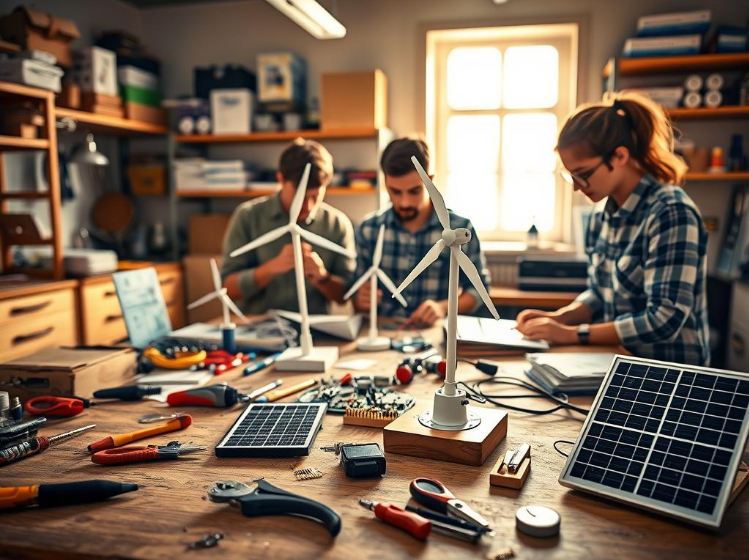
- Constructing small student wind turbines using recycled materials
- Measuring wind energy conversion efficiency
- Designing blade configurations for maximum power generation
Different grade levels can tackle increasingly complex wind power experiments. Elementary students might start with basic wind movement demonstrations, while high school learners can develop sophisticated turbine prototypes that measure precise energy output.
| Grade Level | Wind Energy Project Complexity | Learning Objectives |
|---|---|---|
| Elementary | Pinwheel Demonstrations | Understanding Wind Movement |
| Middle School | Basic Wind Turbine Construction | Energy Conversion Principles |
| High School | Advanced Turbine Design | Engineering and Optimization |
These classroom energy experiments not only teach technical skills but also inspire students to think critically about sustainable energy solutions. By engaging with wind power directly, learners develop a deeper appreciation for renewable technologies and their potential to transform our energy landscape.
Hands-On Hydroelectric Power Activities
Water has been a powerful energy source throughout human history. Hydroelectric projects for schools offer students an exciting way to explore renewable energy through interactive learning experiences. These water power activities help young learners understand how moving water can generate electricity.
Renewable energy lesson plans focused on hydropower provide an engaging approach to teaching science and engineering principles. Students can transform basic materials into working models that demonstrate energy conversion.
Constructing Miniature Water Wheels
Creating water wheels introduces students to fundamental energy concepts. Simple materials can help build functional models:
- Plastic bottles
- Cork
- Popsicle sticks
- Wooden dowels
Key design considerations include:
| Design Element | Learning Objective |
|---|---|
| Wheel Diameter | Understanding mechanical advantage |
| Blade Angle | Exploring water flow efficiency |
| Water Volume | Measuring energy potential |
Designing Micro-Hydro Generators
Advanced hydroelectric projects can help older students develop more complex skills. By coupling water wheels with small generators, students learn about electrical generation and power conversion.
These hands-on activities transform classrooms into interactive learning environments where students can explore renewable energy technologies directly.
Educational DIY Renewable Energy Projects for Different Grade Levels
Renewable energy education offers exciting STEM learning activities for students across all grade levels. Each age group can engage with clean energy for kids through carefully designed school energy experiments that spark curiosity and scientific exploration.
Elementary students (K-5) can start with simple and engaging projects that introduce basic energy concepts:
- Solar-powered toy car demonstrations
- Creating small circuits with miniature solar panels
- Building wind catchers to visualize motion energy
Middle school students (6-8) require more complex experiments that develop critical thinking and data analysis skills:
- Comparing solar panel efficiency at different angles
- Testing wind turbine blade designs
- Measuring water wheel power output
High school students (9-12) can tackle advanced renewable energy projects that integrate sophisticated engineering principles:
- Constructing functional renewable energy systems
- Designing hybrid energy storage solutions
- Conducting comprehensive efficiency analyses
Each project level aligns with Next Generation Science Standards, ensuring educational relevance and progressive learning experiences.
Budget-Friendly Materials and Resources for School Energy Projects
Implementing renewable energy education doesn’t require breaking the bank. Schools can create engaging classroom sustainability programs with creative resource strategies and smart planning. Understanding how to source affordable energy education resources can transform student learning experiences.
Budget constraints shouldn’t limit students’ opportunities to explore renewable energy concepts. Strategic approaches can help educators develop dynamic STEM programs without extensive financial investments.
Free and Low-Cost Supplies
Smart educators can leverage multiple sources for affordable renewable energy project materials:
- Recyclable household items (cardboard, plastic bottles)
- Discarded electronics components
- Community donation drives
- Local maker spaces and tool libraries
Affordable suppliers for renewable energy project components include:
| Supplier | Price Range | Typical Components |
|---|---|---|
| Amazon Education | $10-$50 | Solar panel kits, small motors |
| Science Supply Stores | $5-$30 | Basic electronics, experimental sets |
| Local Electronics Shops | $3-$25 | Surplus components, wiring |
Grant Opportunities for STEM Programs
Renewable energy grants can significantly boost classroom sustainability initiatives. Key funding sources include:
- Federal STEM education grants
- State-level educational innovation programs
- Corporate sustainability sponsorships
- Private foundation technology education funds
When applying for renewable energy grants, educators should focus on clearly articulating educational objectives, demonstrating potential community impact, and presenting realistic budget plans.
Integrating Renewable Energy into STEM Curriculum
Green technology for schools represents a transformative approach to science education. Renewable energy projects offer educators powerful tools to connect multiple academic disciplines through hands-on learning experiences. Students can explore complex scientific concepts by engaging with real-world environmental science activities that spark curiosity and critical thinking.
Effective curriculum integration requires strategic planning across different academic domains. Science fair projects focused on renewable energy can help students develop essential skills in:
- Scientific observation and data collection
- Mathematical analysis and computational thinking
- Engineering design principles
- Technology application and digital documentation
Interdisciplinary learning becomes seamless when renewable energy projects connect multiple subjects. Mathematics students can calculate energy efficiency, while science classes explore environmental impact. Technology courses enable digital modeling, and engineering programs support prototype development.
Practical implementation strategies include:
- Creating modular lesson plans adaptable to different grade levels
- Developing assessment rubrics that measure comprehensive learning outcomes
- Designing project frameworks that align with national science standards
Educators can transform traditional teaching by embracing renewable energy as a dynamic, engaging curriculum cornerstone. These innovative approaches prepare students for future challenges while making learning interactive and meaningful.
Safety Guidelines and Best Practices for Student Projects
Implementing hands-on science projects in renewable energy education requires careful attention to safety protocols. Students participating in STEM projects for students must understand and follow essential safety guidelines to ensure a secure learning environment.
Successful renewable energy lesson plans depend on creating a safe workspace that minimizes risks while maximizing educational opportunities. Educators play a critical role in establishing clear safety standards for scientific exploration.
Classroom Safety Protocols
Effective safety measures are crucial for hands-on science projects involving renewable energy technologies. Students should follow these key guidelines:
- Wear protective eyewear during all project activities
- Use insulated tools when working with electrical components
- Keep workspace clean and organized
- Follow specific safety instructions for each project type
- Report any equipment damage immediately
Supervision Requirements
Proper adult supervision is essential for STEM projects for students, especially when working with complex renewable energy equipment. Recommended supervision strategies include:
- Maintain appropriate student-to-supervisor ratios
- Provide comprehensive safety training before project start
- Establish clear emergency response procedures
- Ensure adult presence during critical project stages
Safety preparation transforms renewable energy lesson plans from potential risks to inspiring learning experiences.
Measuring Success and Learning Outcomes
Evaluating the impact of educational DIY renewable energy projects requires a comprehensive approach that goes beyond simple completion metrics. Educators need robust assessment strategies to measure student learning and engagement in school energy experiments.
Effective assessment of STEM learning activities involves multiple dimensions:
- Formative Assessments: Ongoing checks during project implementation
- Summative Evaluations: Final product and comprehensive understanding assessments
- Performance-Based Measurements: Observing problem-solving skills in action
- Portfolio Tracking: Documenting student learning progression
Key evaluation tools include:
- Detailed rubrics for engineering design processes
- Structured lab report templates
- Presentation guidelines for project explanations
- Reflective learning prompts
Measurement focuses on both technical knowledge and critical skills. Administrators and stakeholders can track program effectiveness through:
- Student engagement metrics
- Pre- and post-project knowledge assessments
- Long-term indicators like increased STEM course enrollment
By implementing these assessment strategies, educators can gain meaningful insights into student learning while maintaining an manageable evaluation process.
Community Partnerships and Real-World Applications
Renewable energy education extends far beyond classroom walls, creating powerful connections between students, local industries, and community resources. By bridging academic learning with real-world experiences, schools can transform sustainable technology education into dynamic, engaging opportunities for student growth.
Collaborating with Local Energy Companies
Strategic partnerships with energy organizations can dramatically enhance science fair projects and student understanding of renewable energy. Students gain invaluable insights through targeted collaborations that bring professional expertise directly into educational settings.
- Invite energy professionals as guest speakers
- Arrange site visits to renewable energy facilities
- Secure equipment donations from local companies
- Develop mentorship programs with industry experts
Showcasing Student Work at Science Fairs
Science fair competitions provide exceptional platforms for students to demonstrate their renewable energy projects. These events offer critical opportunities to develop presentation skills and gain recognition for innovative sustainable technology solutions.
| Competition Level | Potential Benefits |
|---|---|
| School Science Fairs | Initial presentation experience |
| Regional STEM Competitions | Broader audience exposure |
| National Renewable Energy Contests | Scholarships and professional networking |
Successful science fair projects require meticulous preparation, including compelling visual displays, comprehensive documentation, and confident presentation skills. Students should focus on clearly communicating their research methodology, innovative approaches, and potential real-world applications of their renewable energy projects.
Conclusion
Educational DIY renewable energy projects represent a transformative approach to learning that bridges classroom theory with real-world sustainability challenges. By engaging students in hands-on clean energy for kids initiatives, schools can unlock powerful opportunities for scientific exploration and environmental awareness.
Renewable energy education goes beyond simple scientific instruction. These projects empower students to become active problem-solvers, developing critical thinking skills while understanding complex environmental technologies. From solar panel experiments to wind energy demonstrations, students gain practical knowledge that prepares them for future technological innovations.
Schools across the United States can implement these educational programs regardless of budget constraints. Grant opportunities, creative resource management, and scalable project designs make renewable energy education accessible to diverse learning environments. Each small step towards integrating clean energy curriculum represents significant progress in preparing students for a sustainable future.
The journey of implementing educational DIY renewable energy projects starts with curiosity and commitment. Educators are encouraged to begin with simple experiments, gradually building comprehensive programs that inspire student engagement and environmental stewardship. By investing in these learning experiences, we cultivate a generation of informed, innovative thinkers ready to address global energy challenges.
FAQ
Why are renewable energy projects important for school education?
Renewable energy projects are crucial for school education because they combine STEM learning with real-world environmental challenges. They help students develop critical thinking skills, understand complex scientific concepts, and prepare for future careers in sustainable technologies while fostering environmental awareness.
What age groups can participate in renewable energy projects?
Renewable energy projects can be adapted for students from kindergarten through high school. Elementary students can start with simple solar toys, middle school students can conduct more complex experiments, and high school students can develop advanced renewable energy systems with sophisticated design and analysis.
How can schools implement renewable energy projects with limited budgets?
Schools can use low-cost and recycled materials like cardboard, plastic bottles, and discarded electronics. Many educational supply companies offer affordable solar panels and kits. Additionally, educators can seek grants from government programs, private foundations, and energy company sponsorships to support these projects.
Are these projects safe for classroom implementation?
Yes, when proper safety protocols are followed. This includes using appropriate protective equipment, maintaining proper supervision ratios, ensuring workspace organization, and providing pre-project safety training for students. Teachers should always assess project complexity and age-appropriate safety measures.
How do renewable energy projects align with educational standards?
These projects directly support Next Generation Science Standards (NGSS) and Common Core mathematics standards. They integrate multiple disciplines by teaching energy conversion, scientific inquiry, engineering design, data analysis, and problem-solving skills across various subject areas.
What types of renewable energy can students explore?
Students can explore multiple renewable energy sources, including solar power, wind energy, and hydroelectric power. Projects range from building solar ovens and small wind turbines to creating miniature water wheels and micro-hydro generators, allowing hands-on learning across different energy technologies.
How can schools showcase student renewable energy projects?
Schools can participate in science fairs, local STEM competitions, and community showcases. They can also collaborate with local energy companies for field trips, guest speakers, and potential mentorship opportunities that help students connect classroom learning with real-world applications.
What skills do students develop through renewable energy projects?
Students develop critical 21st-century skills including problem-solving, collaboration, engineering design, data analysis, technological literacy, and innovative thinking. These projects also enhance understanding of environmental sustainability and potential career pathways in green technologies.