
Did you know that the average American household can reduce its carbon footprint by up to 40% through scalable sustainable energy solutions? The green energy revolution is no longer a distant dream but an achievable reality for homeowners and small businesses across the United States.
Clean energy alternatives have transformed dramatically in recent years, offering flexible and affordable options for property owners. Sustainable energy is not about making massive investments overnight, but about creating a strategic approach to energy independence that grows with your needs and budget.
From solar panels to wind turbines, geothermal systems to smart energy management, modern green energy solutions provide unprecedented opportunities to reduce energy costs, increase property value, and contribute to environmental conservation. This guide will explore how scalable sustainable energy can empower property owners to take control of their energy future.
Whether you own a small home or operate a local business, the path to sustainable energy is more accessible than ever before. By understanding the available technologies and strategic implementation, you can create a customized energy solution that meets your unique requirements.
Understanding the Growing Need for Renewable Energy Systems
The landscape of energy consumption is rapidly transforming across the United States. Homeowners and small businesses are increasingly recognizing the critical importance of renewable energy systems as a sustainable solution to rising energy challenges.
Rising Energy Costs and Environmental Concerns
Energy prices have become increasingly unpredictable. The average electricity rates in the United States have climbed steadily over the past decade, creating significant financial pressure for consumers. Renewable energy systems offer a promising alternative to traditional power sources.
- Electricity rates have increased by approximately 15% nationwide since 2010
- Fossil fuel-based energy remains vulnerable to market fluctuations
- Carbon footprint reduction is becoming a critical consideration for environmentally conscious consumers
Climate change concerns are driving a profound shift in energy consumption. Carbon footprint reduction has moved from a niche concept to a mainstream priority for individuals and businesses alike.
The Shift Toward Energy Independence
Energy independence represents more than just a financial strategy—it’s a comprehensive approach to securing reliable power. The recent grid failures in Texas and California have highlighted the vulnerabilities of traditional energy infrastructure.
Energy independence provides both economic security and peace of mind for property owners.
By investing in renewable energy systems, consumers can achieve substantial energy cost savings while reducing their environmental impact. The transition offers multiple benefits, including:
- Reduced reliance on utility companies
- Protection against energy price volatility
- Increased property value
- Significant long-term financial savings
The momentum toward sustainable energy solutions continues to accelerate, making now an optimal time for homeowners and businesses to explore renewable energy options.
Solar Power Systems: From Rooftop Panels to Community Arrays
Residential solar power has become an increasingly accessible option for homeowners seeking sustainable energy solutions. Solar panel installation offers flexible approaches to meet diverse energy needs, from compact rooftop systems to expansive ground-mounted arrays.
- Rooftop photovoltaic systems
- Ground-mounted solar arrays
- Solar carports
- Building-integrated photovoltaics
The modular nature of solar panel installation allows property owners to start small and gradually expand their system. Initial investments can begin with a 5kW system designed to offset a portion of household electricity consumption.
Net metering policies play a crucial role in solar energy economics. These regulations enable homeowners to receive credit for excess electricity generated, effectively reducing utility bills. Different states offer varying net metering incentives, making solar power an attractive long-term investment.
Solar technology continues to advance, making renewable energy more efficient and affordable for residential properties.
Community solar programs present innovative solutions for individuals unable to install personal solar systems. These shared arrays allow renters, condo owners, and those with shaded properties to participate in renewable energy generation.
Strategic considerations for solar panel installation include roof orientation, shading analysis, and energy consumption patterns. Consulting with professional solar installers can help determine the most suitable system design for individual energy needs.
Wind Energy Options for Residential and Commercial Properties
Wind energy represents a powerful sustainable power solution for property owners seeking to reduce energy costs and minimize environmental impact. Residential wind turbines offer an innovative approach to generating clean electricity directly on-site, transforming how homeowners and small businesses approach energy efficiency.
Wind turbines residential installations come in various sizes and designs, making them adaptable to different property types and energy needs. Property owners can choose from multiple configurations that maximize energy generation while maintaining aesthetic appeal.
Small-Scale Wind Turbines for Property Owners
Selecting the right wind turbine requires careful consideration of several key factors:
- Property wind resource potential
- Local zoning regulations
- Turbine size and power output
- Installation height requirements
- Maintenance expectations
Modern residential wind turbines typically range from 1kW to 10kW, providing flexible options for different energy consumption levels. Brands like Bergey Windpower and Primus Wind Power offer reliable solutions for homeowners interested in sustainable power generation.
Evaluating Wind Resource Potential
Successful wind energy implementation depends on understanding local wind patterns. Property owners should:
- Consult National Renewable Energy Laboratory wind resource maps
- Assess average wind speeds (minimum 10 mph recommended)
- Analyze terrain and potential wind obstruction
- Consider professional site assessment
Wind turbines can complement solar installations by generating electricity during different weather conditions, creating a more robust renewable energy system. Starting with a smaller turbine allows property owners to scale their sustainable energy investment gradually.
Battery Storage Solutions That Grow With Your Needs
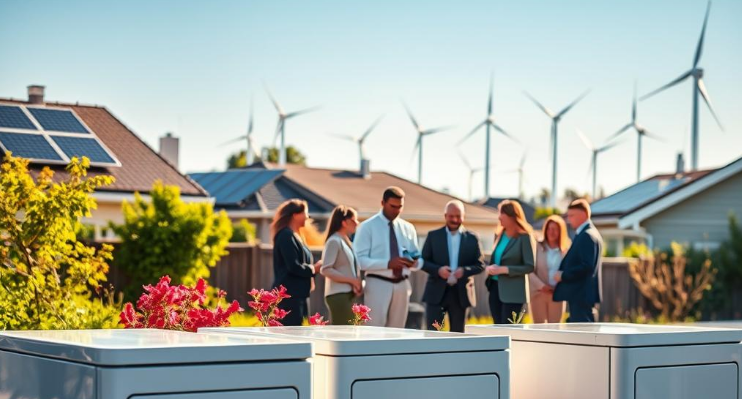
Battery storage systems have revolutionized how homeowners and small businesses manage renewable energy. These innovative energy storage technologies provide a critical solution for maximizing solar and wind power investments by capturing excess energy for later use.
Modern battery solutions offer remarkable flexibility for achieving grid independence. Property owners can start with a single battery unit and expand their storage capacity as energy needs grow. Popular residential options include:
- Tesla Powerwall
- LG Chem RESU
- Enphase Encharge
- Generac PWRcell
Key considerations when selecting battery storage systems include:
| Specification | Important Factors |
|---|---|
| Capacity | Usable energy storage (10-13.5 kWh typical) |
| Efficiency | Round-trip energy conversion rates |
| Integration | AC-coupled vs DC-coupled systems |
Battery storage technology enables practical benefits like backup power during outages, load shifting to reduce electricity costs, and minimizing grid reliance. Federal tax credits make these systems increasingly affordable for residential and commercial properties.
Investing in battery storage is a smart strategy for sustainable energy management.
Emerging technologies continue to improve battery performance, making energy storage more accessible and efficient for property owners seeking reliable renewable energy solutions.
Scalable Sustainable Energy Through Geothermal Heat Pumps
Geothermal heating represents a revolutionary approach to energy system upgrades for homeowners and small businesses seeking sustainable climate control solutions. This innovative technology harnesses the Earth’s consistent underground temperatures to provide efficient heating and cooling with minimal environmental impact.
Renewable energy financing has made geothermal systems increasingly accessible, transforming how properties manage their energy needs. These advanced systems leverage the stable ground temperatures just beneath the surface to create an incredibly efficient heating and cooling solution.
How Geothermal Systems Work
The core principle of geothermal heating involves extracting and transferring heat between the ground and your property. Underground temperatures remain consistent between 50-60°F, allowing heat pumps to:
- Extract heat from the ground during winter
- Transfer heat back into the ground during summer
- Operate with remarkable energy efficiency
Installation Considerations and Long-Term Benefits
Implementing a geothermal system requires careful planning and investment. Property owners can choose from different ground loop configurations:
| Loop Type | Best For | Installation Cost |
|---|---|---|
| Horizontal Loops | Large Properties | $15,000 – $20,000 |
| Vertical Loops | Smaller Lots | $20,000 – $30,000 |
| Pond Loops | Properties with Water Features | $10,000 – $15,000 |
Despite higher initial costs, geothermal systems offer substantial long-term advantages. Operational costs can be 30-60% lower than traditional heating and cooling methods, with ground loops lasting over 50 years and heat pump units functioning for 20-25 years.
Energy system upgrades like geothermal heating provide an intelligent pathway to sustainable, efficient property management, combining environmental responsibility with significant economic benefits.
Micro-Hydropower Systems for Properties With Water Access
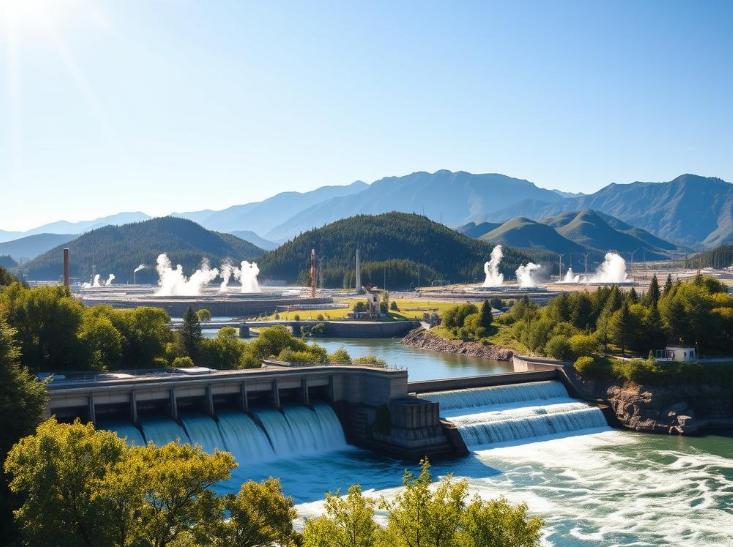
Micro-hydropower represents a powerful renewable energy solution for property owners with access to flowing water resources. This specialized form of energy independence offers small businesses and homeowners an opportunity to generate clean electricity directly from water sources.
The core of micro-hydropower systems relies on converting water’s natural flow into electrical energy. Typical residential systems generate between 1-10 kilowatts, making them ideal for small business energy solutions in rural or water-rich environments.
- Requires minimum water flow and vertical drop
- Works with streams, irrigation canals, and municipal water supplies
- Provides consistent 24/7 power generation
Selecting the right micro-hydropower system depends on several critical factors:
- Water flow rate (gallons per minute)
- Vertical drop (head height in feet)
- Seasonal water availability
Different turbine types suit various water conditions. Pelton wheels work best for high-head/low-flow scenarios, while Kaplan turbines excel in low-head/high-flow environments. Property owners can start with modular systems that allow future expansion as energy needs grow.
Micro-hydropower offers unmatched reliability, with capacity factors often exceeding 50-90% compared to other renewable energy sources.
Before implementation, property owners must consider water rights, environmental regulations, and potential ecosystem impacts. Consulting local renewable energy experts can help navigate these complex considerations and design an optimal micro-hydropower solution.
Smart Energy Management Systems and Home Automation
Smart home energy management represents a revolutionary approach to controlling and optimizing household energy consumption. These intelligent systems transform traditional home energy use into a sophisticated, data-driven experience that maximizes efficiency and reduces waste.
Modern smart energy management technologies provide homeowners with unprecedented insights into their energy consumption patterns. By leveraging advanced monitoring tools, residents can now track and control energy use with remarkable precision.
Comprehensive Energy Monitoring Solutions
Energy efficiency reaches new heights through cutting-edge monitoring platforms. Key features of smart home energy management include:
- Real-time circuit-level energy consumption tracking
- Detailed analysis of renewable energy production
- Automated energy optimization strategies
- Integration with solar and battery storage systems
Intelligent Automation Technologies
Home automation technologies are transforming energy consumption strategies. Smart devices now enable precise control over energy-intensive systems, allowing homeowners to:
- Schedule energy-intensive activities during optimal times
- Automatically adjust thermostat settings
- Manage electric vehicle charging efficiently
- Reduce peak-hour energy consumption
These advanced systems conduct continuous energy audits, providing valuable data that helps property owners refine their energy strategies. By implementing smart home energy management, households can significantly improve their overall energy efficiency and reduce utility costs.
Financing Options and Incentives for Renewable Energy Projects
Navigating the financial landscape of renewable energy can be complex, but numerous renewable energy financing options make sustainable solutions more accessible for homeowners and small businesses. The key to unlocking these opportunities lies in understanding the available incentives and strategic financing mechanisms.
Federal incentives provide a significant boost to renewable energy investments. The Investment Tax Credit (ITC) currently offers a substantial 30% tax credit for solar, battery storage, geothermal, and small wind systems installed through 2032. This powerful incentive dramatically reduces the upfront costs of energy upgrades.
- Federal Tax Credits: 30% credit for qualifying renewable energy systems
- State-Level Incentives: Variable programs by location
- Utility Company Rebates: Direct financial support for green energy
Financing options have expanded to make energy cost savings more achievable. Specialized lenders now offer competitive solar loans with terms aligned with potential energy savings. Homeowners can explore several innovative financing strategies:
| Financing Option | Key Features | Potential Benefits |
|---|---|---|
| Home Equity Loans | Lower interest rates | Leverage property value |
| PACE Financing | Property tax bill attachment | Reduced upfront costs |
| Power Purchase Agreements | Third-party system ownership | Minimal initial investment |
Small businesses can take advantage of additional renewable energy incentives, including the Modified Accelerated Cost Recovery System (MACRS) for accelerated depreciation and Small Business Administration (SBA) loans designed to support energy improvements.
Strategic financing can transform renewable energy from a costly investment to a cash-flow positive opportunity.
Careful comparison of financing offers is crucial. Understanding total costs, interest rates, and potential energy savings helps property owners make informed decisions about scalable sustainable energy solutions.
Calculating Return on Investment for Energy Solutions
Investing in sustainable energy solutions requires careful financial analysis to understand the true value of green upgrades. Energy ROI goes beyond simple cost comparisons, encompassing long-term savings, property value increase, and environmental benefits.
Payback Periods and Long-Term Savings
Understanding the financial performance of renewable energy investments involves calculating key metrics that reveal true economic potential. Property owners can evaluate their energy cost savings through several strategic approaches:
- Simple payback period calculation
- Net present value (NPV) analysis
- Internal rate of return (IRR)
- Levelized cost of energy (LCOE)
Typical solar installations demonstrate compelling financial benefits. For instance, a $15,000 system generating $1,800 annual savings achieves an 8.3-year payback period, after which electricity generation becomes essentially free.
Property Value Enhancement Through Green Upgrades
Research from Zillow and Lawrence Berkeley National Laboratory reveals significant property value increases associated with renewable energy installations. Homes with solar panels typically sell for 4.1% more than comparable properties, translating to approximately $15,000 in added value for median-priced homes.
| Energy Investment | Average Property Value Increase | Annual Energy Cost Savings |
|---|---|---|
| Solar Panel Installation | 4.1% | $1,500 – $2,000 |
| Geothermal Heat Pump | 3.5% | $800 – $1,200 |
| Energy Efficiency Upgrades | 2.7% | $500 – $900 |
Sustainable energy investments offer multifaceted benefits beyond immediate financial returns. Property owners gain energy independence, reduced environmental impact, and protection against future energy price volatility.
Implementation Strategies: Starting Small and Scaling Up
Embarking on a green energy solutions journey doesn’t require an all-at-once approach. Homeowners and small business owners can strategically develop sustainable power systems by breaking down implementation into manageable phases.
The first step in energy system upgrades involves conducting a comprehensive energy audit. This critical assessment helps identify areas of potential improvement and establishes a baseline for future energy consumption.
- Conduct a professional energy audit
- Implement efficiency improvements
- Start with low-cost, high-impact upgrades
- Gradually expand renewable energy capacity
Key strategies for successful implementation include:
- Energy Efficiency First: Reduce overall consumption through insulation, LED lighting, and efficient appliances
- Right-Size Renewable Systems: Begin with solar arrays covering 50-75% of energy needs
- Phased Technology Adoption: Add battery storage as costs decrease
- Professional Guidance: Work with certified energy experts and renewable energy contractors
Small businesses should align implementation strategies with their unique operational requirements. Prioritize technologies offering the quickest payback and highest reliability for your specific location and energy needs.
Remember: Sustainable power is a journey, not a destination. Start small, learn continuously, and expand confidently.
Conclusion
The journey into scalable sustainable energy represents more than just a technological upgrade—it’s a strategic investment in your property’s future. Clean energy alternatives have transformed from experimental concepts to practical solutions for homeowners and small businesses across the United States. Each renewable energy system offers a unique pathway to energy independence, with options ranging from solar panels to geothermal heat pumps.
Technological advancements and expanding financial incentives have made sustainable energy more accessible than ever before. Property owners can now start with modest installations and gradually expand their renewable energy systems as budget and needs allow. The key is taking that first step—whether it’s a small solar array, a compact wind turbine, or a smart energy management system that optimizes existing power consumption.
Financial benefits extend beyond immediate energy savings. Renewable energy solutions increase property values, provide protection against rising utility costs, and demonstrate a commitment to environmental stewardship. Small businesses can leverage these technologies to attract eco-conscious customers and differentiate themselves in competitive markets. The renewable energy landscape continues to evolve, with improving technologies and decreasing implementation costs making sustainable energy an increasingly attractive option.
Your path to energy independence starts with informed research and practical action. Explore local incentives, consult with renewable energy professionals, and begin mapping out a sustainable energy strategy tailored to your specific needs. The future of energy is decentralized, clean, and within reach for properties of all sizes.
FAQ
What makes an energy solution truly “scalable”?
A scalable sustainable energy solution allows you to start with a modest investment and gradually expand capacity over time as your needs grow and budget permits. This approach enables homeowners and small businesses to begin their renewable energy journey incrementally, adding components like solar panels, battery storage, or additional technologies without requiring a complete overhaul of their existing energy system.
How much does a typical residential solar system cost?
A typical residential solar system can range from $15,000 to $25,000 before federal tax credits. With the current 30% Investment Tax Credit, the net cost could be reduced to $10,500 to $17,500. System sizes typically start around 5-7 kilowatts for an average home, but can be scaled up or down based on specific energy consumption needs and budget constraints.
Do I need to replace all my energy systems at once?
No, scalable sustainable energy is designed to be implemented in phases. You can start with energy efficiency improvements, then add solar panels, followed by battery storage, and potentially expand to other technologies like geothermal or wind over time. This approach allows you to manage costs and gradually build a comprehensive renewable energy system.
What financing options are available for renewable energy projects?
Multiple financing options exist, including solar loans, home equity loans, Property Assessed Clean Energy (PACE) financing, power purchase agreements (PPAs), and leasing options. Many of these solutions offer monthly payments that can be lower than your current energy costs, making renewable energy financially accessible for most homeowners and small businesses.
How long do renewable energy systems typically last?
Different technologies have varying lifespans. Solar panels typically last 25-30 years with minimal degradation, battery storage systems last 10-15 years, geothermal ground loops can last 50+ years, and heat pumps typically function for 20-25 years. This long-term performance makes renewable energy a durable and cost-effective investment.
Can I use renewable energy if I don’t own my property?
Yes, options like community solar programs allow renters and condo owners to participate in renewable energy. These programs let you purchase or subscribe to a share of a solar array located off-site, enabling you to benefit from solar energy without installing panels on your own property.
What tax incentives are currently available for renewable energy?
The federal Investment Tax Credit (ITC) currently offers a 30% tax credit for solar, battery storage, geothermal, and small wind systems installed through 2032. Additional state and local incentives vary by location, potentially providing extra rebates, performance-based incentives, and property tax exemptions.
How do smart energy management systems improve renewable energy efficiency?
Smart energy management systems provide real-time monitoring of energy production and consumption, enable intelligent load shifting, optimize battery storage usage, and help reduce overall energy waste. These systems can automatically schedule energy-intensive activities during peak renewable production times or lowest electricity rates, maximizing the financial and environmental benefits of your renewable energy investment.