


Our daily choices have a profound impact on the environment. The average American generates about 16 tons of carbon dioxide equivalent (CO₂e) annually—four times the global average. With climate scientists urging us to reduce this number to under 2 tons by 2050, taking action has never been more crucial. This guide offers 15 practical, high-impact ways to reduce your carbon footprint while creating a more sustainable lifestyle. These changes not only benefit our planet but can also improve your health and save money.
Understanding Your Carbon Footprint
A carbon footprint is the total amount of greenhouse gas emissions generated by your actions. It includes direct emissions from activities like driving and heating your home, as well as indirect emissions from the products you buy and the food you eat. Understanding where your emissions come from is the first step toward reducing them.
Measure Your Impact
Before making changes, find out where you stand. Use a carbon footprint calculator to identify your biggest sources of emissions.
Most household carbon emissions fall into four main categories: home energy use, transportation, food, and consumption of goods. Let’s explore practical ways to reduce your impact in each area.
Home Energy Solutions
Household energy use accounts for about one-third of greenhouse gas emissions. These tips can help you create a more energy-efficient home.

1. Improve Home Insulation
Proper weatherization can reduce your heating and cooling energy use by up to 40%. Start with a home energy assessment to identify where your building is losing energy.
Adding insulation, sealing air leaks, and upgrading windows not only cuts emissions but also improves comfort by reducing drafts and enhancing indoor air quality.
2. Switch to Clean Heating
Heat pumps operate by transferring heat rather than generating it, making them up to three times more efficient than conventional heating systems. They can also provide cooling in summer.
Replacing fossil fuel heating systems with electric heat pumps can significantly reduce your carbon footprint while qualifying for tax credits and incentives.
3. Use Renewable Energy
Installing solar panels can reduce your electricity-related emissions to near zero. If that’s not possible, many utility companies offer renewable energy options.
Community solar projects allow you to access clean energy benefits without installing panels on your property, often at discounted rates compared to standard electricity.
4. Upgrade to LED Lighting
LED bulbs use up to 90% less energy than incandescent bulbs and last up to 25 times longer. Switching your home’s lighting to LEDs can save the average household more than $200 per year.
This simple change can reduce your carbon footprint by up to 400 pounds of CO₂ annually.
5. Use Smart Power Strips
Standby power, or “vampire energy,” accounts for 5-10% of residential energy use. Smart power strips automatically cut power to devices when they’re not in use.
This can save the average household up to $100 per year while reducing unnecessary carbon emissions.
6. Install a Smart Thermostat
Smart thermostats learn your schedule and preferences, automatically adjusting temperatures for optimal efficiency. They can reduce heating and cooling costs by 10-15%.
Some models can even integrate with renewable energy sources to maximize clean energy use.
Quick Fact: Space heating and cooling account for approximately 44% of energy used in U.S. residential buildings. Improving efficiency in this area offers the biggest home energy savings.
Sustainable Transportation
Transportation accounts for about 28% of greenhouse gas emissions in the U.S. Changing how you get around can significantly reduce your carbon footprint.
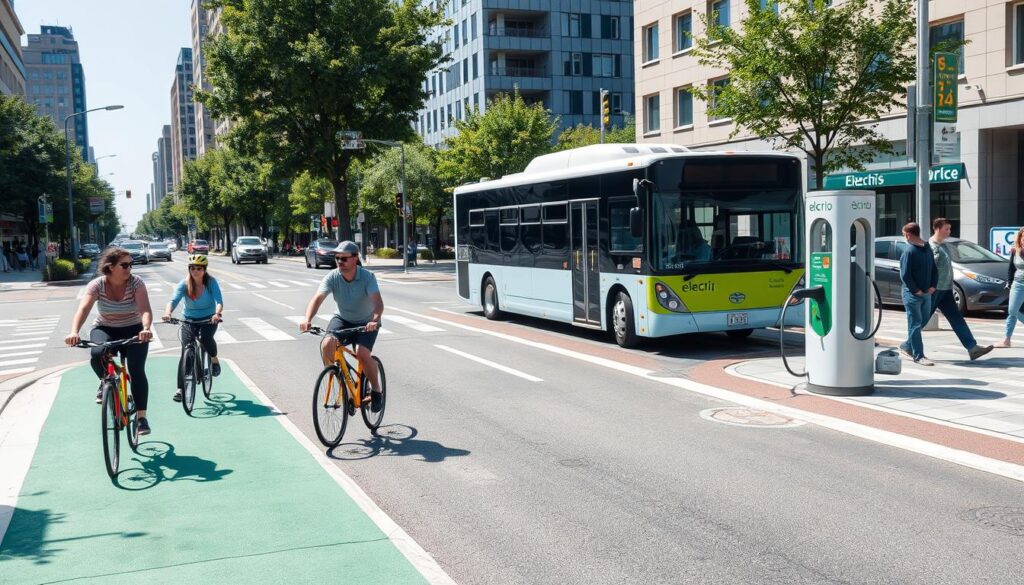
7. Choose Active Transportation
Walking or cycling for short trips eliminates emissions entirely while improving your health. For every mile you don’t drive, you prevent about 0.67 pounds of CO₂ from entering the atmosphere.
If your commute is too long for active transportation, consider combining cycling with public transit.
8. Use Public Transportation
Buses and trains produce significantly fewer emissions per passenger mile than private vehicles. A full bus can take 40+ cars off the road, while a full train can replace hundreds.
Using public transit just twice a week can reduce your carbon footprint by 1,600 pounds annually.
9. Switch to an Electric Vehicle
Electric vehicles produce zero tailpipe emissions and, even accounting for electricity generation, typically produce less than half the lifetime emissions of conventional vehicles.
With federal tax credits worth up to $7,500 and additional state incentives, EVs are becoming increasingly affordable.
Living car-free can reduce your carbon footprint by up to 2 tons of CO₂e per year compared to a lifestyle using a car.
Sustainable Diet Choices
Food accounts for 10-30% of a household’s carbon footprint. What you eat has a significant impact on your environmental footprint.

10. Reduce Meat Consumption
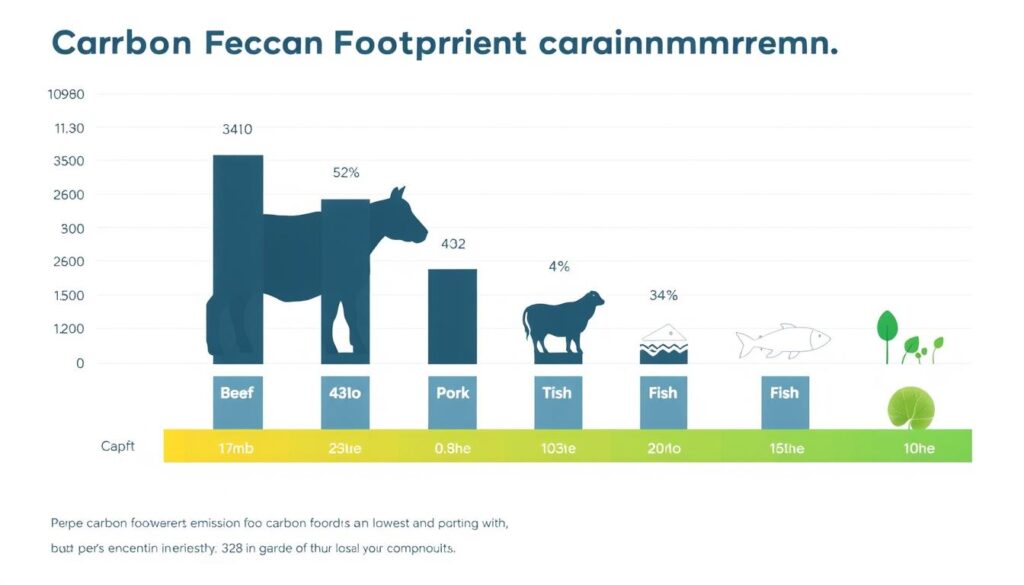
Meat production, especially beef, generates significant greenhouse gas emissions. Beef’s carbon footprint (30.4 kg CO₂e per kg) is 7.2 times higher than chicken (4.2 kg CO₂e).
Shifting to a vegetarian diet can reduce your food-related carbon footprint by up to 500 kg CO₂e per year (or up to 900 kg for a vegan diet).
11. Minimize Food Waste
When food decomposes in landfills, it produces methane, a potent greenhouse gas. About one-third of all food produced globally is wasted.
Planning meals, storing food properly, and composting scraps can reduce your carbon footprint by up to 300 kg of CO₂e annually.
12. Choose Local and Seasonal Foods
Food transportation accounts for about 5% of food-related emissions. Buying locally grown, seasonal produce reduces these “food miles” while supporting local farmers.
Shopping at farmers’ markets or joining a community-supported agriculture (CSA) program makes finding local options easier.
Sustainable Lifestyle Choices
Beyond home, transportation, and food, many other lifestyle choices affect your carbon footprint. These additional tips can help you further reduce your impact.

13. Practice the 5 Rs
Refuse what you don’t need, reduce what you consume, reuse items instead of disposing of them, repair before replacing, and recycle as a last resort.
Manufacturing new products accounts for a significant portion of global emissions. Extending product life through reuse and repair can substantially reduce your carbon footprint.
14. Choose Sustainable Landscaping
Plant native species that require less water and maintenance. Native plants support local wildlife and can sequester carbon in soil and plant matter.
Replace gas-powered lawn equipment with electric or manual alternatives. Running a gas lawn mower for one hour produces as much pollution as driving a car for 300 miles.
15. Make Your Money Count
Consider the environmental impact of your purchases and investments. Support companies committed to sustainability and reducing emissions.
Check if your bank or pension fund invests in fossil fuels. Switching to ethical investment options can reduce your indirect carbon footprint significantly.
Did you know? The top 10% of income earners globally account for nearly half of all carbon emissions. Making sustainable choices with your purchasing power sends a strong message to businesses.
Track Your Progress
Measuring your carbon footprint reduction helps maintain motivation and identify areas for improvement. Several tools can help you track your progress.

Start Tracking Today
Choose a calculator that fits your needs and establish your baseline. Then set specific reduction goals and track your progress over time.
Start Your Carbon Reduction Journey Today
Reducing your carbon footprint doesn’t require a complete lifestyle overhaul. Start with three actions from this guide that feel most achievable for you. Even small changes, when adopted by many, create significant positive impact.
Remember that the journey to sustainability is ongoing. As you incorporate these initial changes, gradually add more sustainable practices to your routine. Your actions not only reduce greenhouse gas emissions but also inspire others to follow your example.
Never doubt that a small group of thoughtful, committed citizens can change the world; indeed, it’s the only thing that ever has.
Take Action Now
Which three carbon-reducing actions will you implement this week? Calculate your current footprint, then track your progress as you make these positive changes.